



The Testosterone Hypothesis
How Hormones Regulate the Life Cycles of Civilization
Autoři
Více o knize
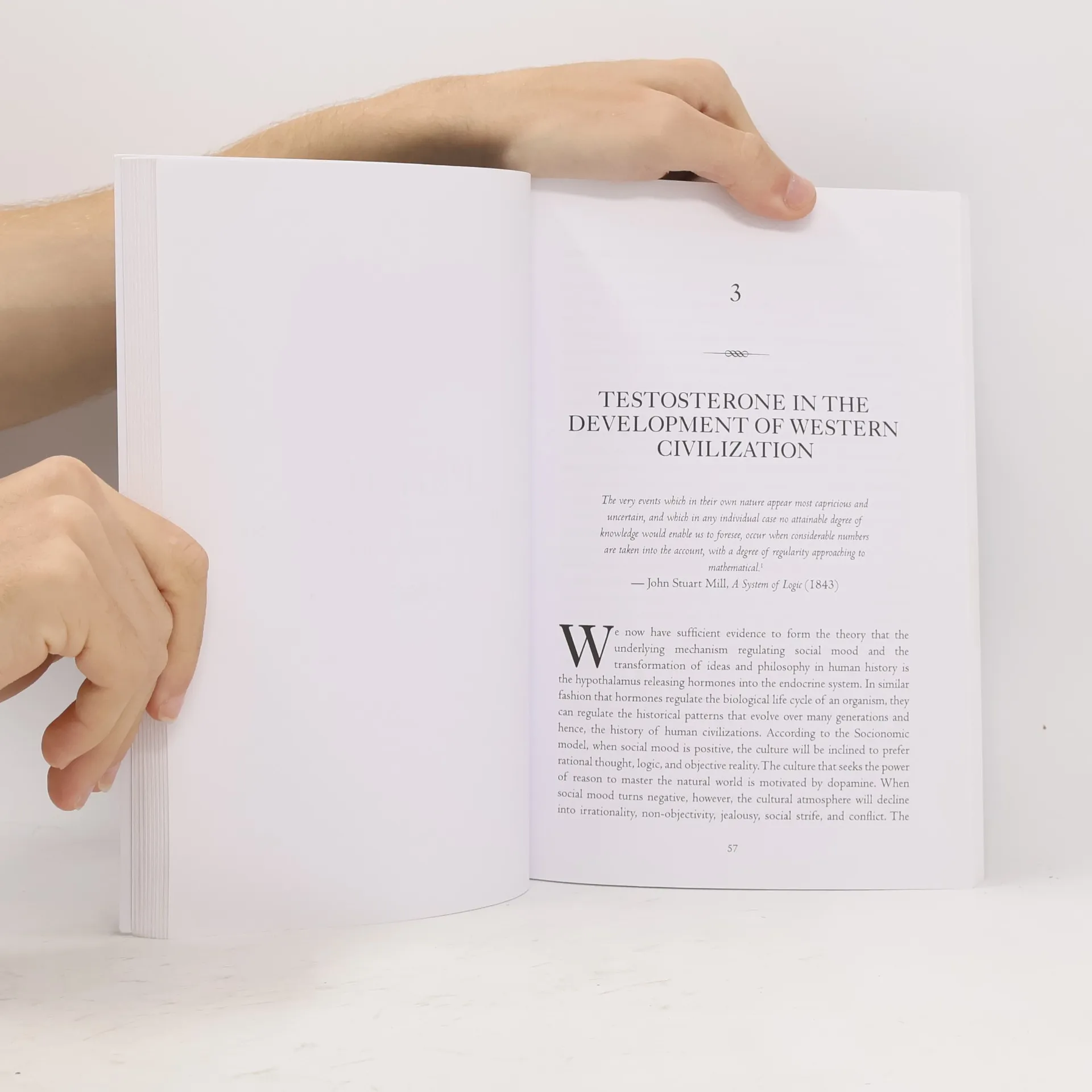
Sex, life, and death are driven by a single force: testosterone. This hormone not only fuels our desire for reproduction but also plays a crucial role in our lifespan and the evolution of human civilization, influencing both its triumphs and tragedies. To grasp the dynamics that govern human cultures and historical progress, this research delves into the fundamental aspects of human neuroscience. It posits that hormones are pivotal in shaping our history, with biological cycles influencing social moods that dictate the rise and fall of civilizations. Hormones affect how we perceive the world, define goodness, and structure our social and political systems. In an era marked by uncertainty and despair, a multi-disciplinary approach—integrating evolution, biology, neuroscience, psychology, and the history of Western civilization—offers a fresh perspective on our past. By moving beyond conventional reductionist science, we can better understand the human mind and view civilization as a complex, adaptive system. To transcend our primal instincts and embrace rational thought could lead humanity to a new evolutionary leap. As civilization faces a growing state of depression, the insights from this research may provide pathways to restore the vibrant mindset that has shaped the modern world.
Nákup knihy
The Testosterone Hypothesis, Ruth Olsen, Roy Barzilai
- Jazyk

- Rok vydání
- 2015
- Vazba
- (měkká),
- Stav knihy
- Velmi dobrá
- Cena
- 109 Kč
Doručení
Platební metody
Nikdo zatím neohodnotil.
- Titul
- The Testosterone Hypothesis
- Podtitul
- How Hormones Regulate the Life Cycles of Civilization
- Jazyk
- anglicky
- Autoři
- Ruth Olsen, Roy Barzilai
- Rok vydání
- 2015
- Vazba
- měkká
- Počet stran
- 234
- ISBN10
- 1508551537
- ISBN13
- 9781508551539
- Série
- Štítky
- Anotace
- Sex, life, and death are driven by a single force: testosterone. This hormone not only fuels our desire for reproduction but also plays a crucial role in our lifespan and the evolution of human civilization, influencing both its triumphs and tragedies. To grasp the dynamics that govern human cultures and historical progress, this research delves into the fundamental aspects of human neuroscience. It posits that hormones are pivotal in shaping our history, with biological cycles influencing social moods that dictate the rise and fall of civilizations. Hormones affect how we perceive the world, define goodness, and structure our social and political systems. In an era marked by uncertainty and despair, a multi-disciplinary approach—integrating evolution, biology, neuroscience, psychology, and the history of Western civilization—offers a fresh perspective on our past. By moving beyond conventional reductionist science, we can better understand the human mind and view civilization as a complex, adaptive system. To transcend our primal instincts and embrace rational thought could lead humanity to a new evolutionary leap. As civilization faces a growing state of depression, the insights from this research may provide pathways to restore the vibrant mindset that has shaped the modern world.