

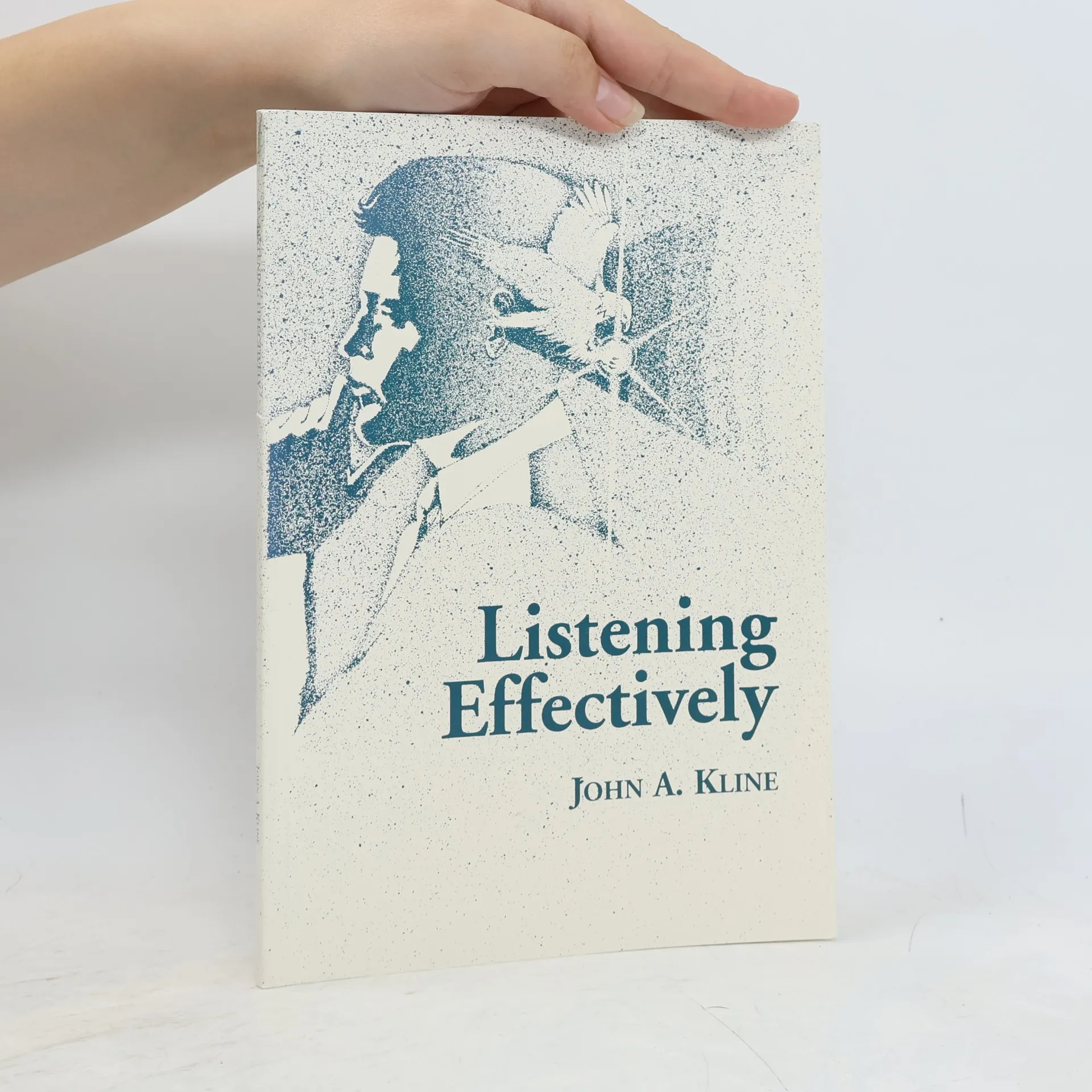

Listening Effectively
Autoři
Více o knize
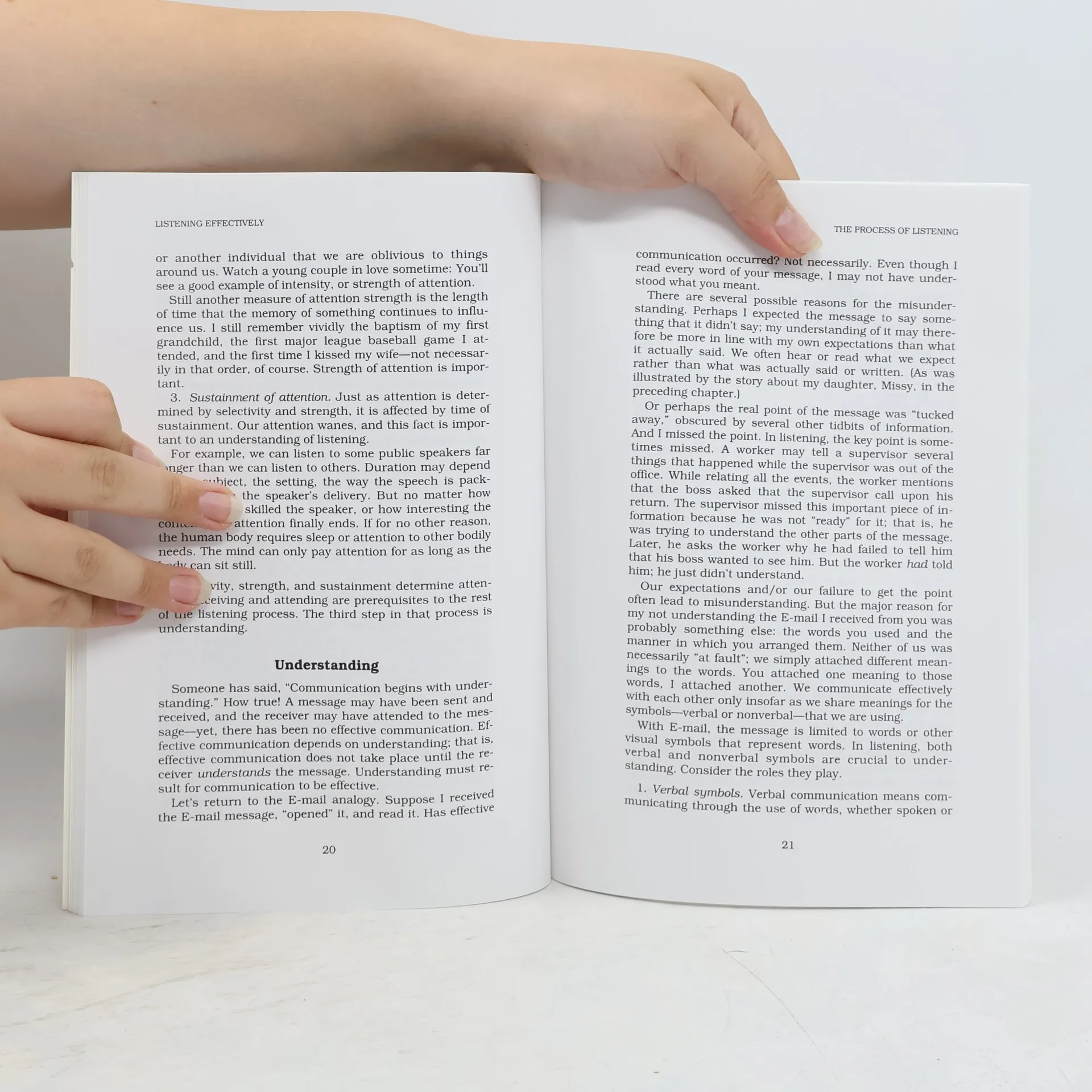
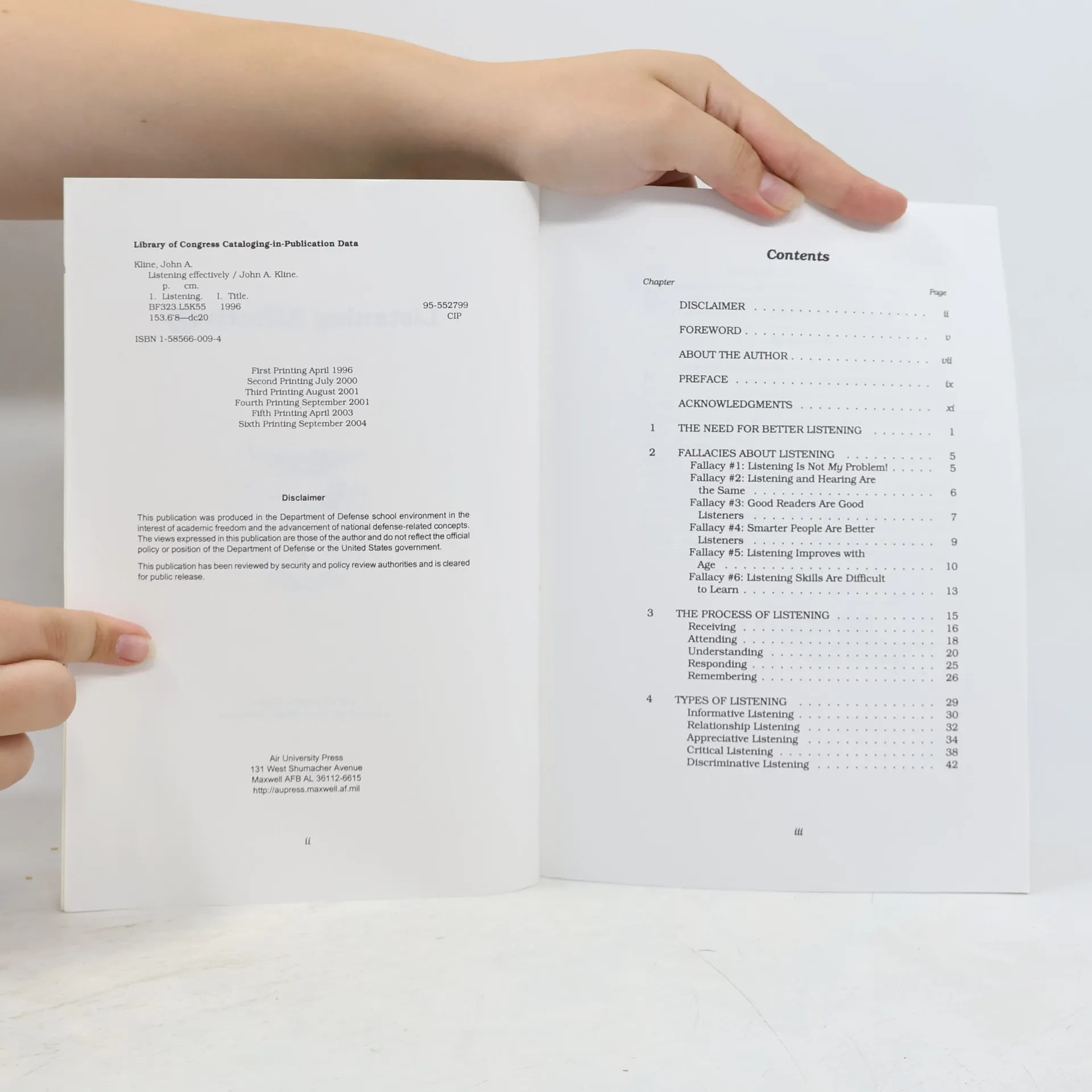
Listening Effectively offers a practical approach to enhancing listening skills, emphasizing that anyone can improve in this area. The first chapter establishes the necessity for better listening, highlighting that few individuals have received formal training in this skill, supported by real-life examples. The second chapter addresses common misconceptions about listening, challenging readers to reconsider their beliefs, which may be difficult for some. The third chapter outlines the listening process, detailing five essential steps: receiving, attending, understanding, responding, and remembering, with examples to illustrate each step. The fourth chapter categorizes the five types of listening—informative, relationship, appreciative, critical, and discriminative—while stressing the importance of adapting to different listening contexts. The final chapter provides guidelines for effective listening, exploring the interplay between thoughts, feelings, and actions related to listening. This book aims to equip readers with the tools necessary to become better listeners, ultimately enhancing their communication skills and relationships.
Nákup knihy
Listening Effectively, John A. Kline
- Jazyk

- Rok vydání
- 2004
- Vazba
- (měkká)
Doručení
Platební metody
Nikdo zatím neohodnotil.
- Titul
- Listening Effectively
- Jazyk
- anglicky
- Autoři
- John A. Kline
- Vydavatel
- Air University Press
- Rok vydání
- 2004
- Vazba
- měkká
- Počet stran
- 59
- ISBN10
- 1585660094
- ISBN13
- 9781585660094
- Série
- Štítky
- Anotace
- Listening Effectively offers a practical approach to enhancing listening skills, emphasizing that anyone can improve in this area. The first chapter establishes the necessity for better listening, highlighting that few individuals have received formal training in this skill, supported by real-life examples. The second chapter addresses common misconceptions about listening, challenging readers to reconsider their beliefs, which may be difficult for some. The third chapter outlines the listening process, detailing five essential steps: receiving, attending, understanding, responding, and remembering, with examples to illustrate each step. The fourth chapter categorizes the five types of listening—informative, relationship, appreciative, critical, and discriminative—while stressing the importance of adapting to different listening contexts. The final chapter provides guidelines for effective listening, exploring the interplay between thoughts, feelings, and actions related to listening. This book aims to equip readers with the tools necessary to become better listeners, ultimately enhancing their communication skills and relationships.