

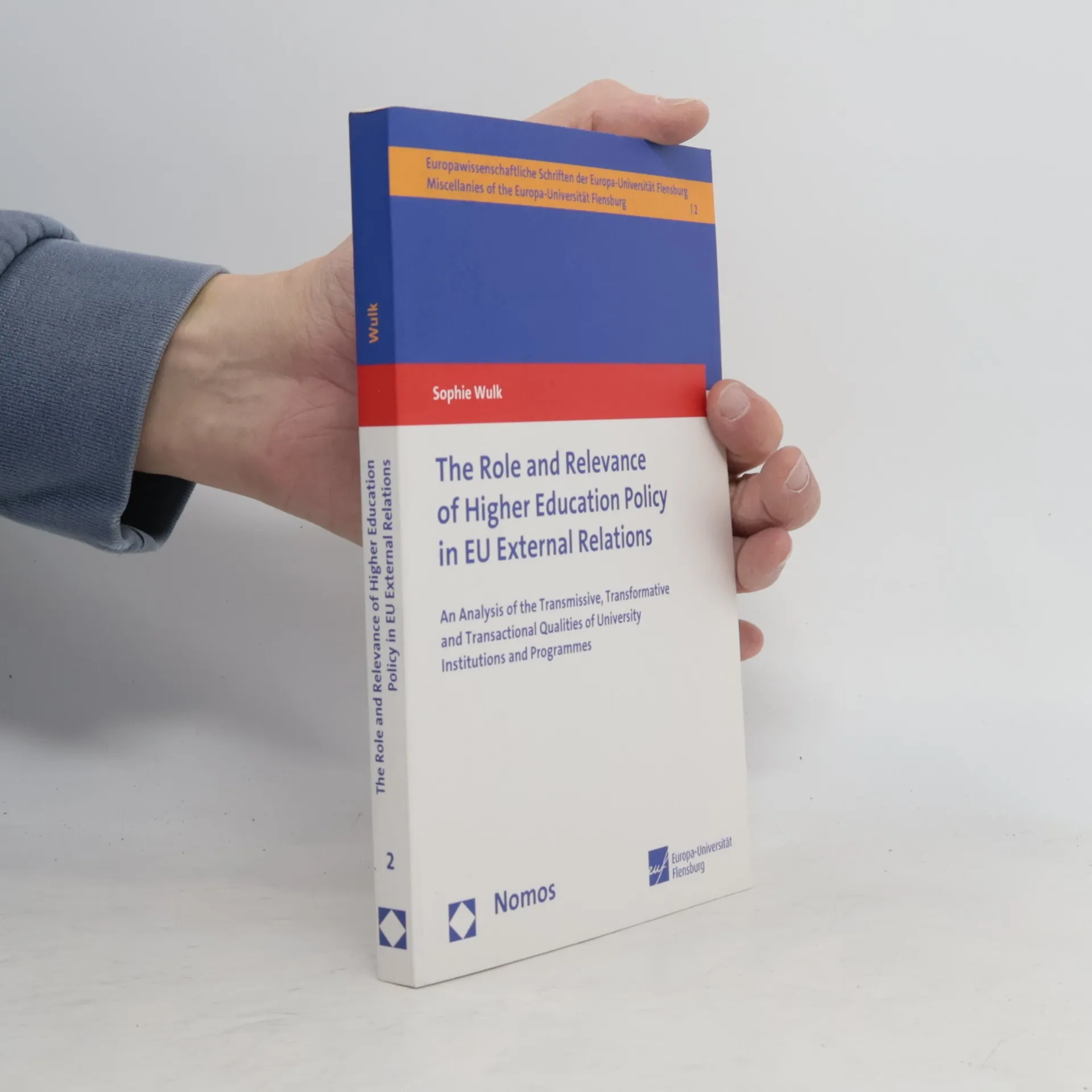


The role and relevance of higher education policy in EU external relations
An Analysis of the Transmissive, Transformative and Transactional ...
Autoři
Parametry
- 261 stránek
- 10 hodin čtení
Více o knize
Measures taken by the EU and not by nation states in the context of education policy with aims relating to foreign affairs have barely been considered in academia although their number and financial scope have been growing steadily. These measures, as well as those from other areas, are part of each trade agreement of the EU and serve the purpose of influencing third countries. However, the dynamic inherent in the educational sector differs fundamentally from that of other areas. By levering out the mechanisms of unilateral transfer of norms, this cooperation facilitates the creation of transnational spaces in the long run, even though this is contrary to its original purpose of expanding the EU’s influence.
Nákup knihy
The role and relevance of higher education policy in EU external relations, Sophie Wulk
- Jazyk

- Rok vydání
- 2015
- Vazba
- (měkká)
Doručení
Platební metody
Nikdo zatím neohodnotil.
- Titul
- The role and relevance of higher education policy in EU external relations
- Podtitul
- An Analysis of the Transmissive, Transformative and Transactional ...
- Jazyk
- anglicky
- Autoři
- Sophie Wulk
- Vydavatel
- Nomos
- Rok vydání
- 2015
- Vazba
- měkká
- Počet stran
- 261
- ISBN10
- 3848709503
- ISBN13
- 9783848709502
- Série
- Kategorie
- Štítky
- Právní tématika, Německo, Vzdělávání & školství, Vysoká škola, univerzita, Zahraniční politika
- Anotace
- Measures taken by the EU and not by nation states in the context of education policy with aims relating to foreign affairs have barely been considered in academia although their number and financial scope have been growing steadily. These measures, as well as those from other areas, are part of each trade agreement of the EU and serve the purpose of influencing third countries. However, the dynamic inherent in the educational sector differs fundamentally from that of other areas. By levering out the mechanisms of unilateral transfer of norms, this cooperation facilitates the creation of transnational spaces in the long run, even though this is contrary to its original purpose of expanding the EU’s influence.