

Více o knize
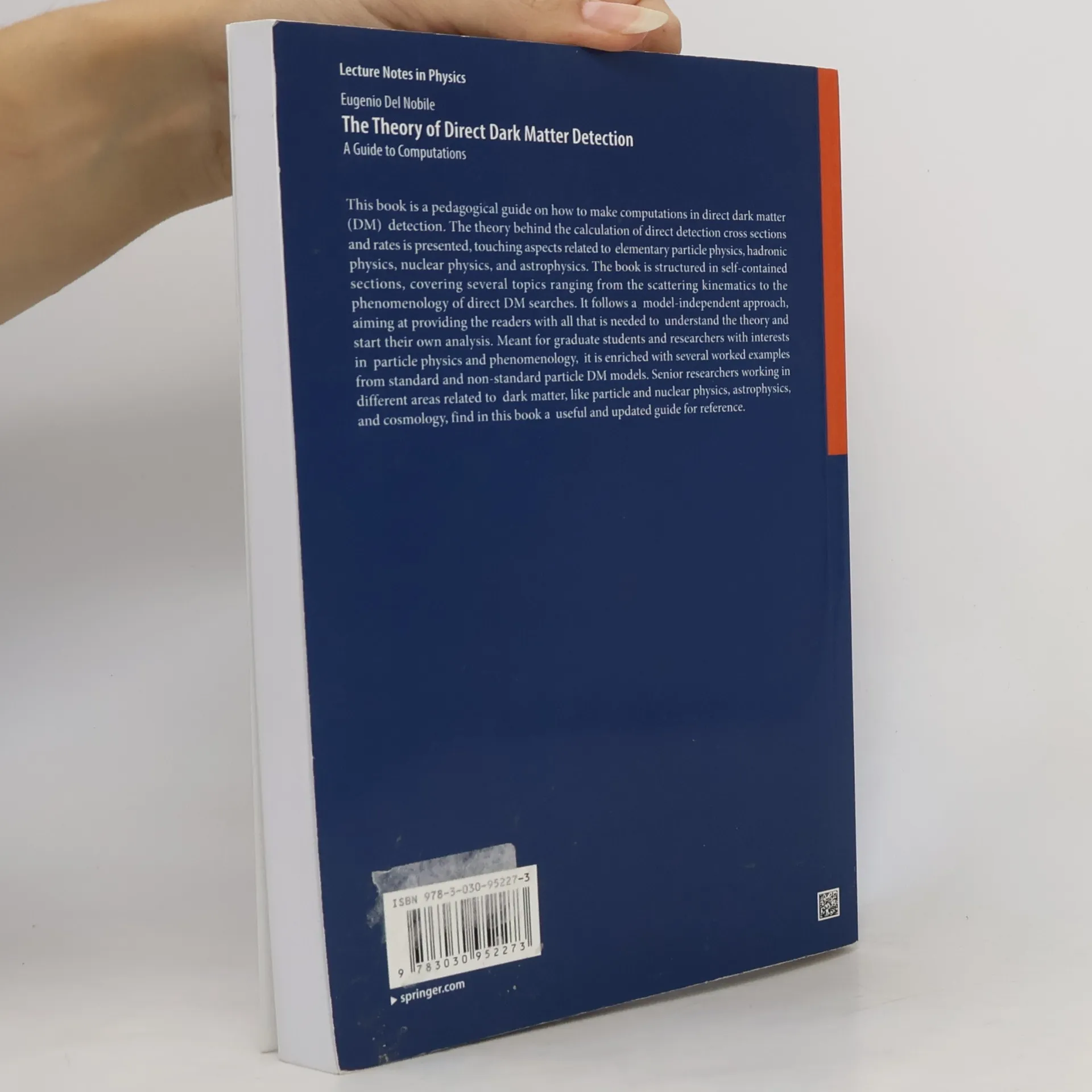
This book is a pedagogical guide on how to make computations in direct dark matter (DM) detection. The theory behind the calculation of direct detection cross sections and rates is presented, touching aspects related to elementary particle physics, hadronic physics, nuclear physics, and astrophysics. The book is structured in self-contained sections, covering several topics ranging from the scattering kinematics to the phenomenology of direct DM searches. It follows a model-independent approach, aiming at providing the readers with all that is needed to understand the theory and start their own analysis. Meant for graduate students and researchers with interests in particle physics and phenomenology, it is enriched with several worked examples from standard and non-standard particle DM models. Senior researchers working in different areas related to dark matter, like particle and nuclear physics, astrophysics, and cosmology, find in this book a useful and updated guide for reference.
Nákup knihy
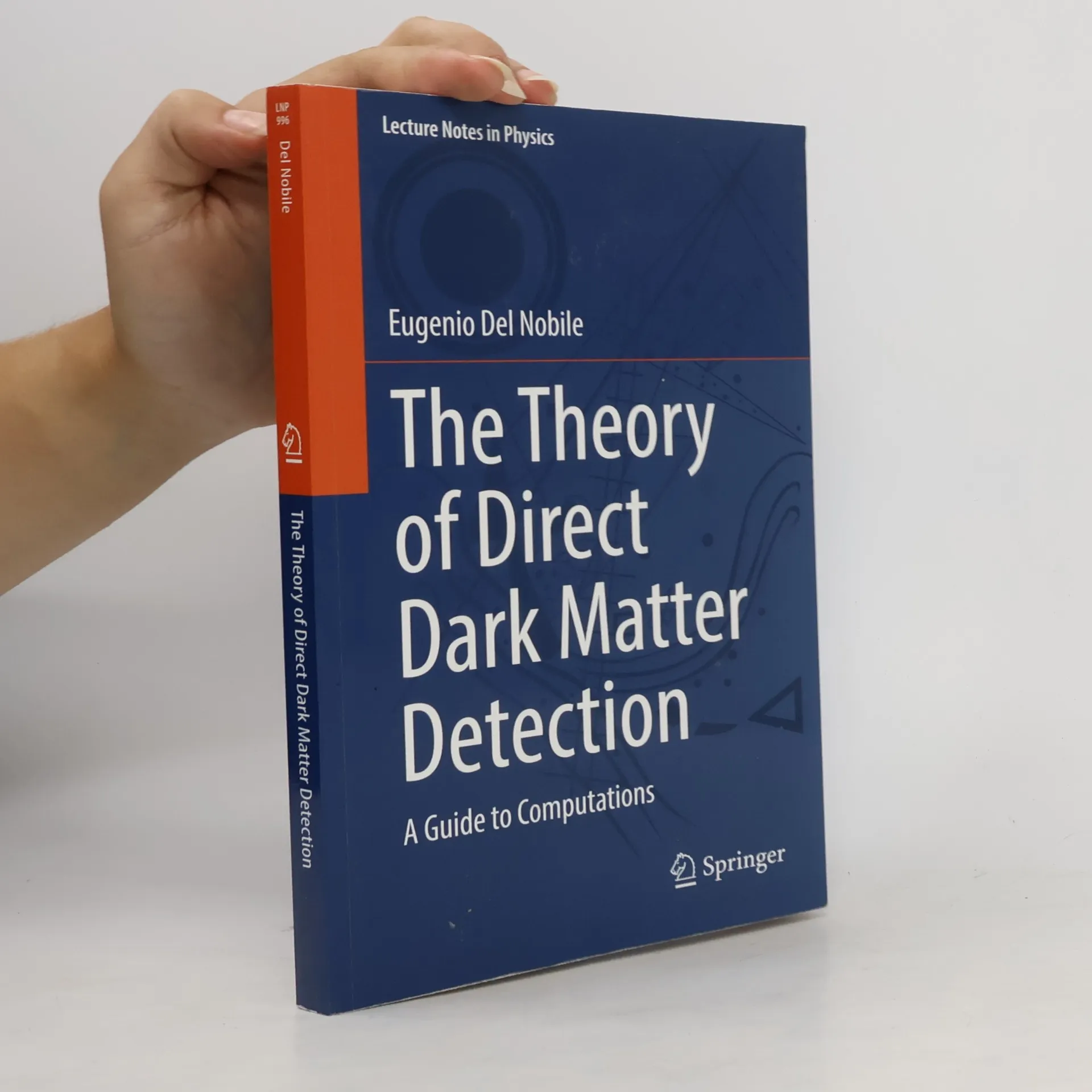
Lecture Notes in Physics - 996: The Theory of Direct Dark Matter Detection, Eugenio Del Nobile
- Jazyk

- Rok vydání
- 2022
- Vazba
- (měkká),
- Stav knihy
- Dobrá
- Cena
- 989 Kč
Nikdo zatím neohodnotil.
- Titul
- Lecture Notes in Physics - 996: The Theory of Direct Dark Matter Detection
- Podtitul
- A Guide to Computations
- Jazyk
- anglicky
- Autoři
- Eugenio Del Nobile
- Vydavatel
- Springer International Publishing
- Rok vydání
- 2022
- Vazba
- měkká
- Počet stran
- 268
- ISBN10
- 3030952274
- ISBN13
- 9783030952273
- Série
- Štítky
- Přírodní vědy, Věda, Vesmír, Kosmologie, Teoretická fyzika, Astrofyzika, Jaderná fyzika, Částicová fyzika
- Anotace
- This book is a pedagogical guide on how to make computations in direct dark matter (DM) detection. The theory behind the calculation of direct detection cross sections and rates is presented, touching aspects related to elementary particle physics, hadronic physics, nuclear physics, and astrophysics. The book is structured in self-contained sections, covering several topics ranging from the scattering kinematics to the phenomenology of direct DM searches. It follows a model-independent approach, aiming at providing the readers with all that is needed to understand the theory and start their own analysis. Meant for graduate students and researchers with interests in particle physics and phenomenology, it is enriched with several worked examples from standard and non-standard particle DM models. Senior researchers working in different areas related to dark matter, like particle and nuclear physics, astrophysics, and cosmology, find in this book a useful and updated guide for reference.