

Parametry
- 1096 stránek
- 39 hodin čtení
Více o knize
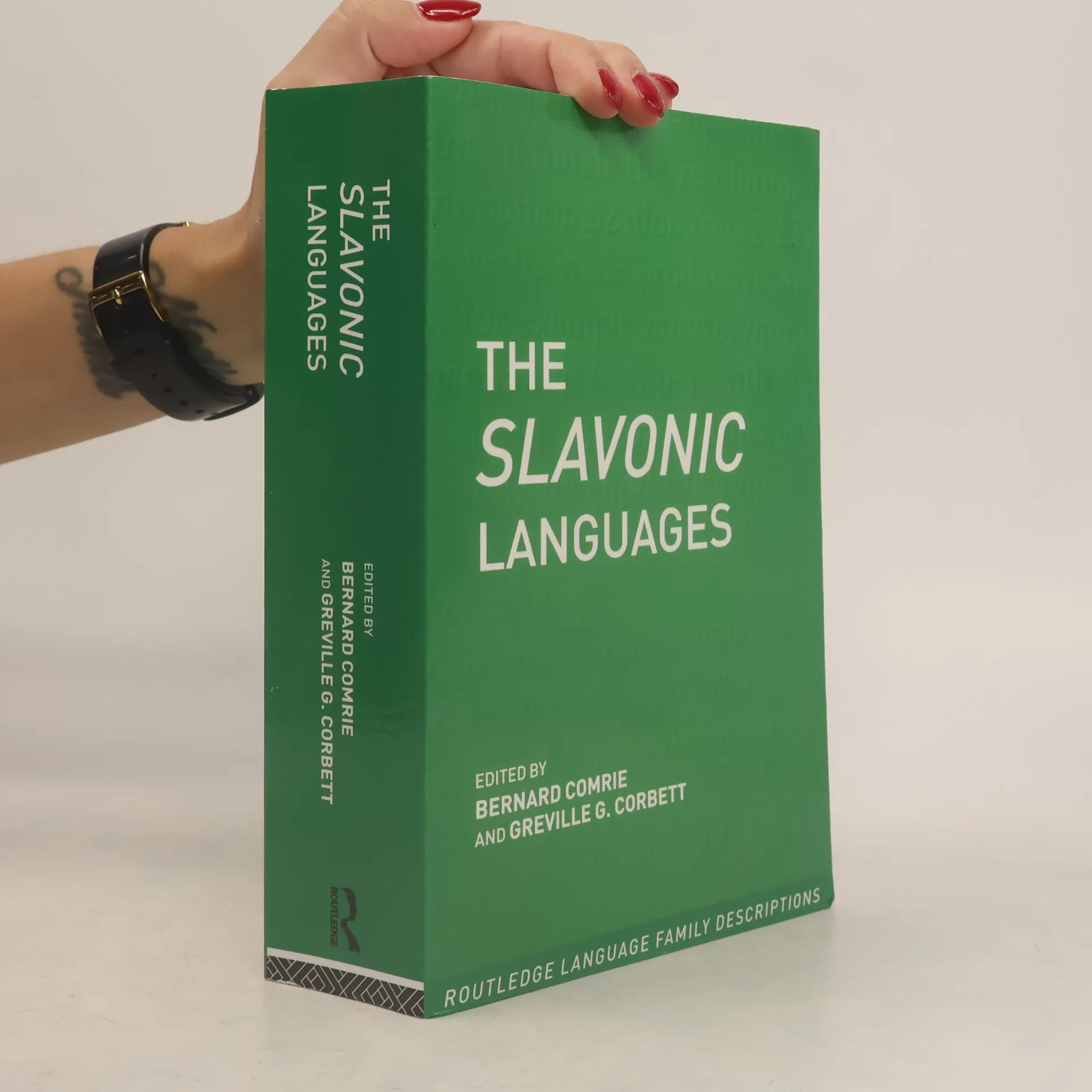
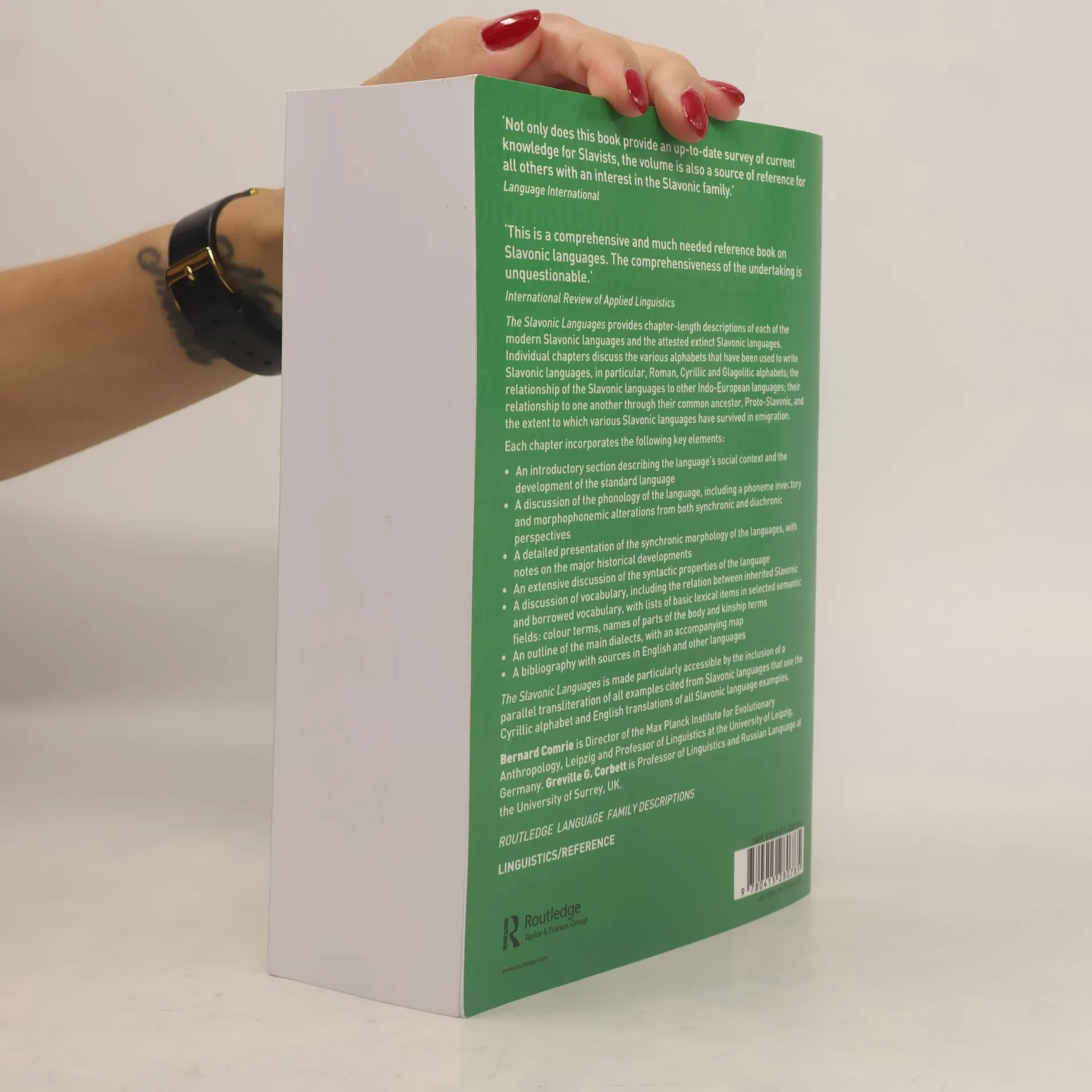
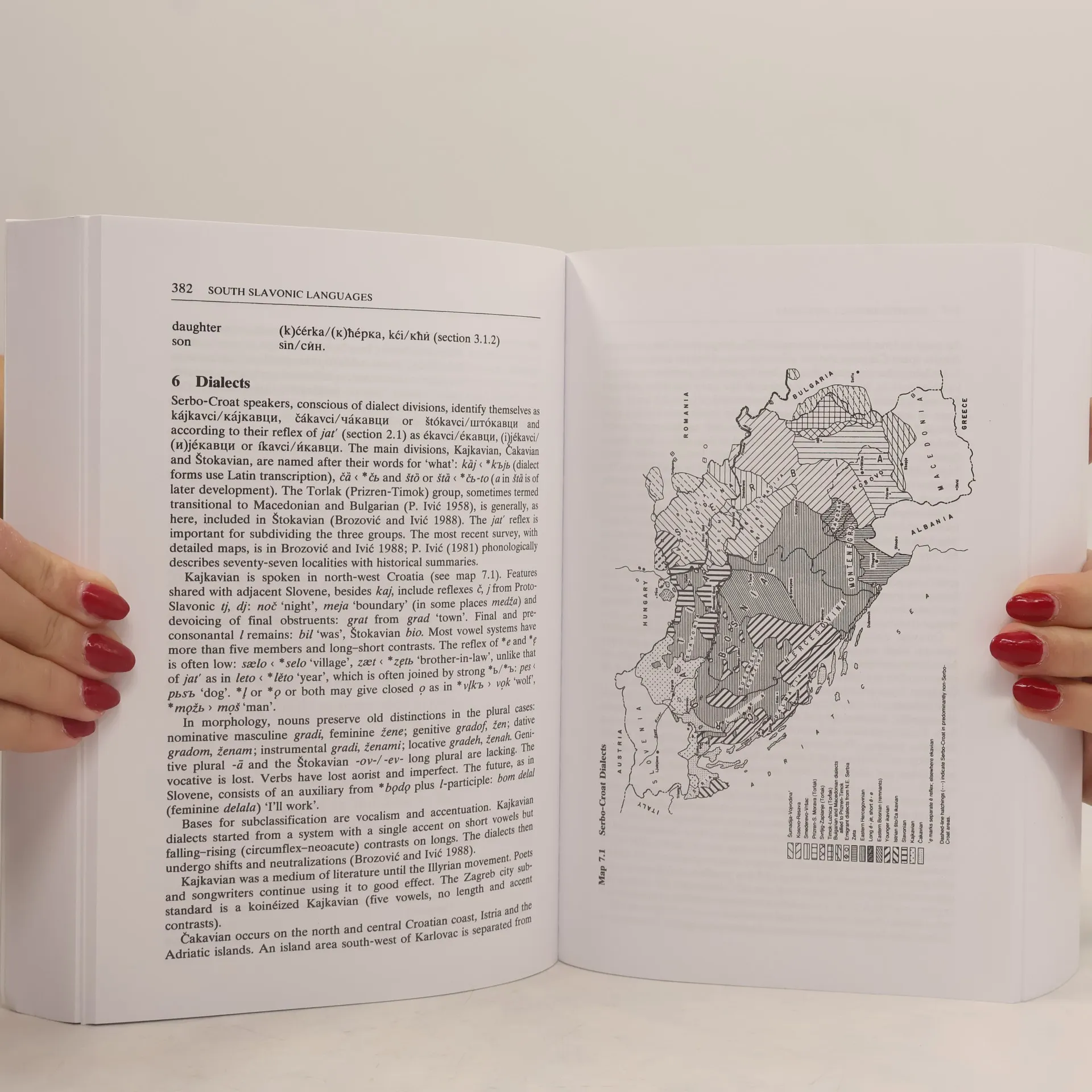
In this scholarly volume, each of the living Slavonic languages are analysed and described in depth, together with the two extinct languages - Old Church Slavonic and Polabian. In addition, the various alphabets of the Slavonic languages - particularly Roman, Cyrillic and Glagolitic - are discussed, and the relationships of the Slavonic languages to other Indo-European languages and to one another, are explored. The last chapter provides an account of those Slavonic languages in exile , for example, Russian, Ukrainian, Polish, Czech and Slovak in the USA.Each language-chapter is written by an expert in the field, in a format designed for comparative study. Information on each language an introductory description of social context and development (where appropriate); a discussion of phonology; a detailed presentation of synchronic morphology, noting major historical developments; comprehensive treatment of syntactic properties; a discussion of vocabulary; an outline of main dialects; and an extensive bibliography, listing English and other sources.
Nákup knihy
Routledge Language Family Descriptions: The Slavonic Languages, Bernard Comrie, Greville G. Corbett
- Jazyk

- Rok vydání
- 2002
- Vazba
- (měkká)
Doručení
Platební metody
Nikdo zatím neohodnotil.
- Titul
- Routledge Language Family Descriptions: The Slavonic Languages
- Jazyk
- anglicky
- Vydavatel
- Routledge
- Rok vydání
- 2002
- Vazba
- měkká
- Počet stran
- 1096
- ISBN10
- 0415280788
- ISBN13
- 9780415280785
- Série
- Štítky
- Příručky a návody, Encyklopedie, Jazykové učebnice, Odborná literatura, Lingvistika, Rusko, Žurnalistika, Humanitní vědy, Sociolingvistika, Syntax, skladba, slovosled, Hláskosloví, fonologie, Slovanské jazyky, Církevní slovanština
- Anotace
- In this scholarly volume, each of the living Slavonic languages are analysed and described in depth, together with the two extinct languages - Old Church Slavonic and Polabian. In addition, the various alphabets of the Slavonic languages - particularly Roman, Cyrillic and Glagolitic - are discussed, and the relationships of the Slavonic languages to other Indo-European languages and to one another, are explored. The last chapter provides an account of those Slavonic languages in exile , for example, Russian, Ukrainian, Polish, Czech and Slovak in the USA.Each language-chapter is written by an expert in the field, in a format designed for comparative study. Information on each language an introductory description of social context and development (where appropriate); a discussion of phonology; a detailed presentation of synchronic morphology, noting major historical developments; comprehensive treatment of syntactic properties; a discussion of vocabulary; an outline of main dialects; and an extensive bibliography, listing English and other sources.