

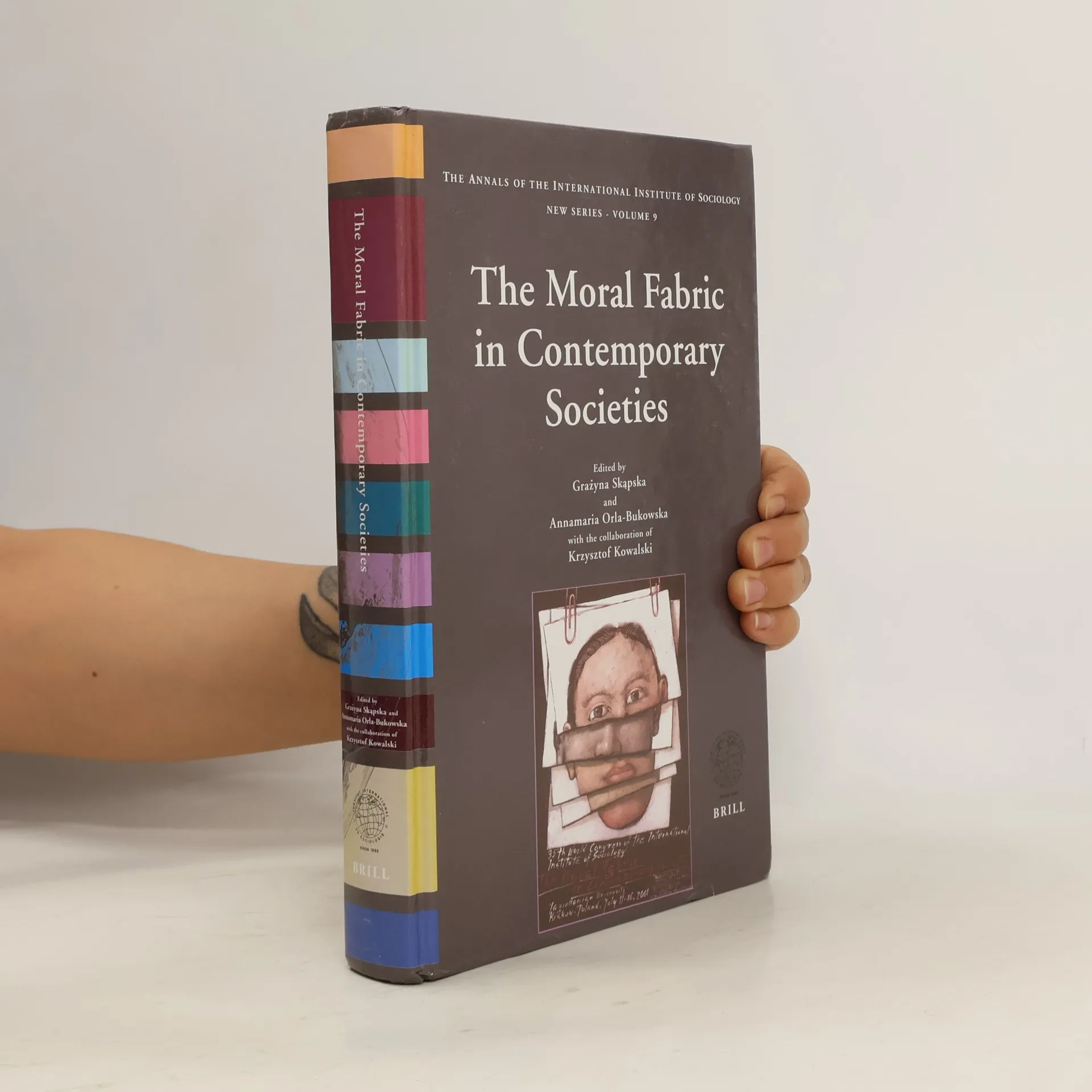



The Moral Fabric in Contemporary Societies
The Annals of the International Institute of Sociology - Volume 9
Autoři
Více o knize
Neither the title of the 35th Congress of the International Institute of Sociology, nor its timing and location were coincidental - "The Moral Fabric in Contemporary Societies" being discussed in 2001 in Poland, a country which had experienced two totalitarianisms in the previous century. The events of the new millennium thus far demonstrate that history is aimless unless the societies who are its agents have moral goals or visions which they pursue. The contents of this volume constitute the best evidence of a belief in the universality and importance of moral issues for the social sciences. The deliberations here cover the notion of trust, proceed with the issue of economic inequalities, discuss multiple modernities as a response to imposed modernization, debate postcommunism and corruption, and, finally, examine genocide and its social consequences. The book opens and closes with reflections on the theoretical aspects of what constitutes the moral fabric today.
Nákup knihy
The Moral Fabric in Contemporary Societies, Grażyna Skąpska
- Jazyk

- Rok vydání
- 2003
- Vazba
- (pevná),
- Stav knihy
- Poškozená
- Cena
- 339 Kč
Doručení
Platební metody
Nikdo zatím neohodnotil.
- Titul
- The Moral Fabric in Contemporary Societies
- Podtitul
- The Annals of the International Institute of Sociology - Volume 9
- Jazyk
- anglicky
- Autoři
- Grażyna Skąpska
- Vydavatel
- Brill
- Rok vydání
- 2003
- Vazba
- pevná
- Počet stran
- 379
- ISBN10
- 9004131140
- ISBN13
- 9789004131149
- Série
- Kategorie
- Štítky
- Architektura
- Anotace
- Neither the title of the 35th Congress of the International Institute of Sociology, nor its timing and location were coincidental - "The Moral Fabric in Contemporary Societies" being discussed in 2001 in Poland, a country which had experienced two totalitarianisms in the previous century. The events of the new millennium thus far demonstrate that history is aimless unless the societies who are its agents have moral goals or visions which they pursue. The contents of this volume constitute the best evidence of a belief in the universality and importance of moral issues for the social sciences. The deliberations here cover the notion of trust, proceed with the issue of economic inequalities, discuss multiple modernities as a response to imposed modernization, debate postcommunism and corruption, and, finally, examine genocide and its social consequences. The book opens and closes with reflections on the theoretical aspects of what constitutes the moral fabric today.