

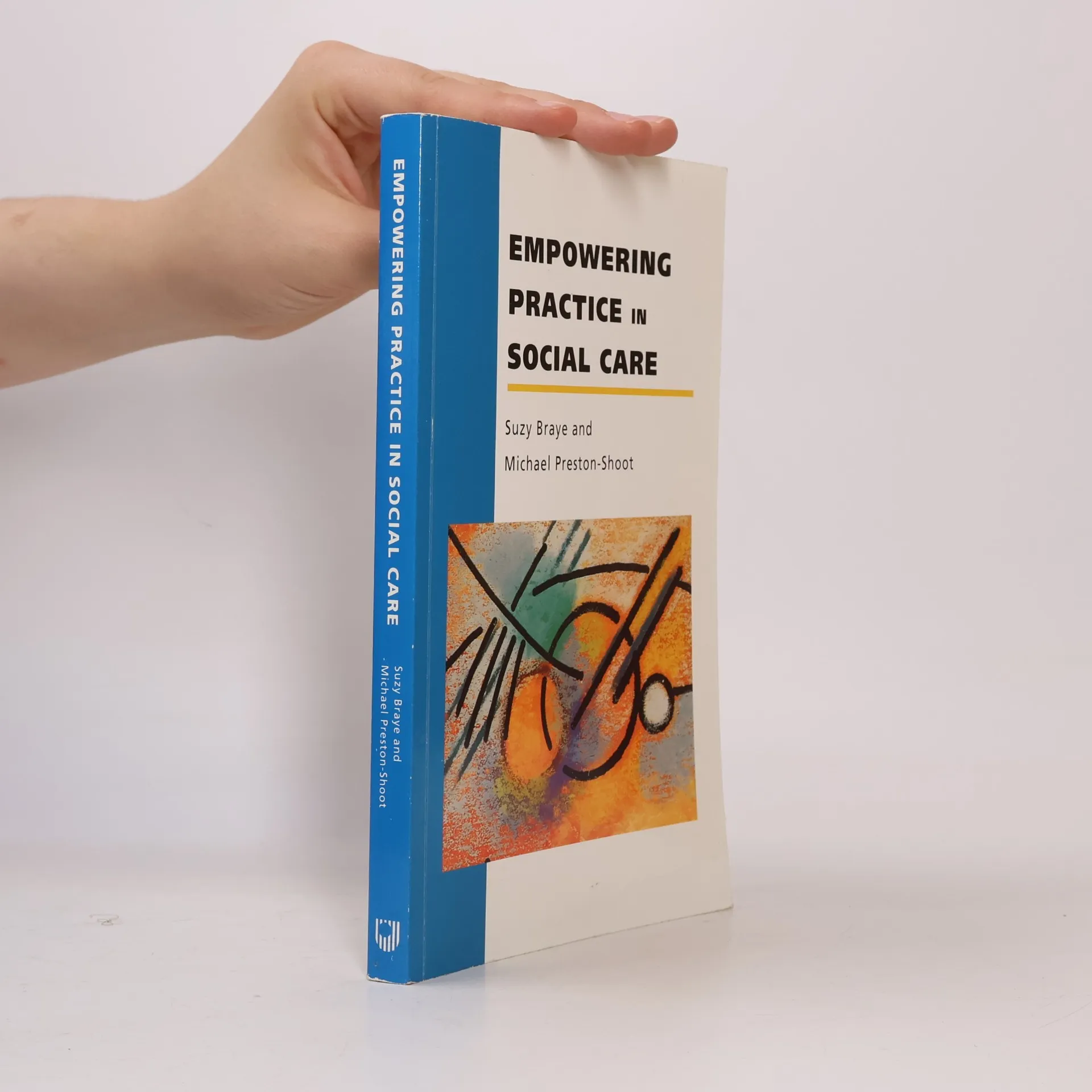


Empowering Practice in Social Care
Více o knize
In answer to popular demand from students and practitioners alike, Braye and Preston-Shoot have produced a guide to understanding the complex area of community care. What are the core components of the Government's community care policy? What do terms like partnership, anti-discriminatory and anti-oppressive practice mean? This book provides a simple exposition of the concepts and value-base underpinning community care policy and practice. Written in a jargon-free style, it goes beyond the how-to approach of much of the existing social care literature and examines the principles and values on which professionals involved in welfare provision base their work. It addresses issues of power and partnership in professional practice and identifies dilemmas arising from the relationship between Needs, Rights and Resources, between Autonomy, Paternalism and Empowerment. It tackles the choices and uncertainties faced by those making decisions about service provision, and offers survival strategies to professionals under stress.
Nákup knihy
Empowering Practice in Social Care, Michael Preston-Shoot, Suzy Braye
- Jazyk

- Rok vydání
- 1995
- Vazba
- (měkká),
- Stav knihy
- Dobrá
- Cena
- 99 Kč
Doručení
Platební metody
Nikdo zatím neohodnotil.
- Titul
- Empowering Practice in Social Care
- Jazyk
- anglicky
- Autoři
- Michael Preston-Shoot, Suzy Braye
- Vydavatel
- The Open University
- Rok vydání
- 1995
- Vazba
- měkká
- Počet stran
- 216
- ISBN10
- 0335192459
- ISBN13
- 9780335192458
- Série
- Kategorie
- Štítky
- Velká Británie, Sociální práce
- Anotace
- In answer to popular demand from students and practitioners alike, Braye and Preston-Shoot have produced a guide to understanding the complex area of community care. What are the core components of the Government's community care policy? What do terms like partnership, anti-discriminatory and anti-oppressive practice mean? This book provides a simple exposition of the concepts and value-base underpinning community care policy and practice. Written in a jargon-free style, it goes beyond the how-to approach of much of the existing social care literature and examines the principles and values on which professionals involved in welfare provision base their work. It addresses issues of power and partnership in professional practice and identifies dilemmas arising from the relationship between Needs, Rights and Resources, between Autonomy, Paternalism and Empowerment. It tackles the choices and uncertainties faced by those making decisions about service provision, and offers survival strategies to professionals under stress.