


Více o knize
There is significant philosophical and scientific interest in emotional feelings, yet many that people struggle to express daily are absent from standard emotion lists. These include feelings of unreality, heightened existence, estrangement, and belonging, among others. Such feelings may be termed 'existential' as they reflect a fluctuating sense of being part of the world. Despite their significance and the severe impact disturbances can have on psychiatric health, existential feelings have not been systematically examined until now. This work offers the first philosophical exploration of the nature, role, and variety of existential feelings in both psychiatric illness and everyday life. The author posits that existential feelings form a unique group characterized by three traits: they are bodily sensations, they shape our relationship with the world, and they influence our sense of reality. The text elucidates how bodily feelings can simultaneously represent reality and belonging, while also investigating how altered feelings manifest in psychiatric conditions such as depression, delusions, depersonalization, and schizophrenia. Additionally, it considers the influence of existential feelings on religious experiences and philosophical discourse. Written in an accessible style, this work is valuable for philosophers, clinicians, students, and researchers across various fields.
Nákup knihy
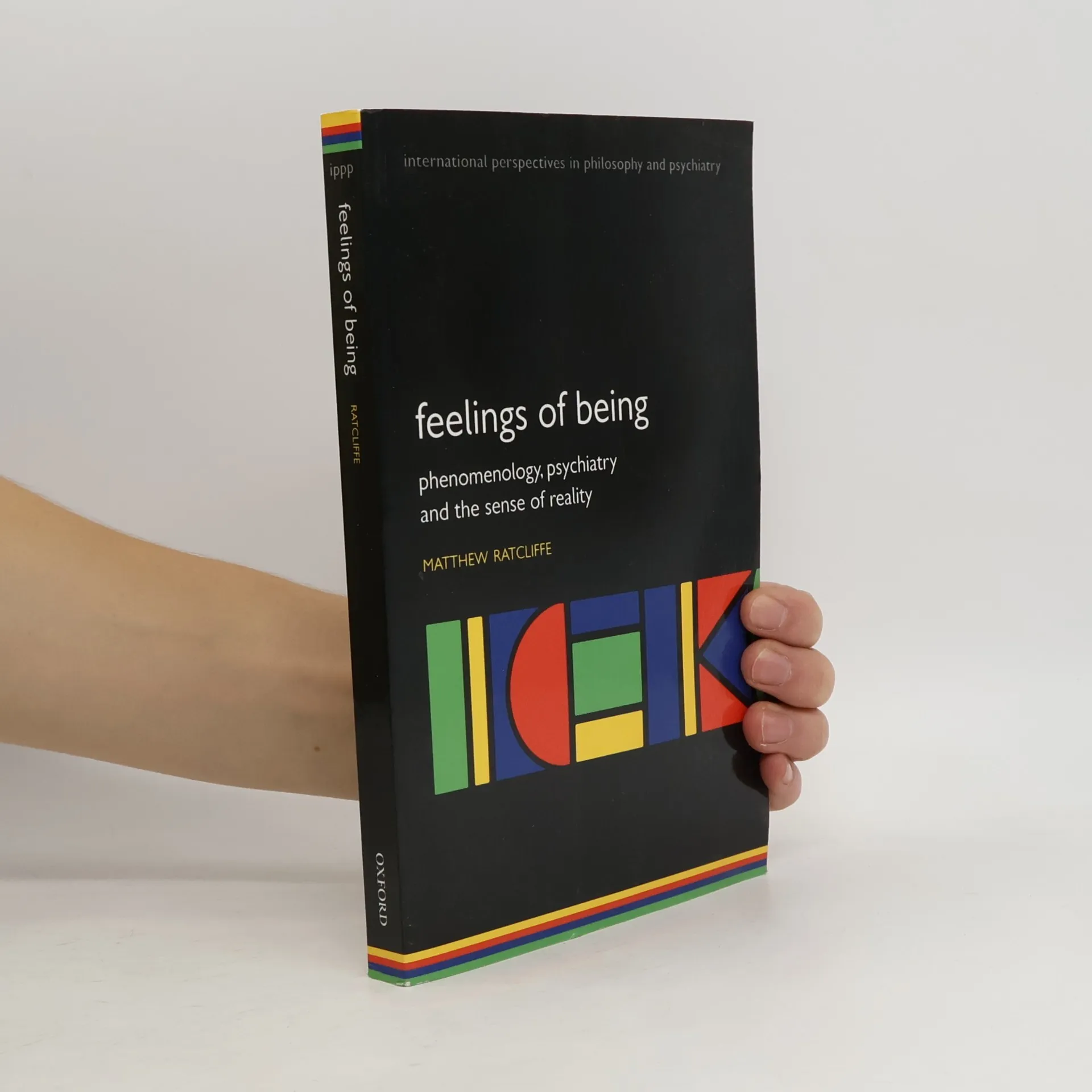
International Perspectives in Philosophy and Psychiatry: Feelings of Being, Matthew Ratcliffe
- Jazyk

- Rok vydání
- 2008
- Vazba
- (měkká),
- Stav knihy
- Dobrá
- Cena
- 999 Kč
Nikdo zatím neohodnotil.
- Titul
- International Perspectives in Philosophy and Psychiatry: Feelings of Being
- Podtitul
- Phenomenology, Psychiatry and the Sense of Reality
- Jazyk
- anglicky
- Autoři
- Matthew Ratcliffe
- Vydavatel
- Oxford University Press
- Rok vydání
- 2008
- Vazba
- měkká
- Počet stran
- 309
- ISBN10
- 0199206465
- ISBN13
- 9780199206469
- Série
- Štítky
- Psychologická tématika, Příručky a návody, Filosofická tématika, Lékařská tématika, Emoce, Psychiatrie, Duševní onemocnění, Existencialismus, Fenomenologie
- Anotace
- There is significant philosophical and scientific interest in emotional feelings, yet many that people struggle to express daily are absent from standard emotion lists. These include feelings of unreality, heightened existence, estrangement, and belonging, among others. Such feelings may be termed 'existential' as they reflect a fluctuating sense of being part of the world. Despite their significance and the severe impact disturbances can have on psychiatric health, existential feelings have not been systematically examined until now. This work offers the first philosophical exploration of the nature, role, and variety of existential feelings in both psychiatric illness and everyday life. The author posits that existential feelings form a unique group characterized by three traits: they are bodily sensations, they shape our relationship with the world, and they influence our sense of reality. The text elucidates how bodily feelings can simultaneously represent reality and belonging, while also investigating how altered feelings manifest in psychiatric conditions such as depression, delusions, depersonalization, and schizophrenia. Additionally, it considers the influence of existential feelings on religious experiences and philosophical discourse. Written in an accessible style, this work is valuable for philosophers, clinicians, students, and researchers across various fields.