

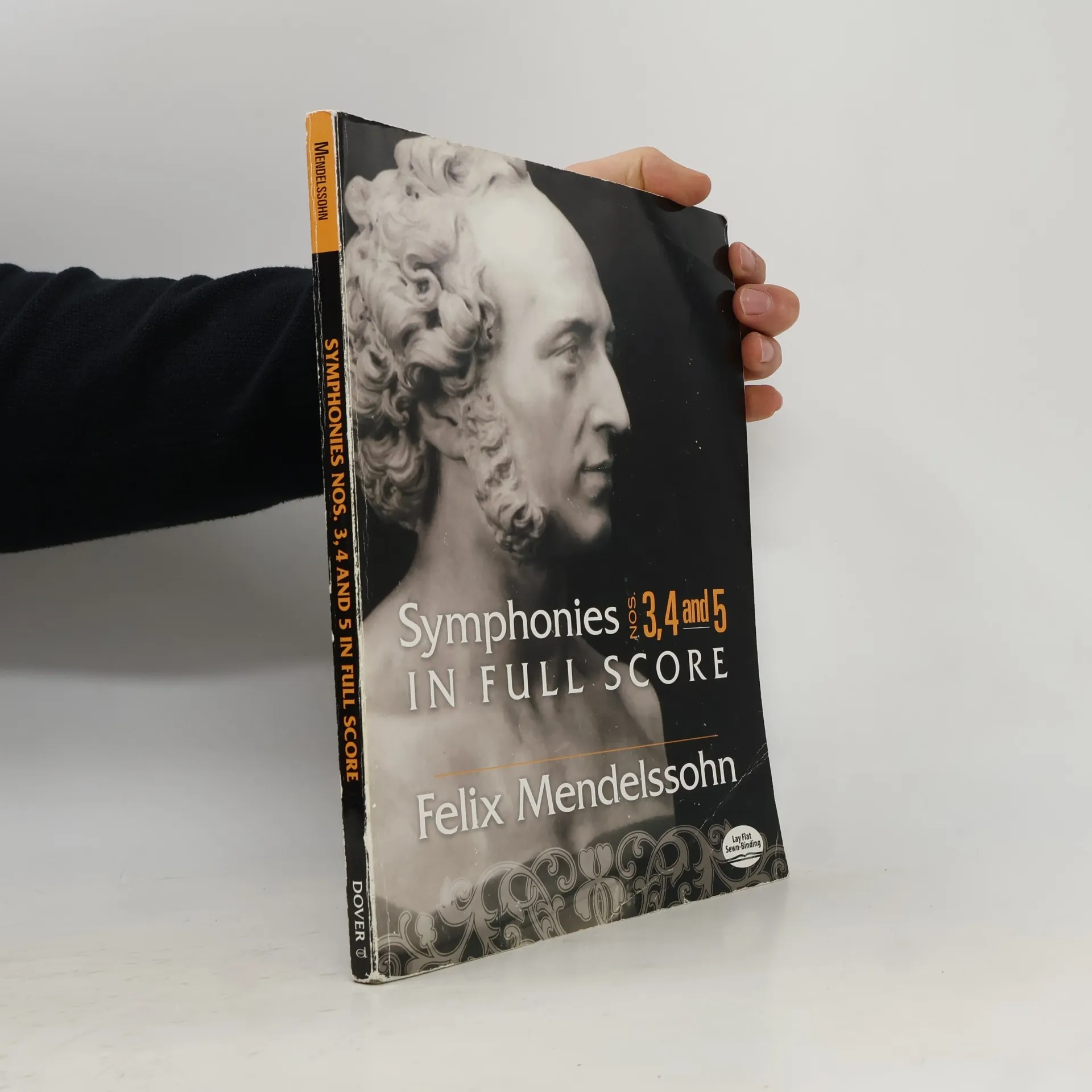
Symphonies Nos. 3, 4 and 5 in Full Score
Více o knize
Mendelssohn's three greatest symphonies — among the most performed and best-loved in the orchestral repertoire — are presented here in one handsome, authoritative volume. This modestly priced compilation is essential for music students, conductors, and other music lovers.Known as the "Scottish" Symphony, Symphony No. 3 in A Minor, Op. 56, was inspired by a trip to the highlands and dedicated to Queen Victoria. Its lively second movement is derived from Scottish folk music. Also inspired by the composer's travels, Symphony No. 4 in A Major, Op. 90, is commonly known as the "Italian" Symphony and evokes the sunny peninsula's color and atmosphere. Symphony No. 5 in D Major, Op. 107, called the "Reformation" Symphony, was written in 1832 to commemorate the 300th anniversary of Martin Luther's Augsburg Confession, the momentous document that formed the cornerstone of the Protestant Reformation. All three works appear here in definitive Breitkopf and Härtel editions.
Nákup knihy
Symphonies Nos. 3, 4 and 5 in Full Score, Felix Mendelssohn-Bartholdy
- Jazyk

- Rok vydání
- 2007
- Vazba
- (měkká)
Doručení
Platební metody
Nikdo zatím neohodnotil.
- Titul
- Symphonies Nos. 3, 4 and 5 in Full Score
- Jazyk
- anglicky
- Vydavatel
- Dover Publications Inc.
- Rok vydání
- 2007
- Vazba
- měkká
- Počet stran
- 240
- ISBN10
- 0486464156
- ISBN13
- 9780486464152
- Série
- Kategorie
- Štítky
- Hudební tématika, Hudební nauka, Muzikály, Orchestr
- Anotace
- Mendelssohn's three greatest symphonies — among the most performed and best-loved in the orchestral repertoire — are presented here in one handsome, authoritative volume. This modestly priced compilation is essential for music students, conductors, and other music lovers.Known as the "Scottish" Symphony, Symphony No. 3 in A Minor, Op. 56, was inspired by a trip to the highlands and dedicated to Queen Victoria. Its lively second movement is derived from Scottish folk music. Also inspired by the composer's travels, Symphony No. 4 in A Major, Op. 90, is commonly known as the "Italian" Symphony and evokes the sunny peninsula's color and atmosphere. Symphony No. 5 in D Major, Op. 107, called the "Reformation" Symphony, was written in 1832 to commemorate the 300th anniversary of Martin Luther's Augsburg Confession, the momentous document that formed the cornerstone of the Protestant Reformation. All three works appear here in definitive Breitkopf and Härtel editions.