


Více o knize
During the 1990s, Emerging Europe and Central Asia (ECA) adopted a model of rapid financial development that prioritized bank credit expansion, often funded by foreign capital. While this approach improved financial inclusion for firms and households, it also resulted in lower efficiency and heightened financial vulnerability. Following crises in the late 1990s and after 2008, ECA's banking systems are under significant stress, leading to diminished trust in banks and reduced job creation in credit-dependent firms. The region's shallow and illiquid capital markets provide little support, while stagnating income growth, particularly among middle- to lower-income earners, has fostered dissatisfaction with low productivity and limited opportunities. This environment necessitates a reevaluation of financial policies. A robust financial sector could enhance structural adjustments in ECA's eastern, oil-dependent economies and promote innovation in the west. The focus must extend beyond merely increasing access to credit; integrated financial systems are essential for prudent financial inclusion, as the region significantly lags in utilizing saving products. Achieving a balance among stability, efficiency, inclusion, and overall depth is vital for sustained inclusive growth. Redesigning financial policy requires addressing often-overlooked trade-offs, as excessive credit and imprudent inclusion have led to banking crises, while overl
Nákup knihy
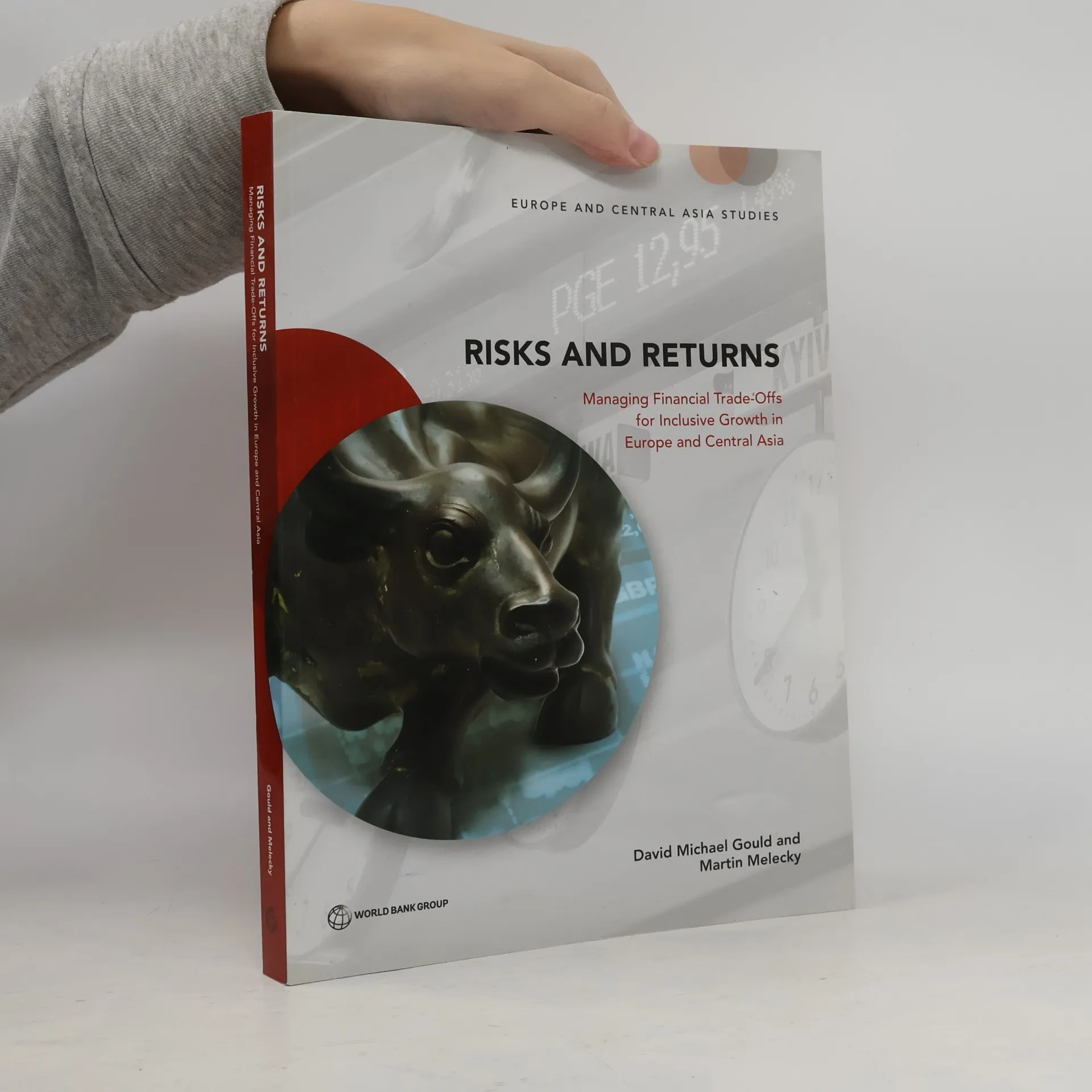
Risks and Returns, David Michael Gould, Martin Melecký
- Jazyk

- Rok vydání
- 2017
- Vazba
- (měkká),
- Stav knihy
- Dobrá
- Cena
- 649 Kč
Doručení
Platební metody
Nikdo zatím neohodnotil.
- Titul
- Risks and Returns
- Podtitul
- Managing Financial Trade-Offs for Inclusive Growth in Europe and Central Asia
- Jazyk
- anglicky
- Vydavatel
- World Bank Publications
- Rok vydání
- 2017
- Vazba
- měkká
- Počet stran
- 292
- ISBN10
- 1464809674
- ISBN13
- 9781464809675
- Série
- Štítky
- Byznys, Evropa, Finance, Hospodářské dějiny, Bankovnictví, Pojištění, Banky, Střední Asie
- Anotace
- During the 1990s, Emerging Europe and Central Asia (ECA) adopted a model of rapid financial development that prioritized bank credit expansion, often funded by foreign capital. While this approach improved financial inclusion for firms and households, it also resulted in lower efficiency and heightened financial vulnerability. Following crises in the late 1990s and after 2008, ECA's banking systems are under significant stress, leading to diminished trust in banks and reduced job creation in credit-dependent firms. The region's shallow and illiquid capital markets provide little support, while stagnating income growth, particularly among middle- to lower-income earners, has fostered dissatisfaction with low productivity and limited opportunities. This environment necessitates a reevaluation of financial policies. A robust financial sector could enhance structural adjustments in ECA's eastern, oil-dependent economies and promote innovation in the west. The focus must extend beyond merely increasing access to credit; integrated financial systems are essential for prudent financial inclusion, as the region significantly lags in utilizing saving products. Achieving a balance among stability, efficiency, inclusion, and overall depth is vital for sustained inclusive growth. Redesigning financial policy requires addressing often-overlooked trade-offs, as excessive credit and imprudent inclusion have led to banking crises, while overl