

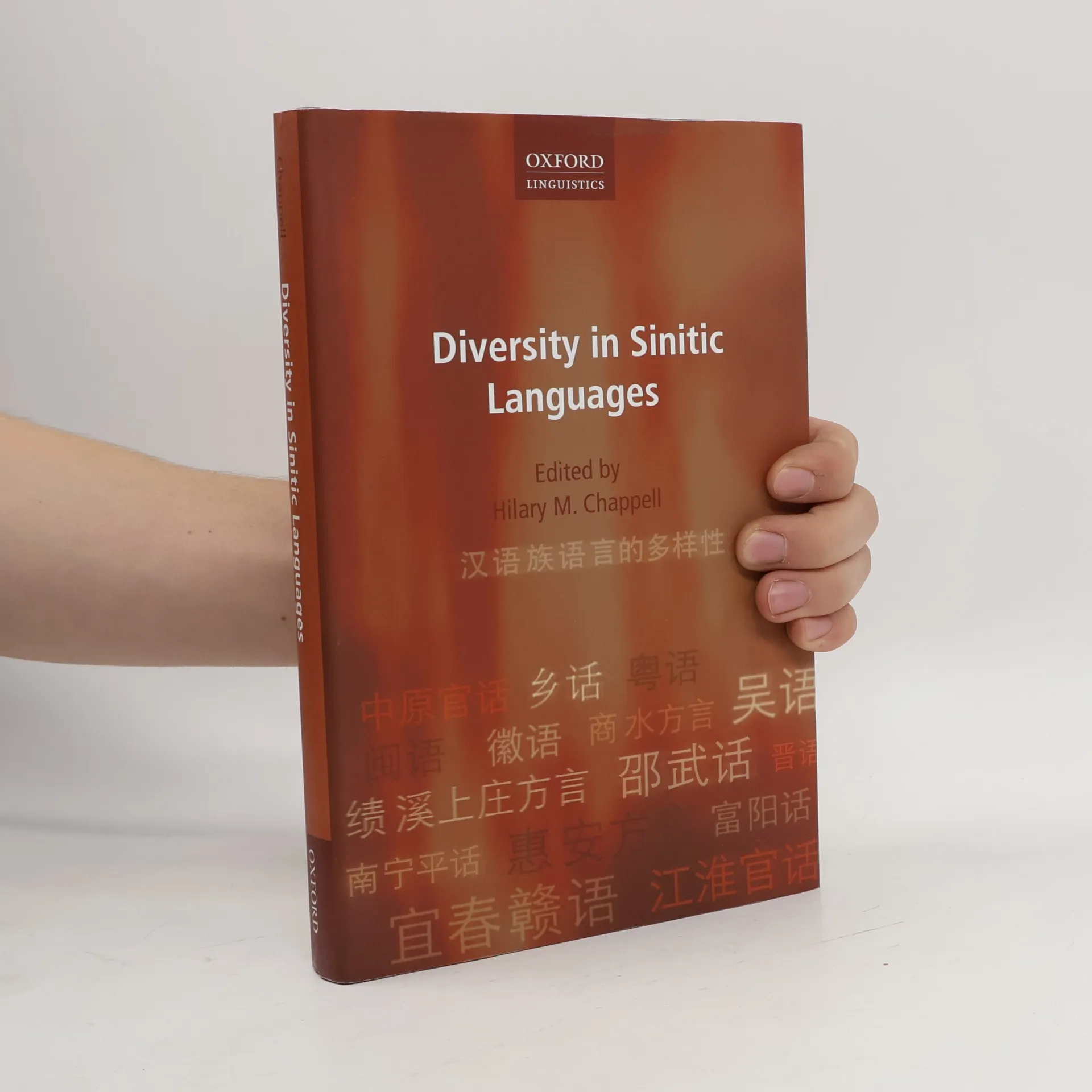
Diversity in Sinitic Languages
Autoři
Více o knize
This book presents new research into the great structural diversity found in Sinitic languages. While many studies focus principally on Standard Mandarin, this work draws on extensive empirical data from lesser-known languages, and seeks to dispel many recurrent linguistic myths about the Sinitic language family. Part I presents findings that show the important interplay of research into diachronic linguistics and typology in China, beginning with a discussion of how to tackle the issue of linguistic diversity in Sinitic languages. Chapters in Part II examine the Sinitic languages from a crosslinguistic perspective with pan-Sinitic explorations of demonstrative paradigms; bare classifier phrases in relation to the coding of definiteness; and of the diachronic development of two main structures for comparatives of inequality with respect to issues in language contact. Part III is devoted to individual studies of linguistic micro-areas in China: Pinghua and the Guangxi Autonomous Region
Nákup knihy
Diversity in Sinitic Languages, Hilary M. Chappell
- Jazyk

- Rok vydání
- 2015
- Vazba
- (pevná)
Doručení
Platební metody
Nikdo zatím neohodnotil.
- Titul
- Diversity in Sinitic Languages
- Jazyk
- anglicky
- Autoři
- Hilary M. Chappell
- Vydavatel
- Oxford University Press
- Rok vydání
- 2015
- Vazba
- pevná
- Počet stran
- 334
- ISBN10
- 0198723792
- ISBN13
- 9780198723790
- Série
- Kategorie
- Štítky
- Jazykové učebnice, Odborná literatura, Lingvistika, Čína, Gramatika, mluvnice, Cizí jazyky, Humanitní vědy, Asijská literatura, Čínština, Nářečí, dialekty, Syntax, skladba, slovosled, Sinologie
- Anotace
- This book presents new research into the great structural diversity found in Sinitic languages. While many studies focus principally on Standard Mandarin, this work draws on extensive empirical data from lesser-known languages, and seeks to dispel many recurrent linguistic myths about the Sinitic language family. Part I presents findings that show the important interplay of research into diachronic linguistics and typology in China, beginning with a discussion of how to tackle the issue of linguistic diversity in Sinitic languages. Chapters in Part II examine the Sinitic languages from a crosslinguistic perspective with pan-Sinitic explorations of demonstrative paradigms; bare classifier phrases in relation to the coding of definiteness; and of the diachronic development of two main structures for comparatives of inequality with respect to issues in language contact. Part III is devoted to individual studies of linguistic micro-areas in China: Pinghua and the Guangxi Autonomous Region