

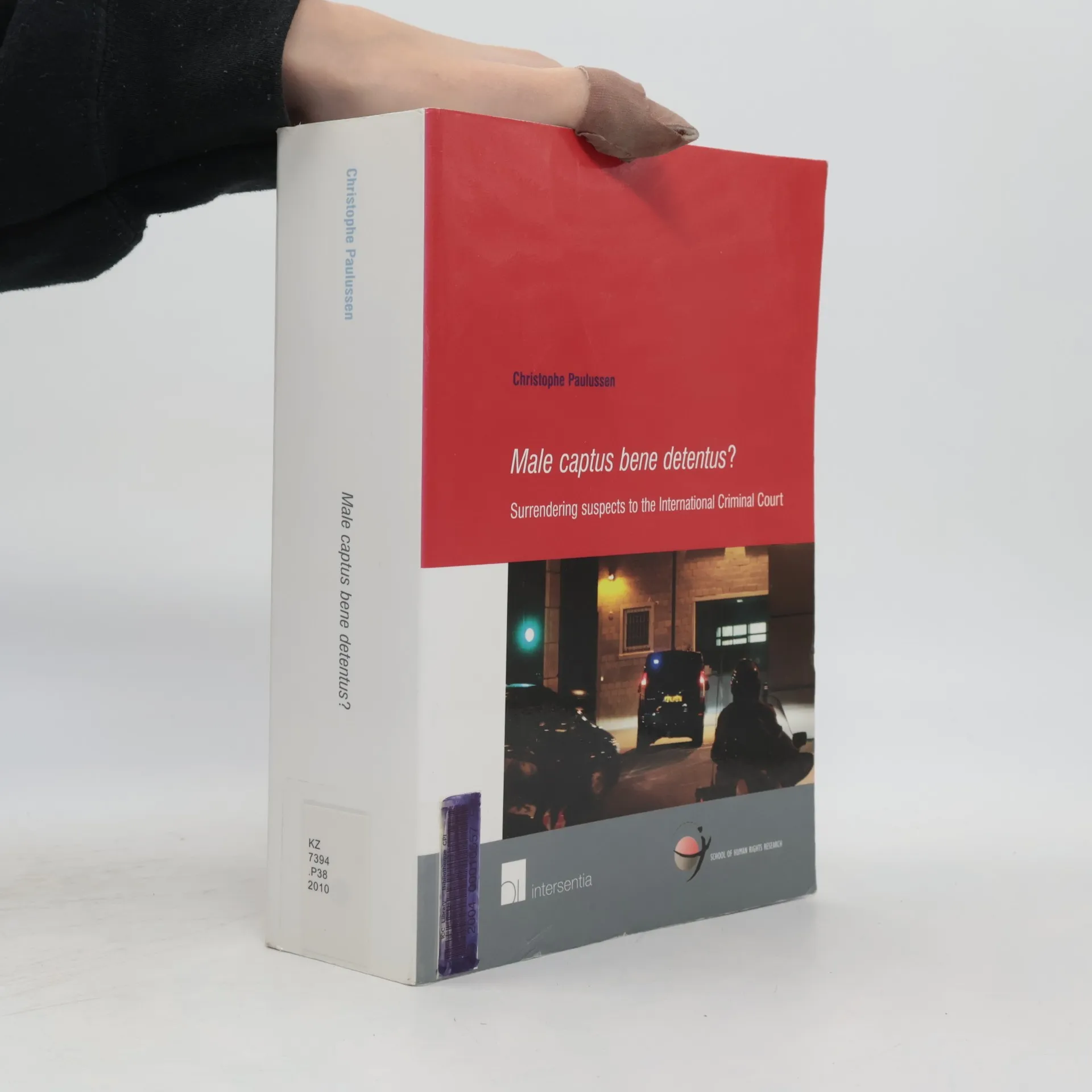



School of Human Rights Research - 41: Male captus bene detentus?
Surrendering Suspects to the International Criminal Court
Autoři
Více o knize
The abduction of Adolf Eichmann in Argentina in 1960 and the kidnapping of suspected terrorist Abu Omar in Italy in 2003 illustrate the ongoing use of irregular means to apprehend suspects when strong interests are at stake. This raises questions about the International Criminal Court's (ICC) stance on suspects claiming irregularity in their transfer to its jurisdiction (male captus). The ICC, a key institution in international criminal justice, faces a dilemma: should it prioritize effectiveness in achieving prosecutions and convictions despite irregularities, or uphold values like fairness and human rights, potentially refusing jurisdiction in cases of male captus? This study examines how the ICC navigates these dilemmas and assesses its approach. The author employs two evaluative frameworks: an external one to compare the ICC's position on male captus with that of other courts, and an internal one to evaluate its stance in relation to its own legal principles. Beyond addressing this central question, the work merges two compelling topics—the ICC and the male captus bene detentus maxim—while contributing to discussions on how judges can manage alleged irregularities in the pre-trial phase and ensure proceedings that are both effective and fair.
Nákup knihy
School of Human Rights Research - 41: Male captus bene detentus?, Christophe Paulussen
- Jazyk

- Rok vydání
- 2010
- Vazba
- (měkká),
- Stav knihy
- Poškozená
- Cena
- 2 242 Kč
Doručení
Platební metody
Nikdo zatím neohodnotil.
- Titul
- School of Human Rights Research - 41: Male captus bene detentus?
- Podtitul
- Surrendering Suspects to the International Criminal Court
- Jazyk
- anglicky
- Autoři
- Christophe Paulussen
- Vydavatel
- Intersentia
- Rok vydání
- 2010
- Vazba
- měkká
- Počet stran
- 1195
- ISBN10
- 9400001002
- ISBN13
- 9789400001008
- Série
- Štítky
- Právní tématika, Trestní právo
- Anotace
- The abduction of Adolf Eichmann in Argentina in 1960 and the kidnapping of suspected terrorist Abu Omar in Italy in 2003 illustrate the ongoing use of irregular means to apprehend suspects when strong interests are at stake. This raises questions about the International Criminal Court's (ICC) stance on suspects claiming irregularity in their transfer to its jurisdiction (male captus). The ICC, a key institution in international criminal justice, faces a dilemma: should it prioritize effectiveness in achieving prosecutions and convictions despite irregularities, or uphold values like fairness and human rights, potentially refusing jurisdiction in cases of male captus? This study examines how the ICC navigates these dilemmas and assesses its approach. The author employs two evaluative frameworks: an external one to compare the ICC's position on male captus with that of other courts, and an internal one to evaluate its stance in relation to its own legal principles. Beyond addressing this central question, the work merges two compelling topics—the ICC and the male captus bene detentus maxim—while contributing to discussions on how judges can manage alleged irregularities in the pre-trial phase and ensure proceedings that are both effective and fair.