

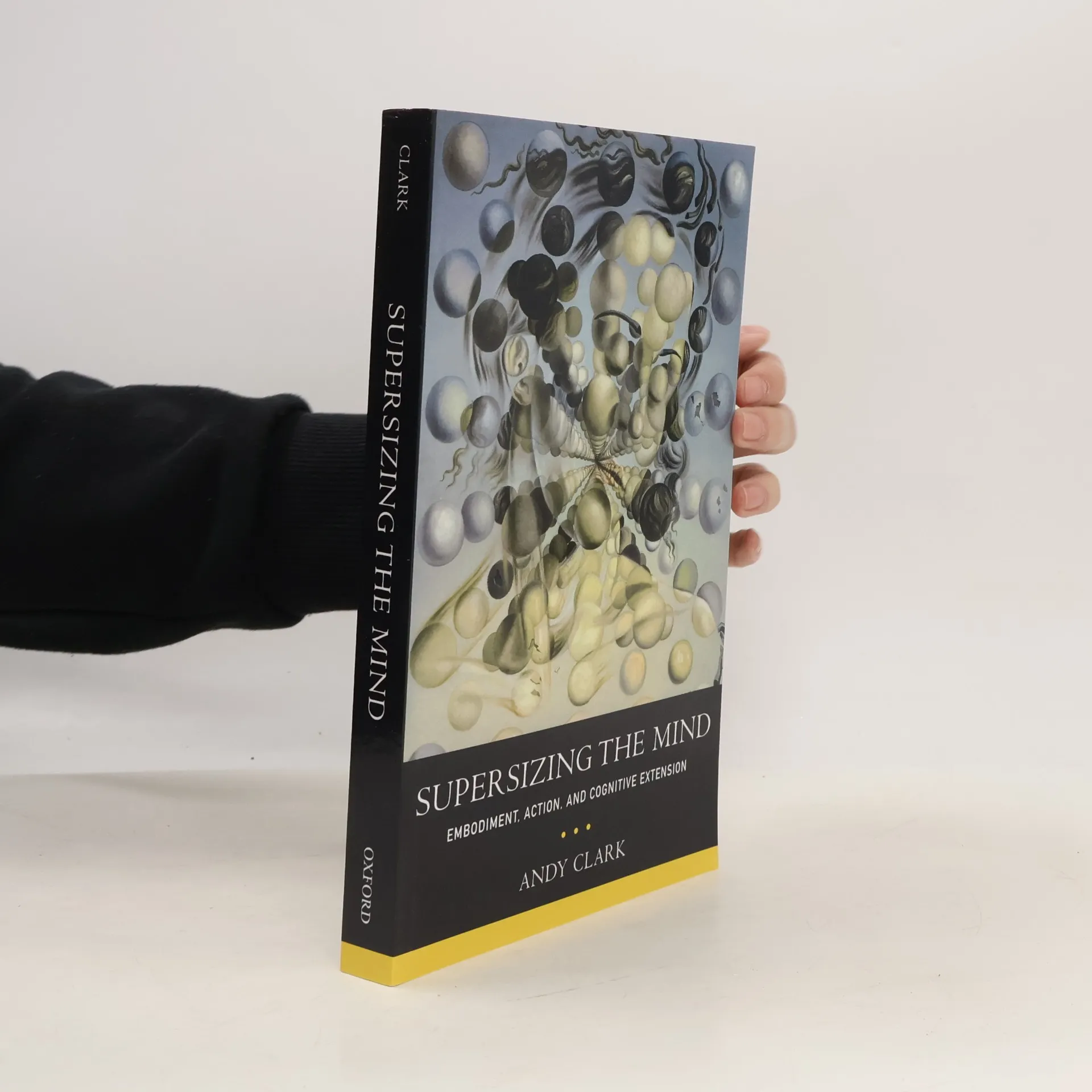



Philosophy of Mind Series: Supersizing the Mind
Embodiment, Action, and Cognitive Extension
Více o knize
When historian Charles Weiner discovered pages of Richard Feynman's notes, he viewed them as a record of Feynman's work. However, Feynman believed the notes represented the work itself. In this exploration, Andy Clark argues that thinking occurs not just in our heads but through complex feedback loops that intertwine brain, body, and environment. Feynman's pen and paper exemplify these loops, acting as physical tools that shape thought and expand the mind's boundaries. Drawing from diverse fields such as psychology, linguistics, neuroscience, and artificial intelligence, Clark presents a compelling case for a conception of mind that transcends traditional "brain-bound" notions. This perspective suggests that our minds can incorporate elements of our social and physical surroundings, implying that the environments we create can influence our cognitive abilities. The book has been praised for its original ideas in the philosophy of mind, and it is deemed essential for cognitive science theorists. While some may remain skeptical, it is clear that this work will influence future debates in the field. Clark's writing is engaging, filled with insightful concepts and humor, making it a rewarding read.
Nákup knihy
Philosophy of Mind Series: Supersizing the Mind, David John Chalmers, Andy Clark
- Jazyk

- Rok vydání
- 2010
- Vazba
- (měkká)
Doručení
Platební metody
Nikdo zatím neohodnotil.
- Titul
- Philosophy of Mind Series: Supersizing the Mind
- Podtitul
- Embodiment, Action, and Cognitive Extension
- Jazyk
- anglicky
- Autoři
- David John Chalmers, Andy Clark
- Vydavatel
- Oxford University Press
- Rok vydání
- 2010
- Vazba
- měkká
- Počet stran
- 318
- ISBN10
- 0199773688
- ISBN13
- 9780199773688
- Série
- Anotace
- When historian Charles Weiner discovered pages of Richard Feynman's notes, he viewed them as a record of Feynman's work. However, Feynman believed the notes represented the work itself. In this exploration, Andy Clark argues that thinking occurs not just in our heads but through complex feedback loops that intertwine brain, body, and environment. Feynman's pen and paper exemplify these loops, acting as physical tools that shape thought and expand the mind's boundaries. Drawing from diverse fields such as psychology, linguistics, neuroscience, and artificial intelligence, Clark presents a compelling case for a conception of mind that transcends traditional "brain-bound" notions. This perspective suggests that our minds can incorporate elements of our social and physical surroundings, implying that the environments we create can influence our cognitive abilities. The book has been praised for its original ideas in the philosophy of mind, and it is deemed essential for cognitive science theorists. While some may remain skeptical, it is clear that this work will influence future debates in the field. Clark's writing is engaging, filled with insightful concepts and humor, making it a rewarding read.