

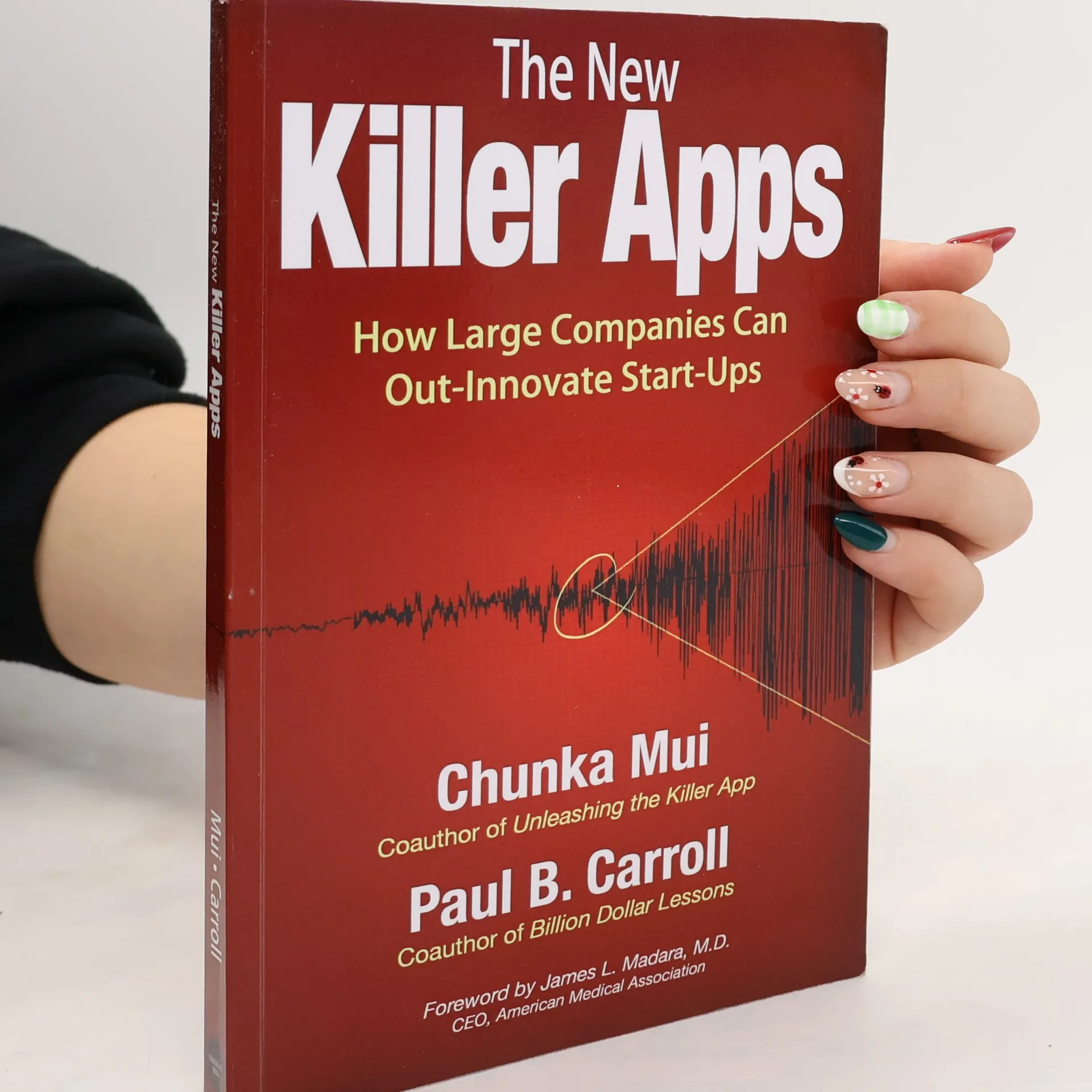


The New Killer Apps
How Large Companies Can Out-Innovate Start-Ups
Více o knize
This insightful guide serves as an anthem for large companies aiming to innovate and compete with agile startups. It offers a well-rounded perspective that will resonate with investors, educators, students, journalists, and historians interested in the tech industry's future. The authors challenge the belief that startups inherently outpace established businesses in innovation, arguing instead that large companies can also thrive. Through sharp analysis and engaging case studies, they illustrate that while small and nimble may beat big and slow, big and agile can outperform all. The book presents a roadmap for large corporations to Think Big, Start Small, and Learn Fast, enabling them to leverage their inherent strengths and overcome obstacles. With over $36 trillion of stock-market value at stake due to technological advancements, companies must either adapt and seize future markets or risk obsolescence. The structured approach includes phases that guide organizations on how to innovate effectively. From embracing a doomsday scenario to fostering collaboration and building a portfolio of options, the authors provide actionable insights. Advanced praise highlights its significance for corporate boards and management, emphasizing the importance of adapting to technological change and leveraging existing assets to remain competitive.
Nákup knihy
The New Killer Apps, Paul Carroll, Chunka Mui, James L. Madara
- Jazyk

- Rok vydání
- 2013
- Vazba
- (měkká),
- Stav knihy
- Dobrá
- Cena
- 149 Kč
Doručení
Platební metody
Nikdo zatím neohodnotil.
- Titul
- The New Killer Apps
- Podtitul
- How Large Companies Can Out-Innovate Start-Ups
- Jazyk
- anglicky
- Autoři
- Paul Carroll, Chunka Mui, James L. Madara
- Vydavatel
- Devils Advocate Group
- Rok vydání
- 2013
- Vazba
- měkká
- Počet stran
- 222
- ISBN10
- 0989242013
- ISBN13
- 9780989242011
- Série
- Kategorie
- Štítky
- Vůdcovství
- Anotace
- This insightful guide serves as an anthem for large companies aiming to innovate and compete with agile startups. It offers a well-rounded perspective that will resonate with investors, educators, students, journalists, and historians interested in the tech industry's future. The authors challenge the belief that startups inherently outpace established businesses in innovation, arguing instead that large companies can also thrive. Through sharp analysis and engaging case studies, they illustrate that while small and nimble may beat big and slow, big and agile can outperform all. The book presents a roadmap for large corporations to Think Big, Start Small, and Learn Fast, enabling them to leverage their inherent strengths and overcome obstacles. With over $36 trillion of stock-market value at stake due to technological advancements, companies must either adapt and seize future markets or risk obsolescence. The structured approach includes phases that guide organizations on how to innovate effectively. From embracing a doomsday scenario to fostering collaboration and building a portfolio of options, the authors provide actionable insights. Advanced praise highlights its significance for corporate boards and management, emphasizing the importance of adapting to technological change and leveraging existing assets to remain competitive.