

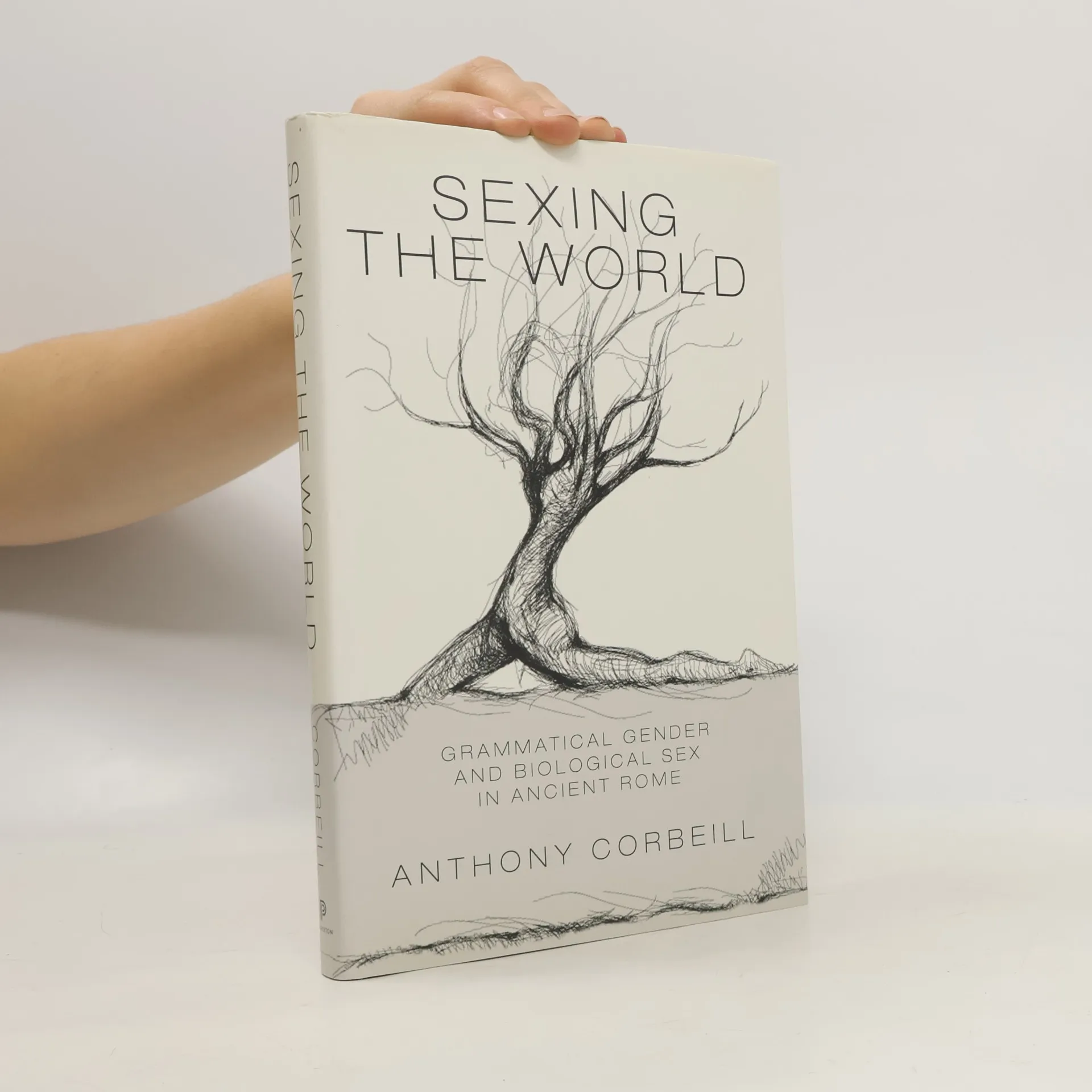


Sexing the World
Grammatical Gender and Biological Sex in Ancient Rome
Autoři
Více o knize
From the moment a child in ancient Rome began to speak Latin, the surrounding world became populated with objects possessing grammatical gender―masculine eyes ( oculi ), feminine trees ( arbores ), neuter bodies ( corpora ). Sexing the World surveys the many ways in which grammatical gender enabled Latin speakers to organize aspects of their society into sexual categories, and how this identification of grammatical gender with biological sex affected Roman perceptions of Latin poetry, divine power, and the human hermaphrodite.Beginning with the ancient grammarians, Anthony Corbeill examines how these scholars used the gender of nouns to identify the sex of the object being signified, regardless of whether that object was animate or inanimate. This informed the Roman poets who, for a time, changed at whim the grammatical gender for words as seemingly lifeless as "dust" ( pulvis ) or "tree bark" ( cortex ). Corbeill then applies the idea of fluid grammatical gender to the basic tenets of Roman religion and state politics. He looks at how the ancients tended to construct Rome's earliest divinities as related male and female pairs, a tendency that waned in later periods. An analogous change characterized the dual-sexed hermaphrodite, whose sacred and political significance declined as the republican government became an autocracy. Throughout, Corbeill shows that the fluid boundaries of sex and gender became increasingly fixed into opposing and exclusive categories.Sexing the World contributes to our understanding of the power of language to shape human perception.
Nákup knihy
Sexing the World, Anthony Corbeill
- Jazyk

- Rok vydání
- 2015
- Vazba
- (pevná)
Doručení
Platební metody
Nikdo zatím neohodnotil.
- Titul
- Sexing the World
- Podtitul
- Grammatical Gender and Biological Sex in Ancient Rome
- Jazyk
- anglicky
- Autoři
- Anthony Corbeill
- Vydavatel
- Princeton University Press
- Rok vydání
- 2015
- Vazba
- pevná
- Počet stran
- 216
- ISBN10
- 0691163227
- ISBN13
- 9780691163222
- Série
- Kategorie
- Štítky
- Příručky a návody, Ženy, USA, Erotika, Evropa, Itálie, Lingvistika, Starověk, antika, Historie Evropy, Psaní, Prehistorie a pravěk, Gramatika, mluvnice, Řím, Západní Evropa, Vtipy & Anekdoty, Gender, Římská říše, Starověký Řím, Latina, Porod, Rétorika, Nejistota, Etymologie, Maskulinita, Latinská literatura, Sugesce
- Anotace
- From the moment a child in ancient Rome began to speak Latin, the surrounding world became populated with objects possessing grammatical gender―masculine eyes ( oculi ), feminine trees ( arbores ), neuter bodies ( corpora ). Sexing the World surveys the many ways in which grammatical gender enabled Latin speakers to organize aspects of their society into sexual categories, and how this identification of grammatical gender with biological sex affected Roman perceptions of Latin poetry, divine power, and the human hermaphrodite.Beginning with the ancient grammarians, Anthony Corbeill examines how these scholars used the gender of nouns to identify the sex of the object being signified, regardless of whether that object was animate or inanimate. This informed the Roman poets who, for a time, changed at whim the grammatical gender for words as seemingly lifeless as "dust" ( pulvis ) or "tree bark" ( cortex ). Corbeill then applies the idea of fluid grammatical gender to the basic tenets of Roman religion and state politics. He looks at how the ancients tended to construct Rome's earliest divinities as related male and female pairs, a tendency that waned in later periods. An analogous change characterized the dual-sexed hermaphrodite, whose sacred and political significance declined as the republican government became an autocracy. Throughout, Corbeill shows that the fluid boundaries of sex and gender became increasingly fixed into opposing and exclusive categories.Sexing the World contributes to our understanding of the power of language to shape human perception.