

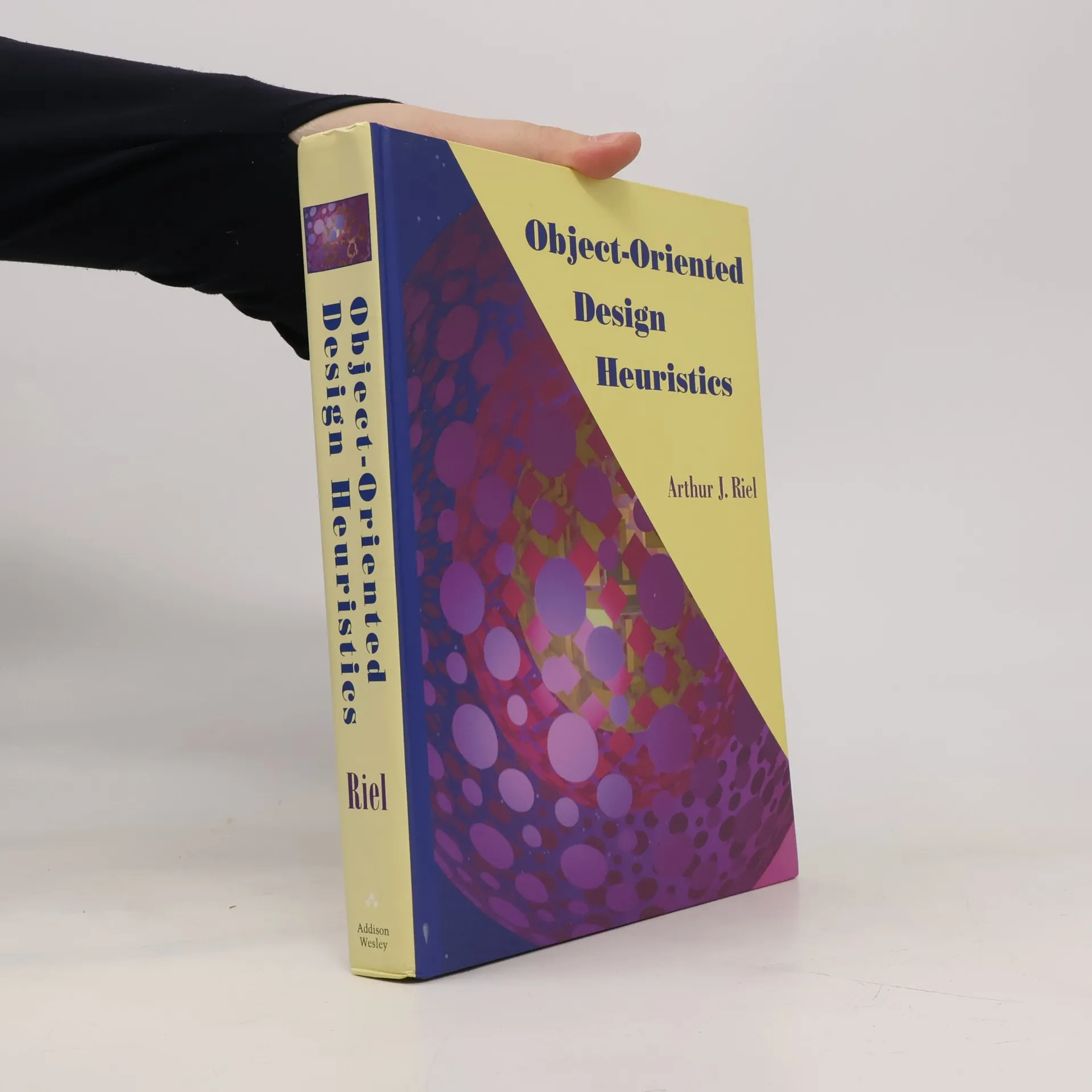


Object-Oriented Design Heuristics
Autoři
Parametry
- 379 stránek
- 14 hodin čtení
Více o knize
Object-Oriented Design Heuristics provides valuable insights for improving object-oriented design with over sixty language-independent guidelines that help assess software design integrity. These heuristics are not rigid rules but serve as flexible warning mechanisms that can be adapted as needed. Drawing from the author's extensive experience in software development, teaching, and design critique across various domains, this tutorial-based approach allows for personalized application of the guidelines. The heuristics address key topics, including classes and objects, their relationships (association, uses, containment, single and multiple inheritance), and physical object-oriented design. Readers will also explore the synergy between design heuristics and design patterns, where heuristics identify design issues while patterns offer potential solutions. This resource is beneficial for programmers at all levels. Newcomers will find a quick path to grasping object-oriented programming concepts, while seasoned developers will gain insightful analysis to enhance their object-oriented practices. With these guidelines, readers are equipped to elevate their software development skills effectively.
Nákup knihy
Object-Oriented Design Heuristics, Arthur J. Riel
- Jazyk

- Rok vydání
- 1996
- Vazba
- (pevná),
- Stav knihy
- Poškozená
- Cena
- 103 Kč
Doručení
Platební metody
Nikdo zatím neohodnotil.
- Titul
- Object-Oriented Design Heuristics
- Jazyk
- anglicky
- Autoři
- Arthur J. Riel
- Vydavatel
- Addison-Wesley Professional
- Rok vydání
- 1996
- Vazba
- pevná
- Počet stran
- 379
- ISBN10
- 020163385X
- ISBN13
- 9780201633856
- Série
- Kategorie
- Štítky
- Architektura, Technologie, Software, Microsoft Word
- Anotace
- Object-Oriented Design Heuristics provides valuable insights for improving object-oriented design with over sixty language-independent guidelines that help assess software design integrity. These heuristics are not rigid rules but serve as flexible warning mechanisms that can be adapted as needed. Drawing from the author's extensive experience in software development, teaching, and design critique across various domains, this tutorial-based approach allows for personalized application of the guidelines. The heuristics address key topics, including classes and objects, their relationships (association, uses, containment, single and multiple inheritance), and physical object-oriented design. Readers will also explore the synergy between design heuristics and design patterns, where heuristics identify design issues while patterns offer potential solutions. This resource is beneficial for programmers at all levels. Newcomers will find a quick path to grasping object-oriented programming concepts, while seasoned developers will gain insightful analysis to enhance their object-oriented practices. With these guidelines, readers are equipped to elevate their software development skills effectively.