

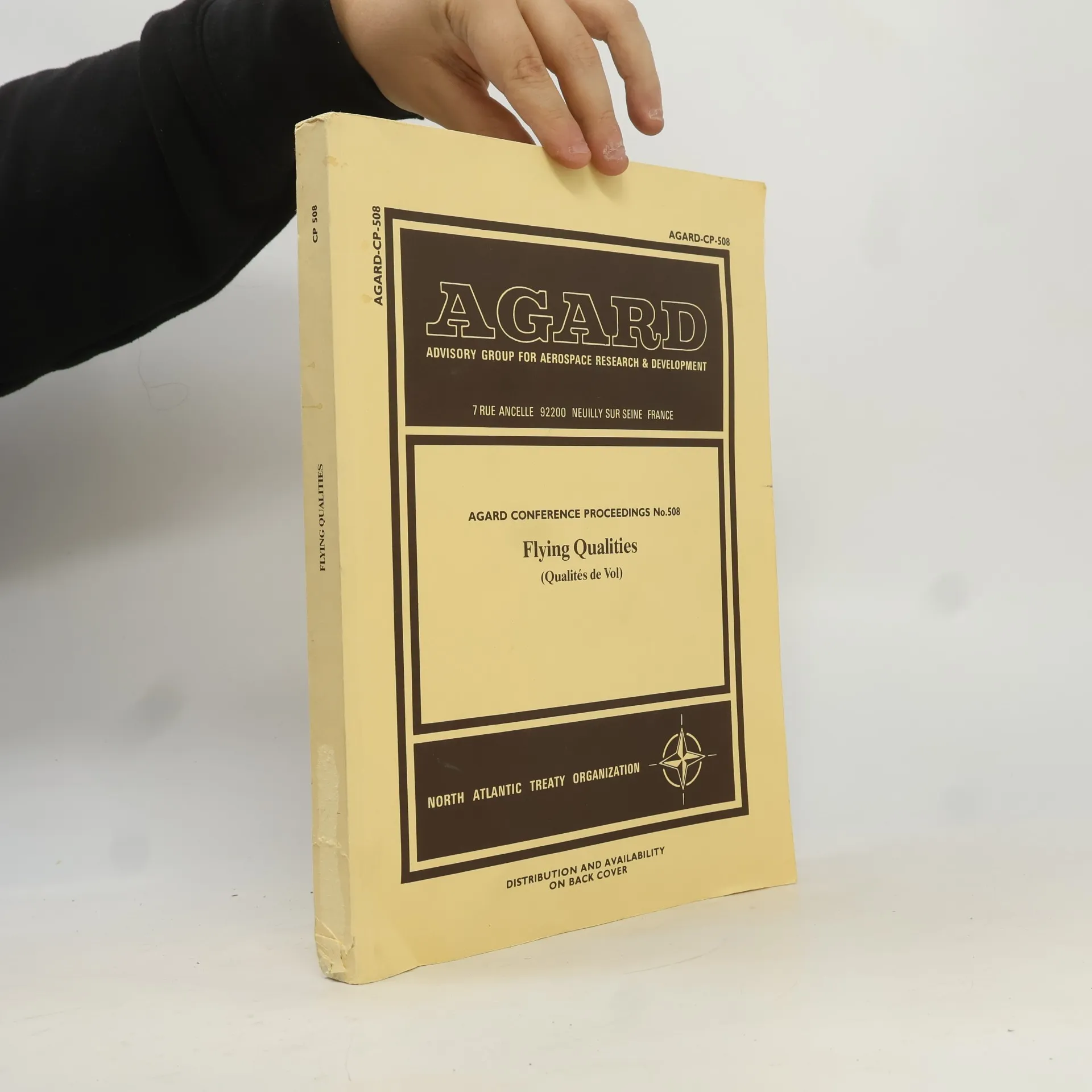

AGARD Conference Proceedings - 508: Flying Qualities
Více o knize
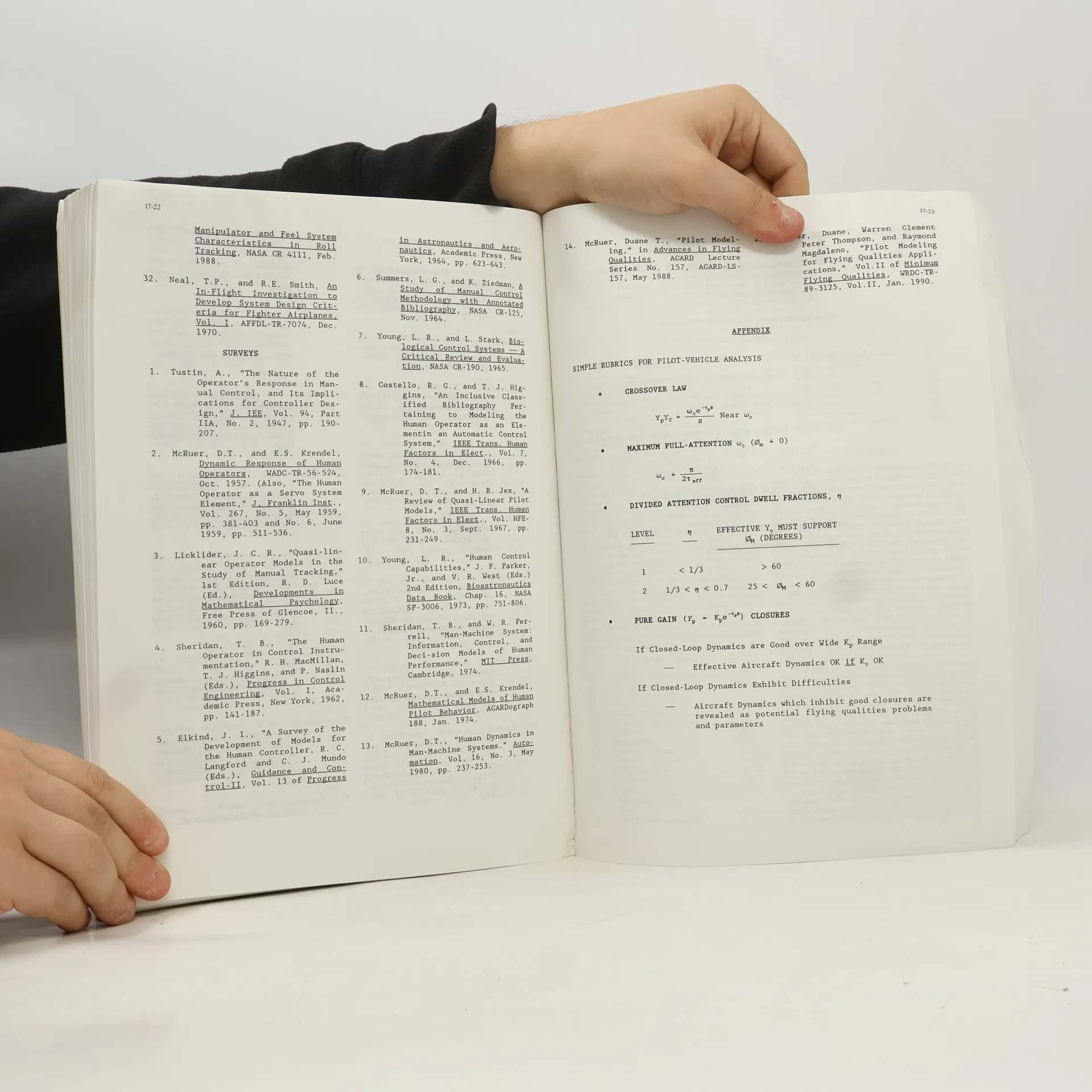
The validity of applying classic flying qualities criteria from stability dominant aircraft to today's control dominant aircraft has been debated for years. The advent of full-time visual scene enhancement through sensor fusion and computer-generated night scenes has further complicated flying qualities concerns. Integrated flight and propulsion control systems, along with direct force controllers, can link all sensors and controllers, enabling a range of controlled motions from single-degree-of-freedom systems to fully coupled six-degrees-of-freedom systems. These advancements have broadened flight envelopes, reduced drag, enhanced maneuverability, and facilitated practical gust alleviation and active flutter suppression, while also allowing for fault-tolerant, damage-adaptive flight controls. However, the evolution of flying qualities criteria has not kept pace with these technological advancements. The Symposium aimed to review current flying qualities issues and report on progress toward their resolution. Key topics included flying qualities experiences with contemporary aircraft, ongoing research, application of specifications, and high incidence flying qualities. The concluding "Round Table Discussion" allowed Session Chairmen to share their perspectives on major issues that need to be addressed in the future.
Nákup knihy
AGARD Conference Proceedings - 508: Flying Qualities, North Atlantic Treaty Organization. Advisory Group for Aerospace Research and Development. Flight Mechanics Panel. Symposium
- Jazyk

- Rok vydání
- 1991
- Vazba
- (měkká),
- Stav knihy
- Poškozená
- Cena
- 116 Kč
Doručení
Platební metody
Nikdo zatím neohodnotil.
- Titul
- AGARD Conference Proceedings - 508: Flying Qualities
- Jazyk
- anglicky
- Vydavatel
- AGARD
- Rok vydání
- 1991
- Vazba
- měkká
- Počet stran
- 390
- ISBN10
- 9283506022
- ISBN13
- 9789283506027
- Série
- Štítky
- Aerodynamika
- Anotace
- The validity of applying classic flying qualities criteria from stability dominant aircraft to today's control dominant aircraft has been debated for years. The advent of full-time visual scene enhancement through sensor fusion and computer-generated night scenes has further complicated flying qualities concerns. Integrated flight and propulsion control systems, along with direct force controllers, can link all sensors and controllers, enabling a range of controlled motions from single-degree-of-freedom systems to fully coupled six-degrees-of-freedom systems. These advancements have broadened flight envelopes, reduced drag, enhanced maneuverability, and facilitated practical gust alleviation and active flutter suppression, while also allowing for fault-tolerant, damage-adaptive flight controls. However, the evolution of flying qualities criteria has not kept pace with these technological advancements. The Symposium aimed to review current flying qualities issues and report on progress toward their resolution. Key topics included flying qualities experiences with contemporary aircraft, ongoing research, application of specifications, and high incidence flying qualities. The concluding "Round Table Discussion" allowed Session Chairmen to share their perspectives on major issues that need to be addressed in the future.