

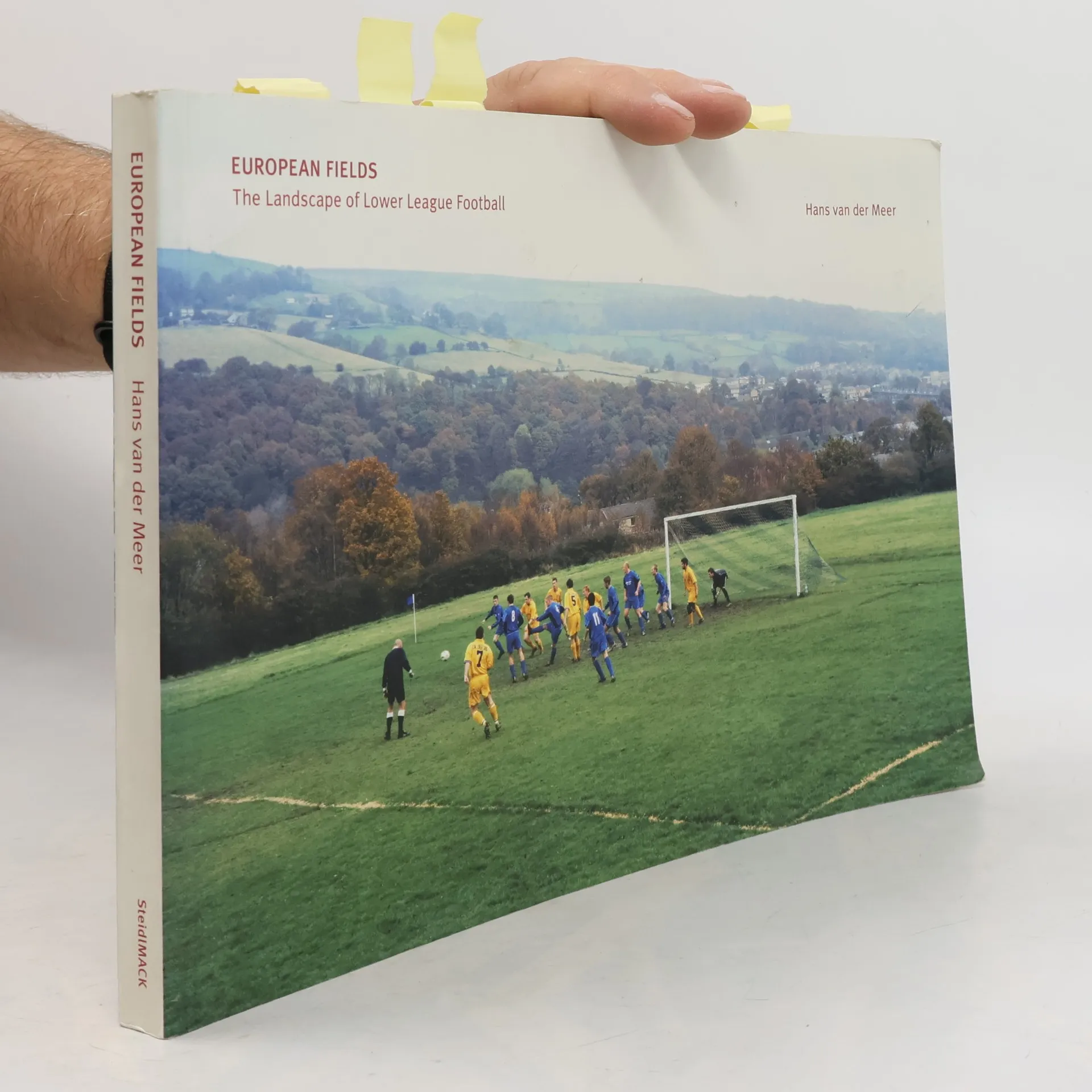
At the beginning of the 1995 soccer season, Hans van der Meer set out to take photographs of the game that dodged the cliched traditions of modern sports photography. In an attempt to record the sport in its original form--a field, two goals and 22 players--he sought matches at the bottom end of the amateur leagues. He avoided tight telescopic details and the hyperbole of action photography, pulled back from the central subject of the pitch, and set the playing field and its unfolding action in the context of local elements. Over the last 10 years, Van der Meer has continued this project across the playing fields of Europe, traveling to every country with a significant history of the game. The Netherlands yielded 1998's Dutch Fields, and the odyssey that brings forth European Fields has since taken him from Bihariain, Romania to Bjarka, Sweden, from Torp, Norway to Als*ars, Hungary, from Bartkowo, Poland to Beire, Portugal, and to urban and suburban Greece, Finland, England, France, Germany, Scotland, Switzerland, Holland, Slovakia, Denmark, Ireland, Wales, Belgium, Spain and Italy. Van der Meer's understated observations of the poetry and absurdity of human behavior on the field use soccer to consider--and provoke a laugh at--the human condition. Also available in a large-format hardcover edition.
Hans van der Meer Knihy
4. duben 1955

Hans Van Der Meer - Time To Change
de varanderende wereld van de Nederlandse koe
- 208 stránek
- 8 hodin čtení
The gap between the consumer and the world of the cow has been growing over the past few decades. Dutch photographer Hans van der Meer takes a closer look at cows and dairy farming in this book, an investigation which addresses topics such as animal welfare, hi-tech food production, and the impact of these on the environment. Not only do his images bring a sharp focus on the complexity of modern farming, juxtaposing both its laudable and repugnant aspects, he also challenges farmers and innovators to think about how and in what way we should continue developing the future of food production. Most importantly, what will the role of the animals be in all this?