


In the tradition of popular science works like Sapiens and Guns, Germs, and Steel, this groundbreaking exploration applies evolutionary science to human psychology, revealing how past challenges have shaped fundamental aspects of our existence. The transition from rainforest to savannah forced our ancestors to shift from individualism to a new form of collectivism, fundamentally altering our minds. This transformation influenced our tendencies toward aggression and peace, leadership and followership, and innovation versus invention. It also fostered a new type of social intelligence and introduced new sources of life satisfaction. The author presents a revolutionary hypothesis, tracing human development through three critical evolutionary inflection points to illustrate how our distant past continues to shape our lives today. From the mundane reasons behind exaggeration to surprising insights about self-deception and the paradox of fame and fortune, the implications are vast and significant. By blending anthropology, biology, history, and psychology with evolutionary science, this work offers a fresh perspective on our species, providing insights into what defines us, what brings us happiness, and how we can leverage this understanding to enhance our lives.
Aiga von Hippel Knihy


"It has been nearly 60 years since the publication of Silent Spring, in which Rachel Carson brought to light evidence of the devastating ecological effects of pesticides. This book, by Frank von Hippel, is a history of these chemicals and our complicated relationship with them. It shows how they've made the modern world possible, while at the same time threatening its essential fabric. 'This book starts with a tragedy that led scientists on an urgent mission to prevent famine with chemicals,' von Hippel writes in his manuscript's Prologue. 'It ends with the realization that those chemicals were insidiously damaging human health and driving species toward extinction.' Along the way, we learn how pesticides' destructive legacy led to the environmental movement and made possible a new era of ecological thinking"-- Provided by the publisher
The Chemical Age
- 368 stránek
- 13 hodin čtení
Berufliche Weiterbildung in Volkshochschulen
Zugänge zum lebenslangen Lernen
- 404 stránek
- 15 hodin čtení
Die Autoren untersuchen die Strukturen der beruflichen Weiterbildung an Volkshochschulen und deren Entwicklung zwischen 2007 und 2017. Dabei wird auch die öffentliche Verantwortung der Volkshochschulen beleuchtet. Die Analyse zeigt, wie diese Bildungseinrichtungen als gesellschaftliches Angebot für lebenslanges Lernen fungieren und welche Veränderungen in ihrem Ansatz zur Weiterbildung stattgefunden haben.
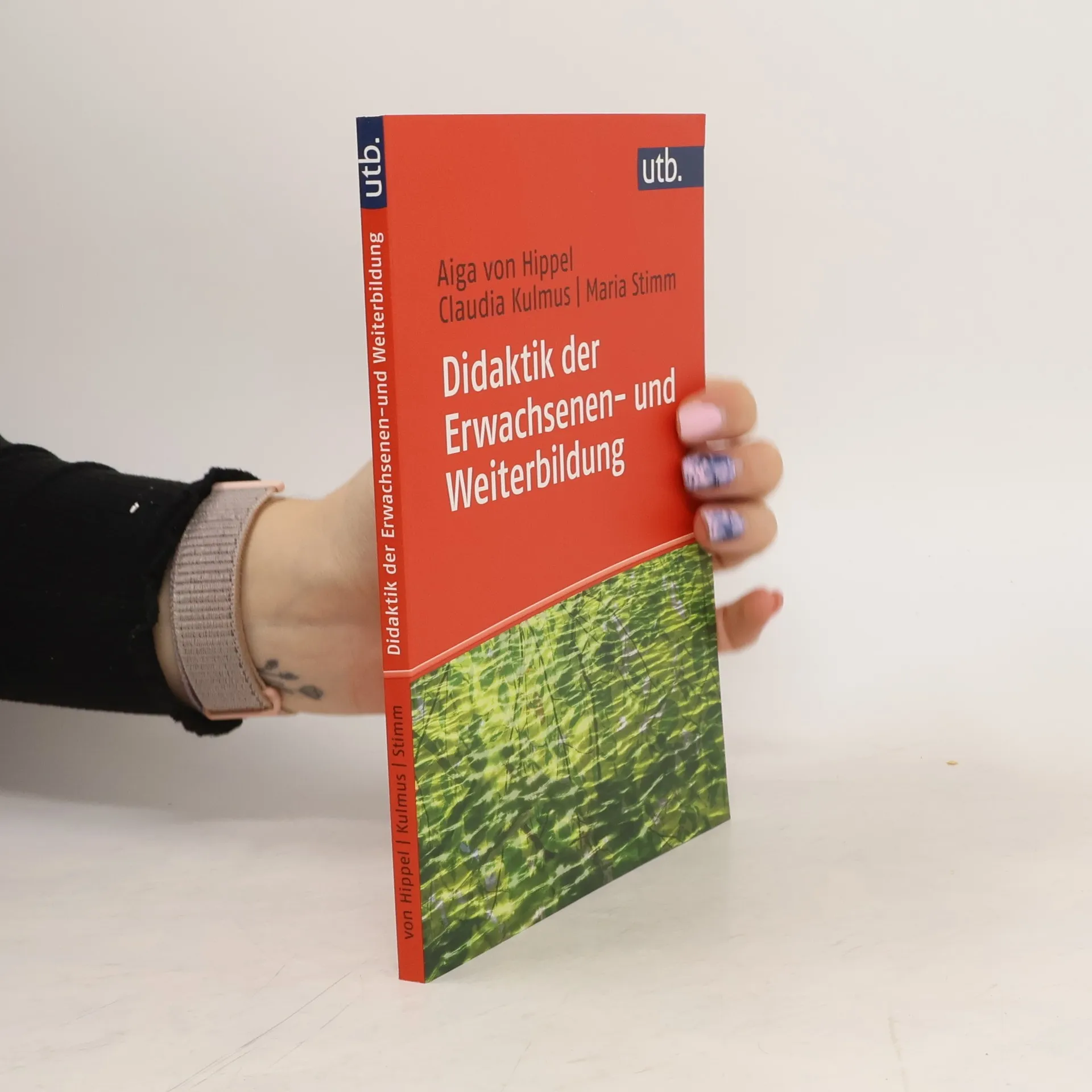
Die Bedeutung der Erwachsenenbildung nimmt zu. Professionelle Kernaufgabe der Erwachsenenbildung ist didaktisches Handeln. Diese Einführung erklärt die Besonderheiten des Handlungsfeldes und zentrale Begriffe. In der Verknüpfung von Lehr-Lerntheorien, didaktischen Handlungsebenen, Prinzipien und der Auswahl von Methoden wird das theoretische Wissen auch fürs praktische Handeln relevant.
Erwachsenenbildung und Weiterbildung stehen mehr denn je im Fokus erziehungswissenschaftlicher und gesellschaftlicher Diskurse. Als Grundlagenwerk zu Geschichte, Theorien, Forschungsmethoden und Institutionen vermittelt das Handbuch einen systematischen Überblick über den vielfältigen Themenbereich. Die zahlreichen Zielgruppen der Erwachsenenbildung und Weiterbildung wie auch die verschiedenen Methoden des Lehrens und Lernens werden zugleich einführend und umfassend dargestellt.