Morální dimenze ekonomiky
- 243 stránek
- 9 hodin čtení

3,5






The President of the Federal Republic of Germany, Roman Herzog, and four internationally renowned scholars from different cultural backgrounds and academic disciplines argue about ways to prevent the scenario of a clash of civilizations from becoming reality. Recognizing that scenario as an intellectual projection with considerable influence on policy-makers across the world, they agree on the necessity to mobilize ideas of cooperation as countervailing forces against mindsets of conflict and violence; to respect the diversity of cultures, but avoid moral relativism; to recognize the danger of fundamentalist instrumentalization of religion for purposes of political power; to cope with economic and social disequilibria that may lead to eruptions of conflict and violence; and to focus on commonalities between cultures as a strategy of peace in a globalized world.
What should American policies be toward liberated countries such as Iraq and Afghanistan, or rogue states like North Korea and Iran? What must be done to protect America from nuclear terrorism? The author asserts that providing basic security must be the first priority in all foreign policy considerations.
Renowned scholar Amitai Etzioni probes the actual relationship between human behavior, an efficient, innovative economy, and a just society as he presents a bold new vision, "socio-economics".
Supplementary Readings
Amitai Etzioni argues for a new liberal communitarian approach as an effective response to populism. The book considers national security versus privacy, private sector responsibility, freedom of the press, campaign finance reform, regulatory law and the legal status of terrorists, offering a timely discussion of key issues.

One of the world's leading sociologists and most quoted intellectuals in America today, Amitai Etzioni has been the subject of numerous profiles in all the major media and has worked both with members of the Clinton Administration and Republican senators on social issues and policy. Now, in this important new book, he invites us to explore how a good society should operate and what values we must bring to our social interactions if we are to achieve stronger and more enduring community ties.As Etzioni has found in his years devoted to researching and studying the subject, the problem facing society today is that half the population is wary of order and morality, while the other half is suspicious of liberty, which is equated with permissiveness. In an in-depth analysis that masterfully cuts this Gordian knot, the author lays out how we can, indeed must, have both order and autonomy if we are to create a society in which communities and individuals can thrive. Recognizing that excessive morality and excessive liberty are each a dire threat to the health of society, Etzioni demonstrates how we have overreacted in recent years by assuming that there must be a tradeoff between morality and freedom. However, this need not be the case, because when order is largely based on moral commitments rather than on the law, and autonomy is regarded as a place in a social space, these two social virtues can reinforce each other.Using this framework, Etzioni studies the implications for the future of diversity in America, the implications for educating the next generation, and our relationships with other societies. He also explores the public policy implications of his observations and how governments, community groups and families can respond and grow.



gemeenschap en moraal in een democratische samenleving
Communitaristische visie op de maatschappij, die positie kiest tussen individuele vrijheid en de normen en waarden van de gemeenschap.



Der Sozialstaat wird unter dem Druck des internationalen Wettbewerbs schleichend demontiert, die Arbeitslosigkeit steigt. Auch die angeblichen Alternativen Staat oder Markt versagen. Entweder wird dem Individuum durch den Wohlfahrtsstaat alle Eigenverantwortung abgenommen, oder aber der Markt verkommt zum Kampf aller gegen alle. In seinem neuen Buch plädiert Etzioni für eine soziale Ordnung, die den Gegensatz von individueller Autonomie und sozialer Verpflichtung auflöst. Ohne gemeinschaftliche Bindungen und geteilte Werte, so Etzioni im ultimativen Grundlagenwerk des kommunitaristischen Denkens, führen die garantierten Freiheitsrechte des Individuums zu verantwortungslosem Handeln und untergraben somit die Solidar- gemeinschaft sowie die Demokratie. »Die Verantwortungsgesellschaft« weist einen Weg, der beides erreicht: moralische Verbindlichkeiten, ohne zu moralisieren, und individuelle Freiheit, die nicht auf Kosten anderer geht. Etzionis Vorschläge, die an aktuellen Beispielen aus Politik und Gesellschaft anschaulich erläutert werden, haben nicht nur den amerikanischen Präsidenten Bill Clinton, seinen Stellvertreter Al Gore und den britischen Labour-Chef Tony Blair maßgeblich beeinflußt, sondern auch deutsche Politiker wie Kurt Biedenkopf (CDU), Rudolf Scharping (SPD) und Joschka Fischer (Bündnis 90/Die Grünen) setzen sich rundum mit seinen Thesen auseinander.

Das zentrale Glaubensbekenntnis der neoliberalen Wirtschaftsideologie lautete: je ungehemmter sich der Individualismus entfalten kann, desto grösserer Nutzen entsteht für die Gemeinschaft. Aber die Frage, wieviel Egoismus eine Gesellschaft ertragen kann, ohne zu zerfallen, wird immer drängender. Der Autor, ein US-Ökonom und Präsidentenberater, behauptet deshalb: Dem einzelnen kann und muss sehr wohl Gemeinschaftssinn und gesellschaftliche Verantwortung zugestanden und abverlangt werden -- und zwar nicht im Sinne einer platten Restauration überholter Werte, sondern im Rahmen einer verantwortlichen Gemeinschaft von Individuen.
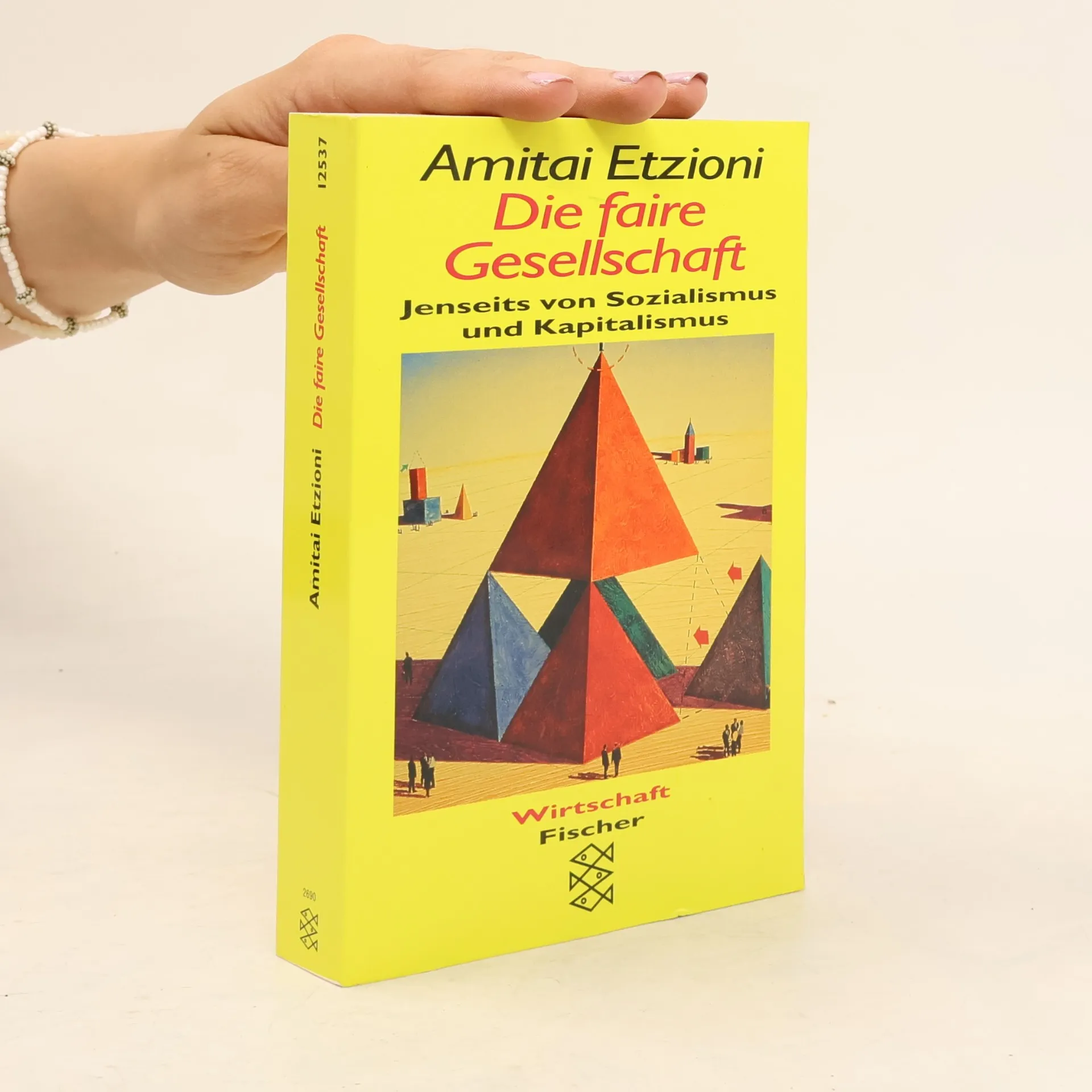
Wachsende Scheidungsraten, steigende Jugendkriminalität, soziale Verwahrlosung, die Auflösung der Familie als Leb ensform - das sind Befunde, die in den Vereinigten Staaten eine Gruppe von Sozialforschern und Philosophen vor einigen Jahren veranlaßt hat, ein 'Kommunitaristisches Programm' zu verabschieden. Der prominenteste Vertreter dieser Gruppe, der amerikanische Soziologe Amitai Etzioni, erläutert die vieldiskutierten Thesen und zeigt an konkreten Beispielen, wie verantwortungsbereites Handeln eine Gesellschaft 'von unten' verändern kann.