

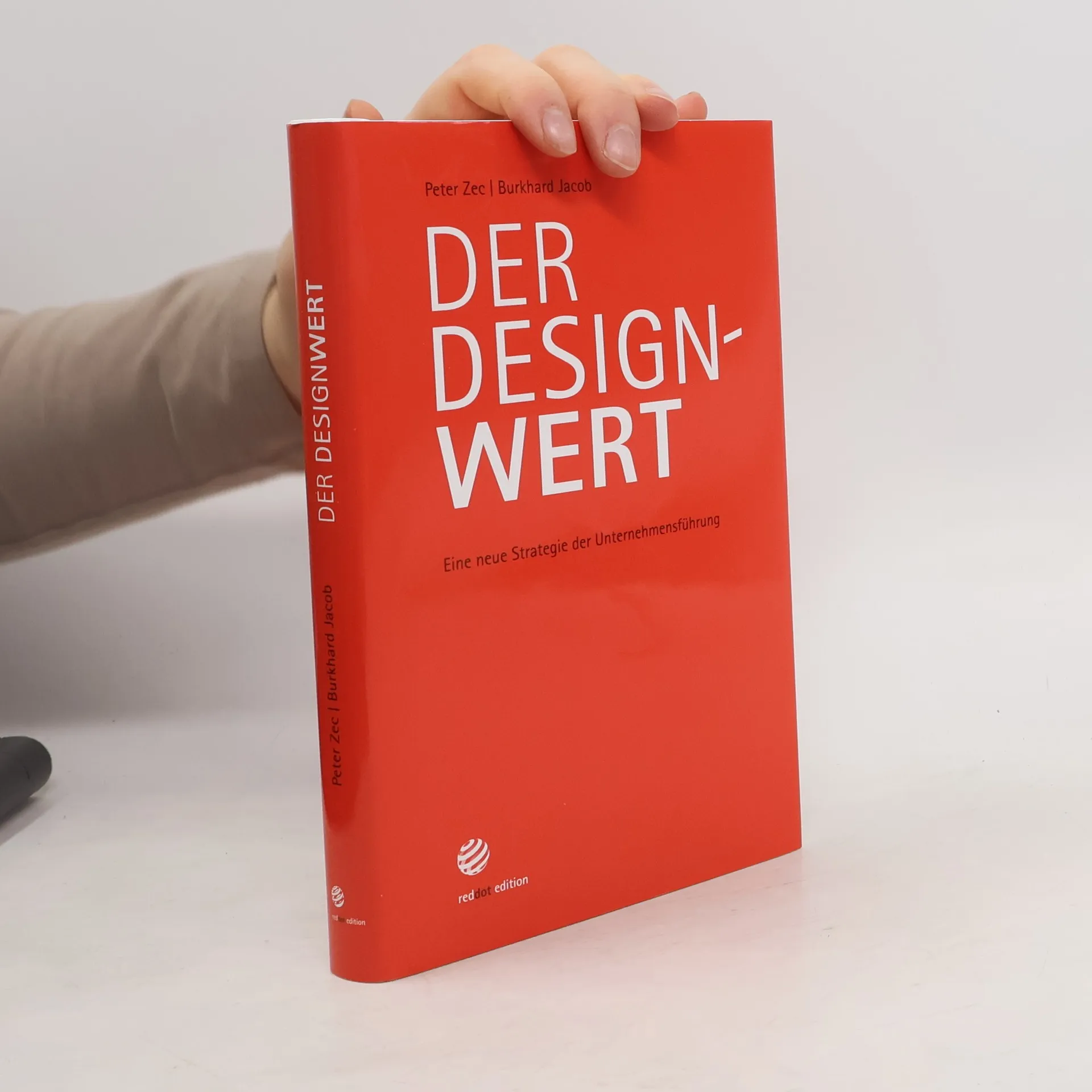
Die Autoren Peter Zec und Burkhard Jacob erläutern, wie Design den Unternehmenswert steigert und was wir von führenden Designunternehmen lernen können. Sie betonen die Rolle des Designs als treibende Kraft für wirtschaftliches Wachstum und Wertschöpfung, illustriert durch Beispiele aus verschiedenen Branchen. Anhand ihrer Methodik zeigen sie, wie Unternehmen ihre Designwerte ermitteln und vergleichen können, um Design als strategisches Führungsinstrument zu nutzen. Der red dot design award, mit über 12.000 Anmeldungen aus mehr als 60 Ländern, ist der weltweit führende internationale Designwettbewerb. Jährlich messen sich Unternehmen und Designer in einem anspruchsvollen Wettbewerb, wobei die Qualität ihrer Arbeiten von einer unabhängigen Expertenjury bewertet wird. Die steigende Teilnehmerzahl belegt das wachsende Bewusstsein für Qualität und Design weltweit. Für die besten Unternehmen bestätigt sich der Slogan von Thomas Watson jr.: „Good design is good business.“ Sollte dieser Satz zutreffen, ist es entscheidend, dass gutes Design und effektives Designmanagement zur Wertsteigerung beitragen.
Burkhard Jacob Knihy
Carl Jacob Christoph Burckhardt byl historik umění a kultury, který se proslavil jako jeden z hlavních zakladatelů kulturních dějin. Jeho přístup se výrazně lišil od dnešního akademického pojetí, neboť Burckhardt zkoumal celé epochy do hloubky. Zahrnoval nejen umění, ale i každodenní společenský život. Jeho práce položila základy pro komplexní chápání historických období.

As Christianity adopted ancient sculpture, it was already in decline. By the end of the 2nd century, reproductions of earlier types had become mere repetitions, and the treatment of details had deteriorated. The preference for colossal forms and hard stones diverted artistic skill from higher purposes. The decline of pagan religion further impacted the art form. The sculpture of the Constantinian era could not produce Christian types that could compare with earlier deities. The Arch of Constantine exemplifies the exhausted and empty formal language of antiquity, showing no signs of new development. Perhaps aware of this impotence, or out of respect for the cherished statuary of paganism and the Mosaic law, the church largely ceased the creation of statues. Rare examples like the two small statues of the Good Shepherd in the Lateran's Museo Cristiano and the bronze statue of St. Peter from the 5th century are notable exceptions, the latter attempting to mimic seated toga figures of pagan times. Few secular honorific statues survived into the 5th century, and Italy retains only the formless bronze colossus of Emperor Heraclius in Barletta. Busts also became extremely rare, with the Amal asunt a bust in the Capitol collection being one of the few remaining. Thus, the development of sacred types, akin to those given to pagan gods, was virtually absent in sculpture, as figures like Christ and the Apostles were initially unsuitable