

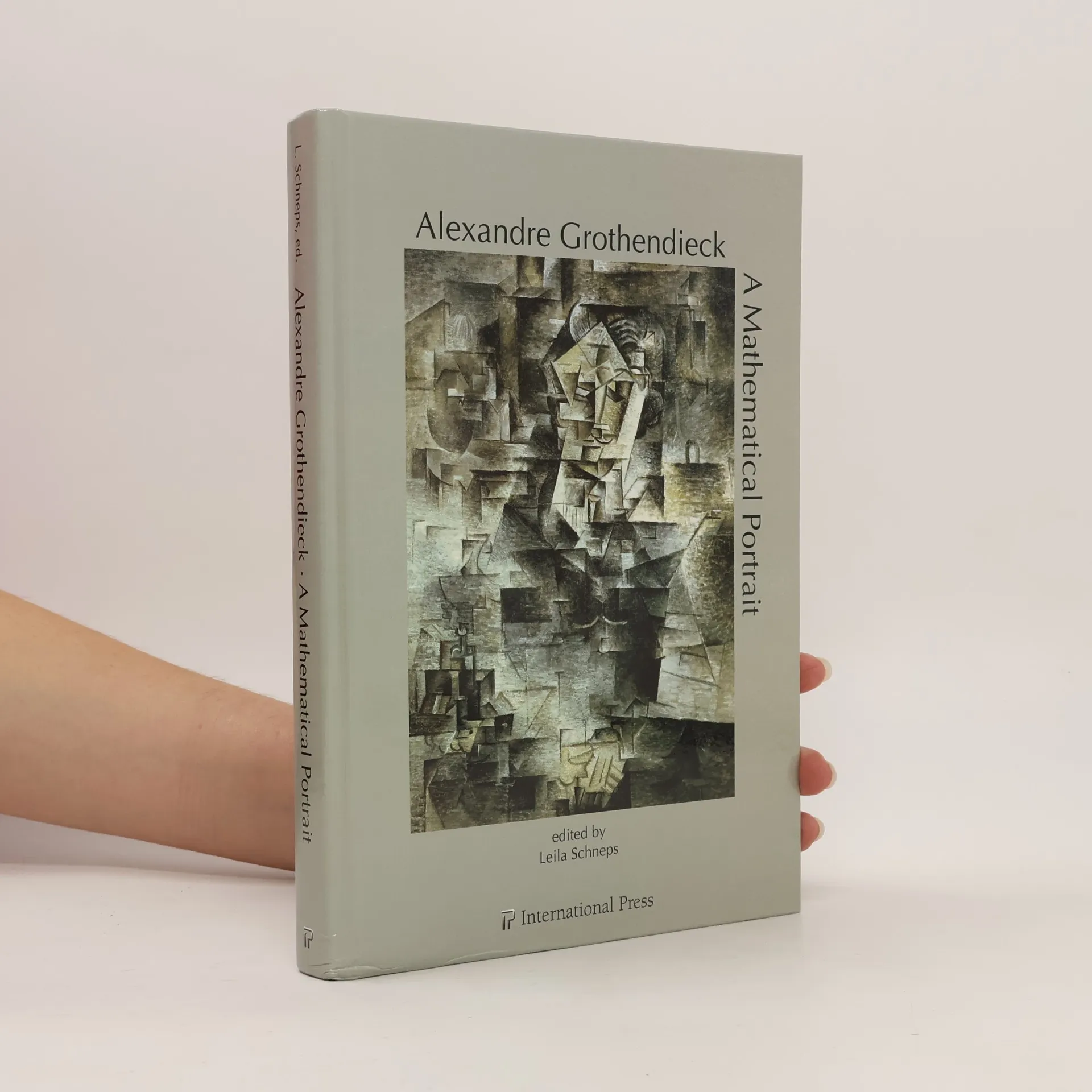
Mathematics students and researchers often wonder about the reasons behind Alexandre Grothendieck's legendary status in the field. This question, while valid, is challenging to answer due to the complexity of his mathematics and the numerous concepts he introduced. Some of these ideas have become so ingrained in the discipline that it's easy to forget their origins, while others are so abstract that even experts may take years to fully understand them. Grothendieck's contributions extend beyond notable results; they involve a comprehensive rethinking of established ideas, fundamentally transforming algebraic geometry. This volume aims to clarify what made Grothendieck a remarkable mathematician. It features thirteen articles by individuals who knew him personally, including those who studied or collaborated with him for years. These pieces provide insights into his thought processes, detailing his discoveries and contributions across various subjects, enriched by personal memories and anecdotes. Through the perspectives of those who were closest to him, readers will gain a deeper appreciation of Grothendieck's uniqueness. Additionally, the book includes six pages of photographs of the contributing authors, enhancing the personal connection to the narrative.
Leila Schneps Knihy

„Wahrscheinlich Mord“ versammelt acht spektakuläre Gerichtsfälle, in deren Kern ein mathematischer Irrtum stand. Leila Schneps und Coralie Colmez erzählen Geschichten von unschuldig Verurteilten wie Sally Clark, die irrtümlich des Mordes an ihren Kindern beschuldigt wurde. Und von umstrittenen Fällen wie dem um Amanda Knox, die vielleicht noch im Gefängnis säße, wenn der Richter eine Ahnung von Wahrscheinlichkeitsrechnung gehabt hätte. Die fatalen Rechtsirrtümer zeigen, dass die unsachgemäße Anwendung von Mathematik vor Gericht den Unterschied zwischen Freiheit und Haft, Leben und Tod bedeuten kann. Ein Buch, das sich wie ein Krimi liest - und nebenbei in die Geheimnisse der Statistik einführt.