

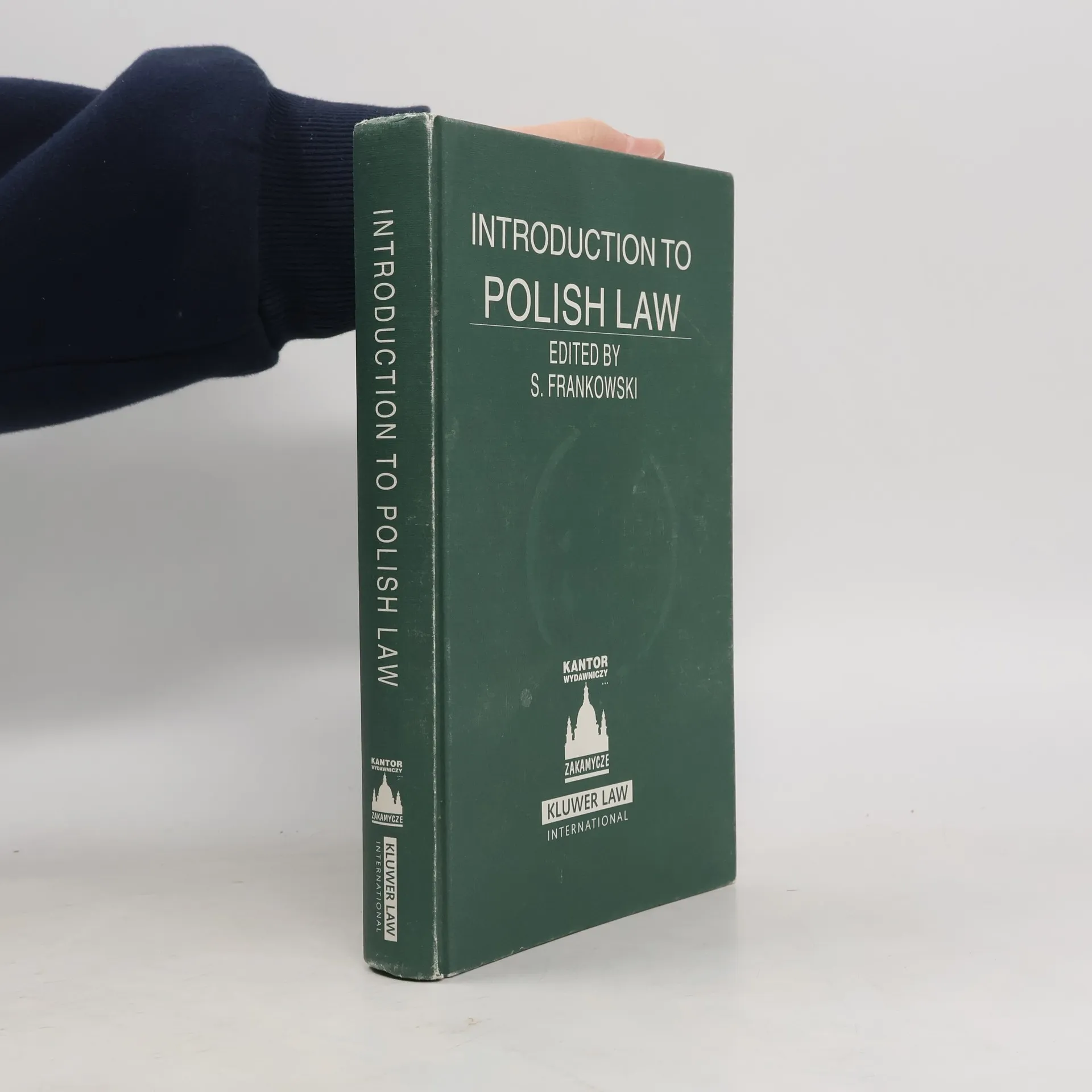
Introduction to Polish Law
- 421 stránek
- 15 hodin čtení
Over two decades marked by significant events—the collapse of European communism in 1989, NATO membership in 1999, and EU accession in 2004—Poland's legal system has developed remarkable maturity and stability. Drawing from its democratic heritage, effective communist-era legislation, and the vibrant 1997 Constitution, Polish law reflects contemporary social, economic, and political realities. This volume features eleven chapters authored by fifteen experts from the Warsaw University School of Law and Administration, making it an essential resource for anyone seeking to understand Polish law. The authors elucidate key legal concepts and customs related to constitutional law, administrative law, civil procedure, judicial review, enforcement of foreign judgments, family law, corporate law, contract law, environmental protection, and more. Each chapter includes a detailed bibliography, providing a thorough foundation for further research. This work serves as an ideal introduction for English-speaking legal practitioners and academics, covering all major fields of legal practice. It offers a comprehensive understanding of the Polish legal system, facilitating familiarity with legal processes and supporting further inquiry into specific legal matters. Practitioners will find it invaluable for both counseling and courtroom applications.