

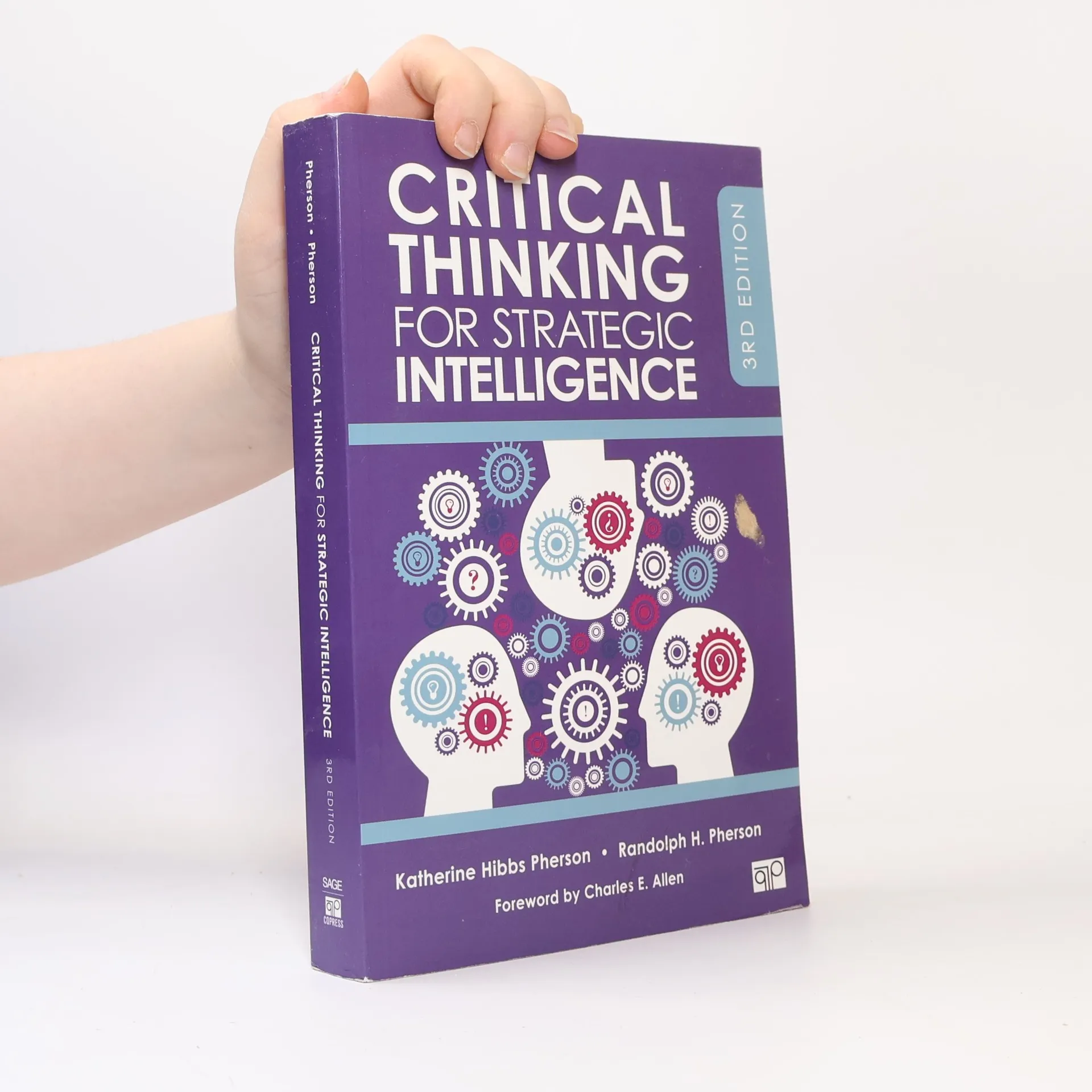
With Critical Thinking for Strategic Intelligence , Katherine Hibbs Pherson and Randolph H. Pherson have updated their highly regarded, easy-to-use handbook for developing core critical thinking skills and analytic techniques. This indispensable text is framed around 20 key questions that all analysts must ask themselves as they prepare to conduct research, generate hypotheses, evaluate sources of information, draft papers, and ultimately present analysis, including: How do I get started? Where is the information I need? What is my argument? How do I convey my message effectively? The Third Edition includes suggested best practices for dealing with digital disinformation, politicization, and AI. Drawing upon their years of teaching and analytic experience, Pherson and Pherson provide a useful introduction to skills that are essential within the intelligence community.
Katherine Hibbs Pherson Pořadí knih (chronologicky)
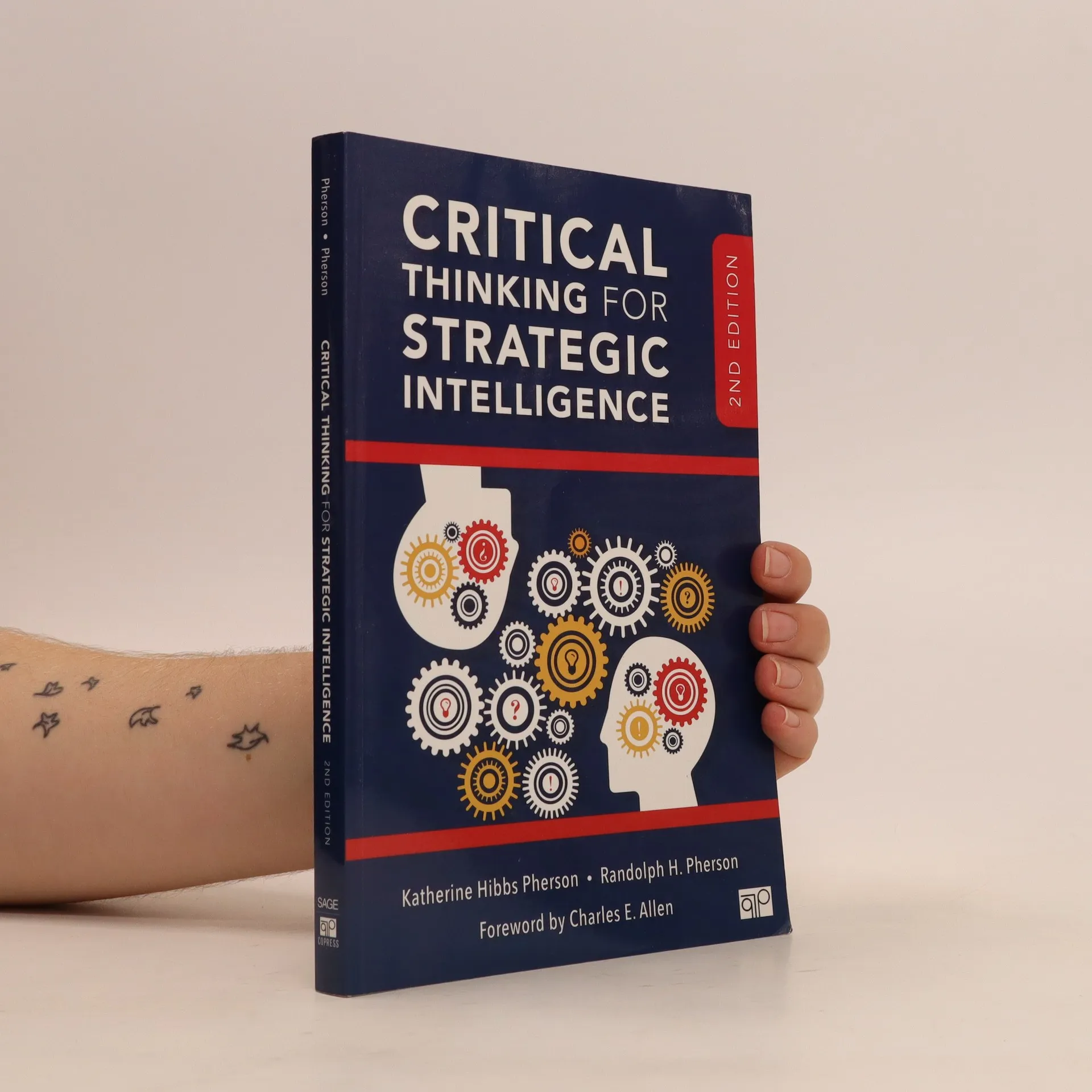
Critical Thinking for Strategic Intelligence. 2nd Edition
- 408 stránek
- 15 hodin čtení
With this second edition of "Critical Thinking for Strategic Intelligence", Randolph H. Pherson and Katherine Hibbs Pherson update their highly regarded, easy-to-use handbook for developing core critical thinking skills and analytic techniques. This indispensable text is framed around 20 key questions that all analysts must ask themselves as they prepare to conduct research, generate hypotheses, evaluate sources of information, draft papers, and ultimately present analysis. New material includes a chapter on working with statistics and probabilities at an introductory level; discussions on how to work with social media; managing the "big data" phenomenon and what role analysis plays both at the front and back end of utilizing such information. -- From product description
Critical Thinking For Strategic Intelligence
- 360 stránek
- 13 hodin čtení
Accomplished instructors and intelligence practitioners Beebe and Pherson have created a set of twelve robust, class-tested cases on events in foreign intelligence, counterintelligence, terrorism, homeland security, law enforcement, and decision-making support. The case studies are designed to give analysts-intraining a hands-on opportunity to apply structured analytic techniques to tackle real-life problems. Each case delivers a compelling narrative and a set of step-by-step instructions that make teaching and learning as effective and efficient as possible. Key Features: - Questions at the start of each case challenge the student to think critically and help the students bring the case into focus; - Carefully crafted narratives provide the right amount of detail to give a realistic sense of the complexity and challenges of the case; - Recommended readings at the end of each narrative allow room for further research - Sections entitled "Structured Analytic Techniques in Action" frame the analytic tasks and provide step-by-step instructions for applying three to fi ve analytic techniques in a series of exercises for each case study; - Two hundred photos, maps, figures, tables, boxes, and technique templates support analysis and instruction; and - A matrix of the cases and techniques used in each cases augment the annotated table of contents and provide students and instructors an all-in-one view of the contents.