Hilton Kramer is recognized as a leading art critic in America, celebrated for his insightful and bold critiques. He co-founded and co-edits The New Criterion alongside Roger Kimball, contributing significantly to the discourse on contemporary art. His work reflects a deep understanding of the art world and its cultural implications, making him a pivotal figure in shaping modern art criticism.
Hilton Kramer Knihy


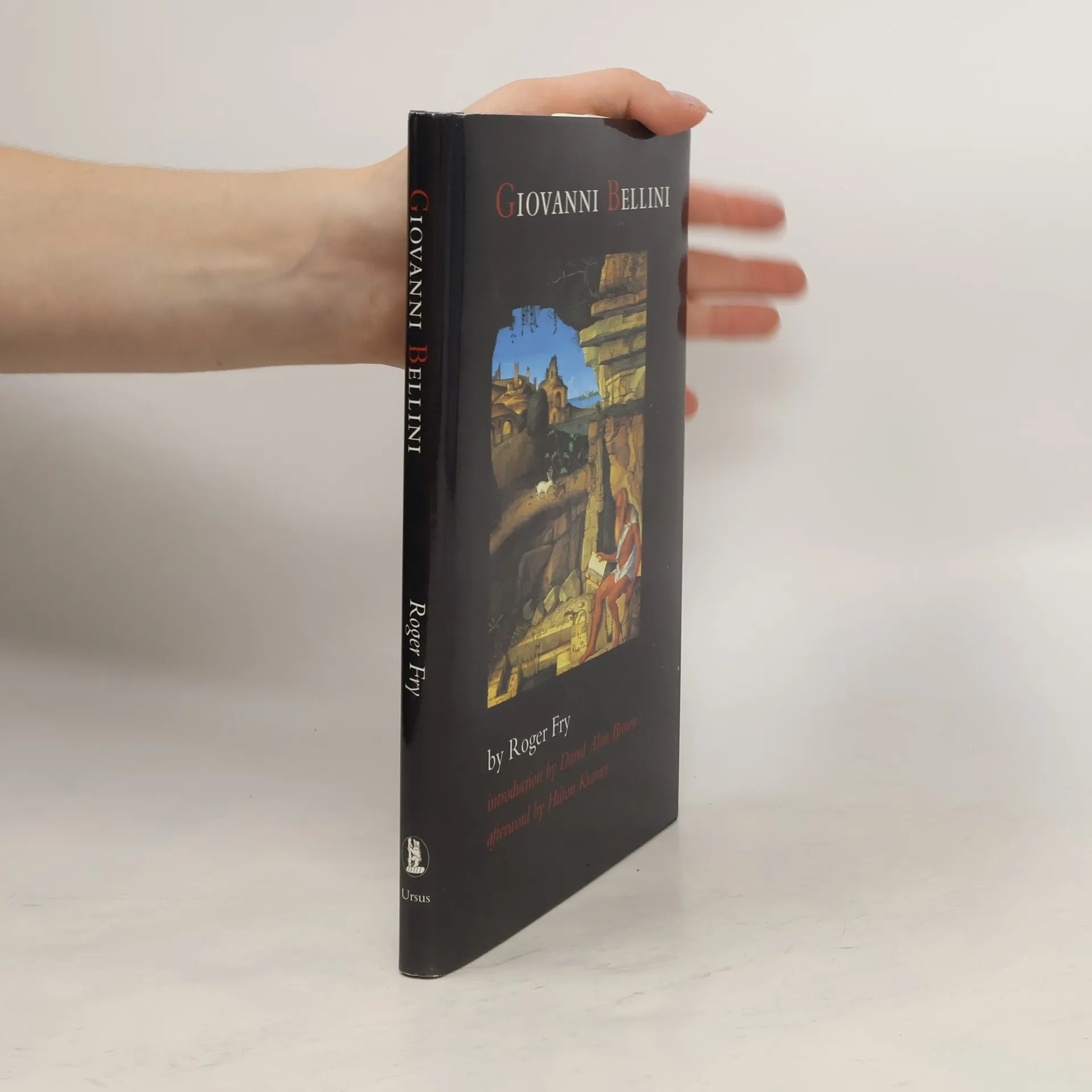
Giovanni Bellini is being published for the first time since 1901. Highly popular at the time of its original publication (three editions were published between 1899 and 1901), Roger Fry's monograph was instrumental in rescuing Bellini from the oblivion of a Victorian-era reputation by reinterpreting and revaluing his art for an early twentieth-century audience. Giving a succinct but definitive view of Bellini's career, Fry not only brought to bear the new "scientific" connoisseurship in his analysis of individual pictures and their chronology, but he also brought a keen interest into Bellini's innovative use of semi-transparent oil glazes, the psychological depth of his subjects, and Bellini's profound sensitivity to nature. As a painter himself, Fry had the critical advantage of studying Bellini with a sympathy deepened by his own close awareness of aesthetic problems
Hilton Kramer's collection showcases his authoritative art criticism, reflecting on the contemporary art scene through a series of essays and reviews. The work serves as a diagnostic tool, exploring the state of modernism and its enduring influence in a postmodern context. This compilation highlights Kramer's insights and the historical significance of modernism, making it a vital resource for understanding the evolution of art criticism over the past two decades.
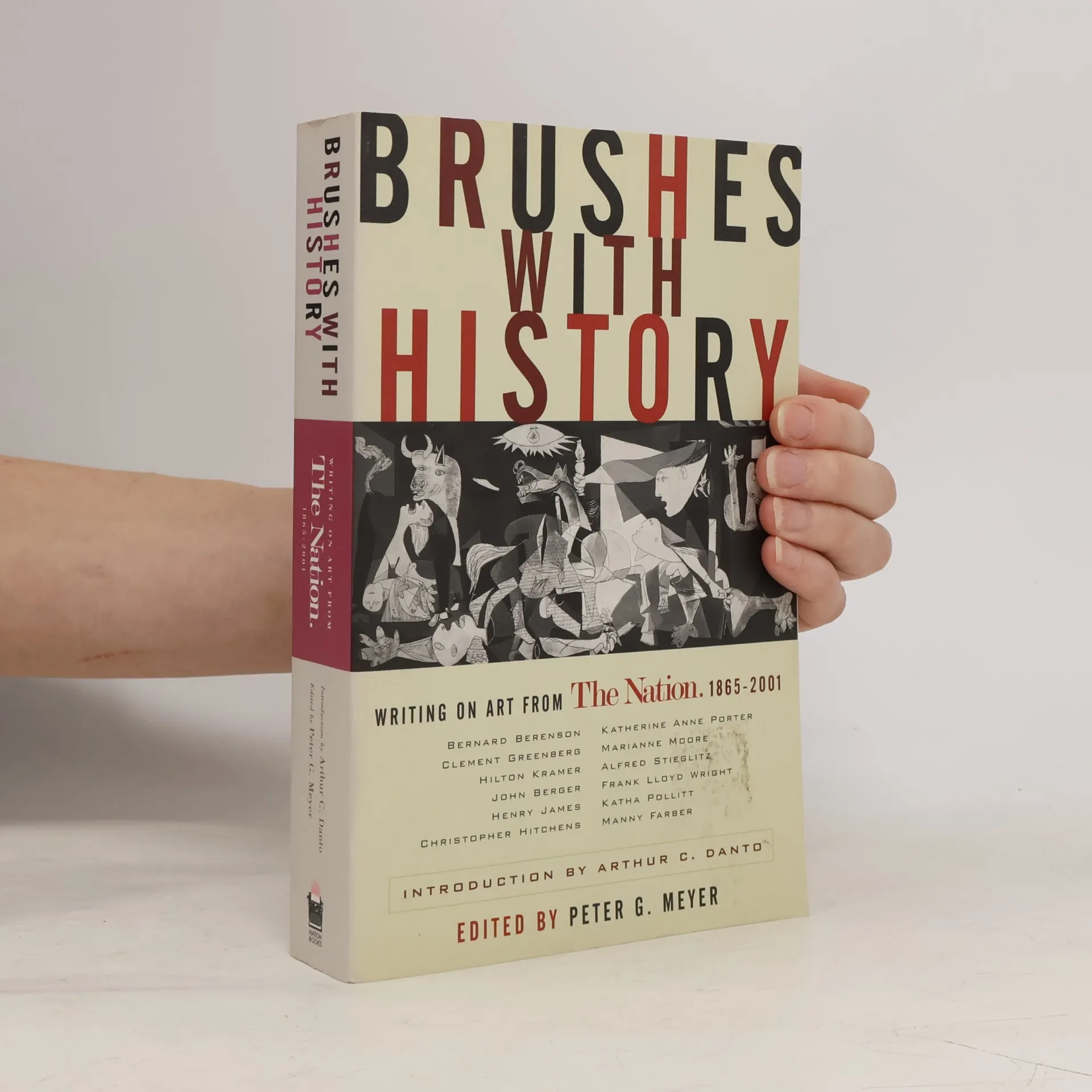
The Nation magazine, since its founding in 1865, began what has become, for better or worse, art criticism as a cultural institution in the United States. This eclectic collection features contributors like Christopher Hitchens on “degenerate art,” Heywood Broun on the Artists Congress of 1936, Katherine Anne Porter on children’s art, Marianne Moore on the death of Nation art critic Paul Rosenfeld, and Langston Hughes on “Negro Art.” The volume also includes contributions from many well-known Stuart Davis, Marsden Harley, Alfred Stieglitz, John Marin, Kenyon Cox, Guy Pene Du Bois, Louis Lozowick, and Frank Lloyd Wright. Celebrated writers on art such as Bernard Berenson, Clement Greenberg, Lawrence Alloway, Hilton Kramer, Max Kozloff, John Berger, and Arthur Danto give readers first-hand accounts of the debuts of artists ranging from John Singer Sargent to Jackson Pollock and Willem deKooning as well as the famous lawsuit between John Ruskin and James McNeill Whistler (reported by a youthful Henry James), the destruction of Diego Rivera’s Rockefeller Center murals and Richard Nixon’s views on art. More recently writers like E.L. Doctorow and Katha Pollitt have weighed in on the recent culture wars over arts funding and free expression.
Richard Lindner
- 256 stránek
- 9 hodin čtení
Gaston Lachaise
- 208 stránek
- 8 hodin čtení
Né à Paris le 19 mars 1882, fils d'un fabricant de meubles, Gaston Lachaise étudie la sculpture à l'École nationale supérieure des beaux-arts de 1898 à 1906. Vers 1902 ou 1903, Lachaise rencontre Isabl Dutaud Nagel, une Américaine de dix ans son aînée, marié et mère d'un enfant. Il tombe passionnément amoureux d'elle, et lorsqu'elle retourne à Boston, Lachaise la suit un an plus tard. Après le divorce d'Isabel, Gaston Lachaise l'épouse en 1917. Il ne cessera alors, et jusqu'à sa mort, de s'inspirer du corps de sa femme pour des sculptures, souvent monumentales, qui le mettront vite au tout premier plan des sculpteurs modernes. Ses oeuvres seront rapidement dans les plus grands musées américains. L'obsession pour le corps de sa femme le conduit à des oeuvres de plus en plus radicales qu'il ne montre pas au public, en particulier certaines sculptures du corps féminin qu'il réduit à deux seins gigantesques entourant un sexe, oeuvre aussi dérangeante que L'Origine du monde de Courbet.La sculpture de Lachaise, qui a marqué de manière significative l'art du XXᵉ siècle, est peu connue en France. C'est pourquoi le musée d'Art et d'Industrie - La Piscine de Roubaix organise, avec le soutien de la Fondation Lachaise, une grande rétrospective de son oeuvre, avec près de quatre-vingts sculptures et de nombreux dessins.