

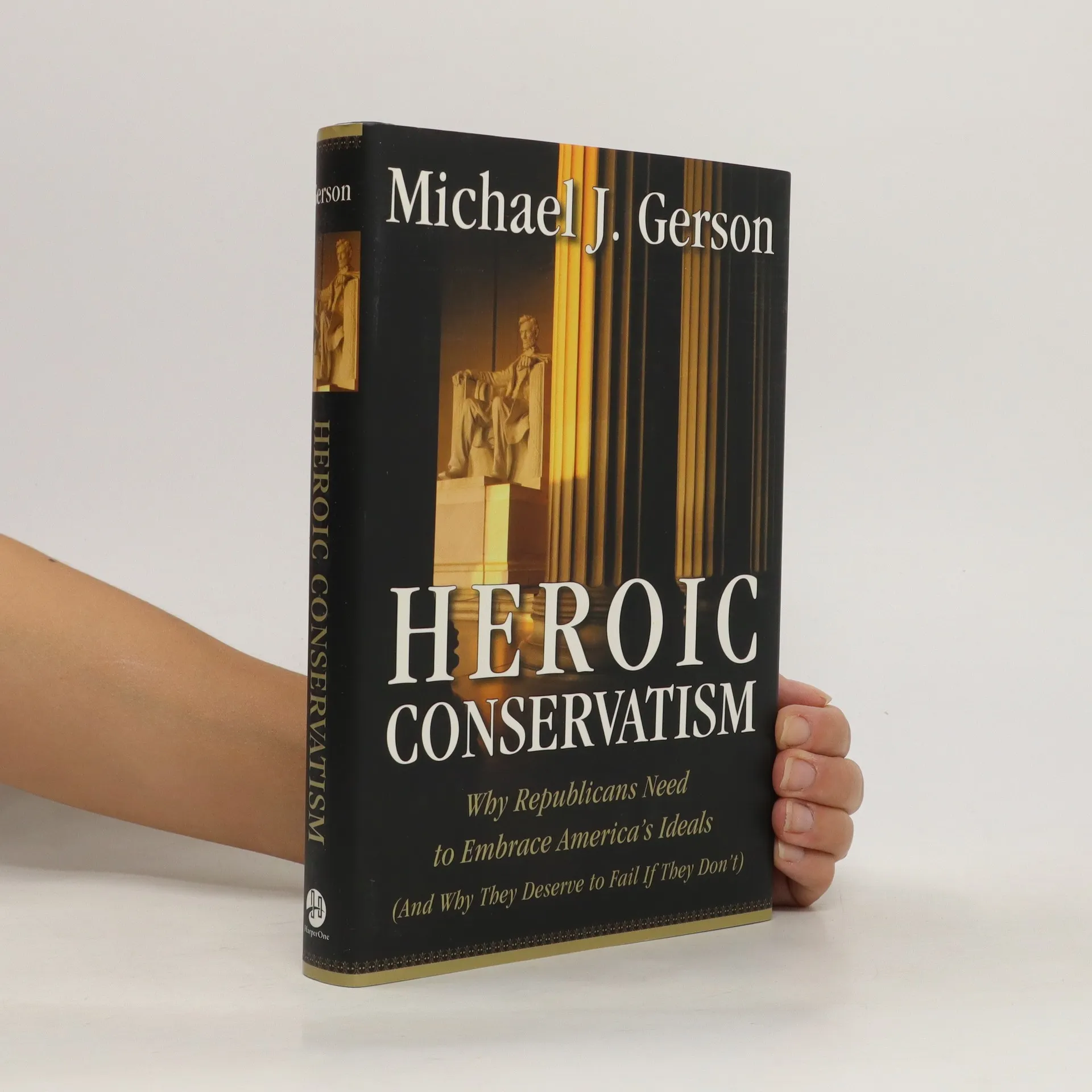
Michael Gerson, who worked with George W. Bush on his most inspiring speeches, is considered by many Democrats and Republicans to be the most influential White House speechwriter since the Kennedy administration. He was also more than a speechwriter, he was a trusted insider who helped shape policy. In Heroic Conservatism Gerson uses his own experiences in the upper tier of the Bush White House to show why America needs a conservatism that is heroic in its aspirations—including "compassionate conservative" proposals to confront global AIDS, combat poverty in America, and promote human rights and dignity abroad—initiatives that Gerson fought for during his time in government. Gerson has a unique ability to frame complex issues in a way that both challenges and inspires, and in Heroic Conservatism he delivers a new manifesto for the Republican Party and a fascinating memoir of a history-shaping Presidency.
Michael J. Gerson Knihy
Michael Gerson je uznávaný komentátor a bývalý vlivný politický poradce. Jeho psaní se často zaměřuje na etické a morální rozměry politiky, přičemž zkoumá napětí mezi ideály a realitou. Gersonův analytický přístup a schopnost artikulovat složité problémy z něj činí důležitý hlas v současných veřejných debatách.

From two former White House insiders, one a columnist for the Washington Post, the other for the New York Times Our nation is in a political nightmare. With the rise of the Alt-Right, and increasing division between liberals and conservatives, it is hard to know how to be politically engaged while maintaining Christian integrity. Former White House insiders Michael Gerson and Peter Wehner call evangelicals toward a new kind of political engagement—a kind that is better both for the church and the country, a kind that cannot be co-opted by either political party, a kind that avoids the historic mistakes of both the Religious Right and the Religious Left. A product of the authors' own wrestling with the complicated relationship between religion and politics, City of Man deals with questions central to evangelicals' future political role, including: How can religious people exercise influence while maintaining their integrity? What tone should they be known for? How should they think about the role and purpose of government? Which causes and issues, both at home and abroad, ought to be a part of their agenda? Incisive, bold, and marked equally by pragmatism and idealism, Gerson and Wehner's book charts a new political future not just for civic-minded Christians and "values voters," but for the nation as a whole.