

Knihobot

Adom Getachew

    Merkur 8/2024, Jg.78
    Die Welt nach den Imperien
    Die Welt nach den Imperien
    Imagining Global Futures
    Worldmaking after Empire
    • Worldmaking after Empire

      • 288 stránek
      • 11 hodin čtení

      Decolonization transformed the international order in the twentieth century. Standard narratives depict the end of colonialism as a straightforward shift from empires to nations, equating self-determination with nation-building, which downplays the radical nature of this change. This account draws on the political thought of anticolonial figures like Nnamdi Azikiwe, W.E.B. Du Bois, and Kwame Nkrumah, revealing their ambitious vision to reshape not just nations but the world. It demonstrates that African, African American, and Caribbean anticolonial nationalists were not merely focused on nation-building. In response to racialized sovereign inequality, exemplified by interwar Ethiopia and Liberia, Black Atlantic thinkers challenged international racial hierarchies and proposed alternative worldviews. They aimed to establish an egalitarian postimperial world by advocating for self-determination within the United Nations, forming regional federations in Africa and the Caribbean, and creating the New International Economic Order. Utilizing archival sources from Barbados, Trinidad, Ghana, Switzerland, and the UK, this work reinterprets the history of decolonization, reevaluates the challenges faced by anticolonial nationalism, and offers fresh insights into contemporary debates about the international order.

      Worldmaking after Empire
      4,5
    • A collection of post-colonial visions for a more just world. What does a just world look like? This volume begins with a planet beset by accumulating crises—environmental, social, and political—and imagines how we can move beyond them. Drawing on the legacy of post-colonial struggles for liberation, Imagining Global Futures explores a range of radical visions for a world after neoliberalism and empire. Centered on movements in the Global South, the collection challenges dominant patterns of social and political life and sketches more just and sustainable futures we might build in their place. What can we learn from alternative conceptions of the good life? How can we build a world where people are both freer and more equal? An urgent resource for collective imagination, Imagining Global Futures counterposes thick visions of a better world to our dystopian present.

      Imagining Global Futures
    • Die Welt nach den Imperien

      Aufstieg und Niedergang der postkolonialen Selbstbestimmung | Platz 1 der Sachbuchbestenliste von ZEIT/Deutschlandfunk/ZDF

      Die Welt nach den Imperien
      3,7
    • Die Welt nach den Imperien

      Aufstieg und Niedergang der postkolonialen Selbstbestimmung

      • 437 stránek
      • 16 hodin čtení

      Der Wandel durch die Dekolonisierung im 20. Jahrhundert war tiefgreifender als oft angenommen. Adom Getachew analysiert das politische Denken von antikolonialen Intellektuellen und Staatsmännern wie Nnamdi Azikiwe und W. E. B. Du Bois, um die explosive Kraft der dekolonialen Bewegung zu beleuchten. Durch die Nutzung zahlreicher Archivquellen wird nicht nur die Geschichte dieser Bewegung dokumentiert, sondern auch ihr Scheitern thematisiert. Das Buch bietet somit eine neue Perspektive auf die aktuellen Debatten zur Weltordnung und hinterfragt etablierte Narrative über den Übergang zu Nationalstaaten.

      Die Welt nach den Imperien
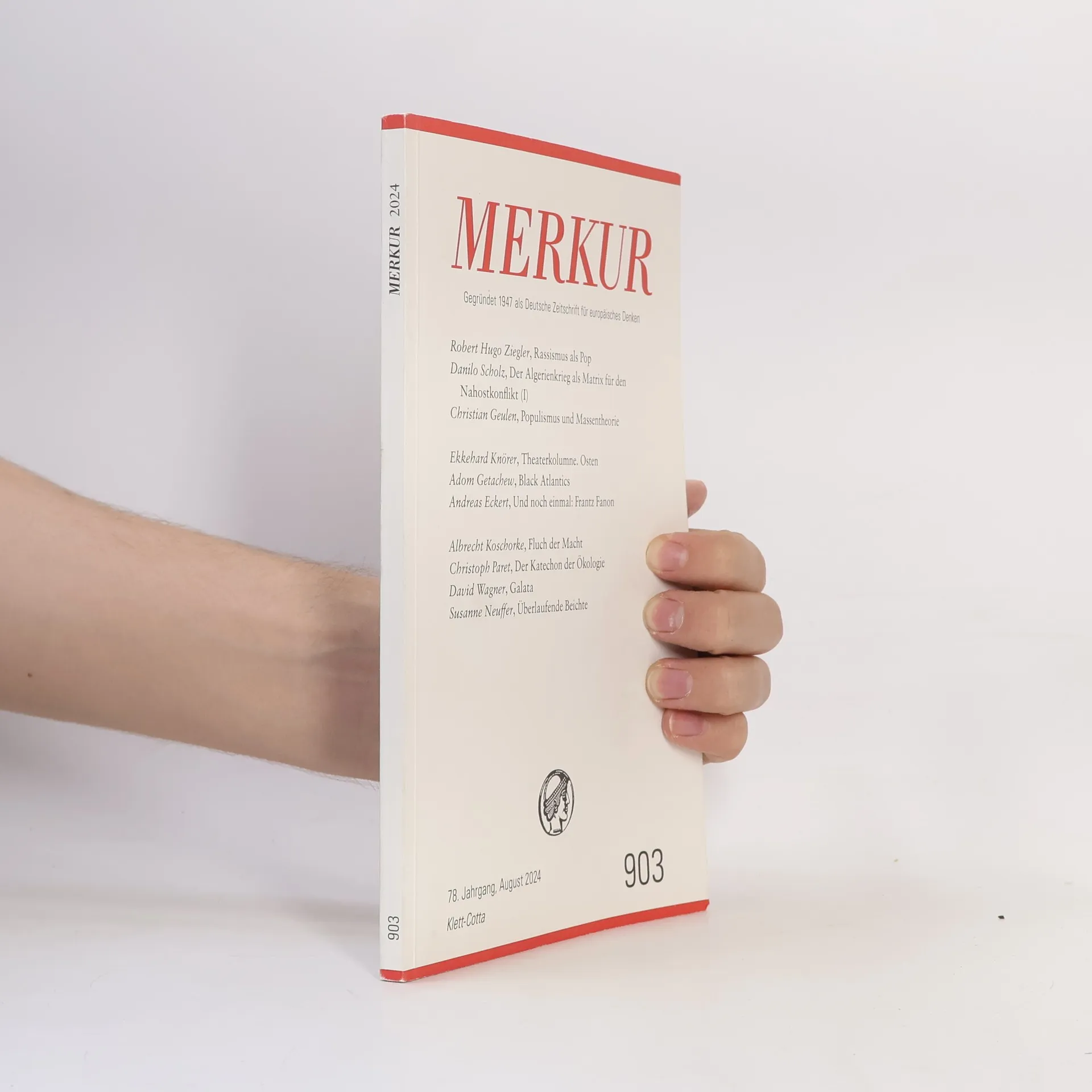
    • Merkur 8/2024, Jg.78

      Nr. 903, Heft 08, August 2024

      • 104 stránek
      • 4 hodiny čtení

      Der Philosoph Robert Hugo Ziegler fragt sich nach der Bedeutung der ausländerfeindlichen Sylter Hassgesänge: Wie genau kommen hier Rassismus, Spaß, Transgression und Bürgertum zusammen? Danilo Scholz verfolgt die diskursiven Spuren, die vom französischen Kolonialismus und vom Algerienkrieg zur Situation in Palästina/Israel führen. (Er verfolgt das so genau, dass im kommenden Heft ein zweiter Teil folgt.) Über den Wandel des Begriffs der „Masse“ – und seine angesichts des Populismus neue Aktualität – denkt Christian Geulen nach. Für die erste Folge seiner Theaterkolumne ist Ekkehard Knörer in Ostdeutschland unterwegs. Adom Getachew beschäftigt sich, auch aus autobiografischer Perspektive, mit dem Autor und Wissenschaftler Louis Chude-Sokei, der die Vielfalt der afrikanischen Diaspora betont. Die neue Frantz-Fanon-Biografie von Adam Shatz hat Andreas Eckert gelesen. Albrecht Koschorke legt dar, was in der aktuellen politischen Situation nicht nur die Gesellschaft, sondern auch die Einzelnen zu zerreißen droht. Über unser sich rasant prekarisierendes Leben im Anthropozän und die Möglichkeit des Aufschubs der Katastrophe schreibt Christoph Paret. Im Vorabdruck aus David Wagners neuem Roman ist nicht nur die Titelheldin Verkin, sondern auch der Istanbuler Stadtteil Galata im Bild. In Susanne Neuffers Erzählung Überlaufende Beichte geht es um einen Mann, der (fast) alle Menschen zum Reden bringt.

      Merkur 8/2024, Jg.78