

Knihobot

Vijay Prashad

    Vijay Prashad je přední indický historik a publicista, jehož dílo se soustředí na globální nerovnosti a dějiny globálního Jihu. Jeho psaní proplétá hlubokou analýzu sociálních a politických procesů s kritickým pohledem na kolonialismus a jeho přetrvávající dopady. Prashadův přístup k psaní je charakterizován snahou o zpřístupnění komplexních sociálně-vědních konceptů širšímu publiku a o pochopení perspektiv utlačovaných komunit. Jeho práce vybízí čtenáře k zamyšlení nad současným světovým pořádkem a k hledání alternativních cest k sociální spravedlnosti.

    Washington Bullets
    No Free Left
    Washington's New Cold War
    Marx's Capital
    Will the Flower Slip Through the Asphalt?
    Struggle Is What Makes Us Human
    • Two brilliant and influential minds look beyond capitalism, and chart a roadmap for a planet ravaged by pandemics, a climate crisis, and wars.

      Struggle Is What Makes Us Human
      4,5
    • Will the Flower Slip Through the Asphalt?

      Writers Respond to Capitalist Climate Change

      • 122 stránek
      • 5 hodin čtení

      Exploring the intersection of climate change and occupation, this collection features Naomi Klein's impactful Edward Said lecture, emphasizing how marginalized communities are disproportionately affected by environmental crises. Accompanying essays from global writers, including John Bellamy Foster and Ghassan Hage, reflect on Klein's ideas. Contributors share diverse perspectives, from Karachi's coast to Malaysia's cultural dynamics, and India's climate struggles, culminating in Amitav Ghosh's reflections on globalization and transformation through the lens of spices.

      Will the Flower Slip Through the Asphalt?
      4,3
    • Marx's Capital

      • 138 stránek
      • 5 hodin čtení

      Understanding capitalism requires engaging with Marx's Capital, a complex work spanning over 2,000 pages. This Reader, crafted by seven prominent Marxist scholars, serves as a comprehensive guide for both beginners and advanced readers. It begins with foundational concepts, progresses through theoretical discussions, and culminates in an application of Marx's methods to contemporary capitalism. By providing essential conceptual tools and fresh insights, this volume unlocks the depth of Marx's analysis, making it accessible and relevant for all readers.

      Marx's Capital
      4,3
    • No Free Left

      The Futures of Indian Communism

      • 380 stránek
      • 14 hodin čtení

      The book explores the significant shift in India's political landscape over the past two decades, highlighting the rise of right-wing ideologies led by the BJP and Congress. It critiques how this trajectory has undermined the aspirations of the working class, revealing a fractured socialist consensus and the disarray of socialist parties. The author delves into the implications of these changes for India's future, emphasizing the need for a renewed focus on social equity and the challenges faced by those advocating for a more just society.

      No Free Left
      4,0
    • Washington Bullets is written in the best traditions of Marxist journalism and history-writing. It is a book of fluent and readable stories, full of detail about U.S. imperialism, but never letting the minutiae obscure the larger political point. It is a book that could easily have been a song of despair-a lament of lost causes;

      Washington Bullets
      4,2
    • The East Was Read

      Socialist Culture in the Third World

      • 154 stránek
      • 6 hodin čtení

      The book explores the nostalgic impact of Soviet literature on individuals from the Third World, highlighting its significance in shaping their lives and thoughts. Contributors share personal stories, such as Deepa Bhasthi's emotional journey through her grandfather's library and Ng g wa Thiong'o's experience writing in Yalta. The text also includes a historical overview of Progress Publishers and reflections on cultural connections between the Soviet Union and the Third World, particularly through the lens of influential figures like Faiz.

      The East Was Read
      4,1
    • War Against the Planet

      • 118 stránek
      • 5 hodin čtení

      The book explores the complex geopolitical landscape following the September 11 attacks, focusing on the U.S. military response in Afghanistan and the motives behind targeting Osama bin Laden and the Taliban. It questions the lack of scrutiny on Saudi Arabia and examines the dynamics of radical Islamic groups, the decline of leftist movements in the Arab world, and the influence of oil in global politics. Through extensive research, Vijay Prashad analyzes the historical and social forces shaping these events, offering insights into the broader implications of the Fifth Afghan War.

      War Against the Planet
      3,9
    • Red Star Over the Third World

      • 144 stránek
      • 6 hodin čtení

      An inspiring reminder of the great strength of twentieth century Communism in the Global South.

      Red Star Over the Third World
      4,1
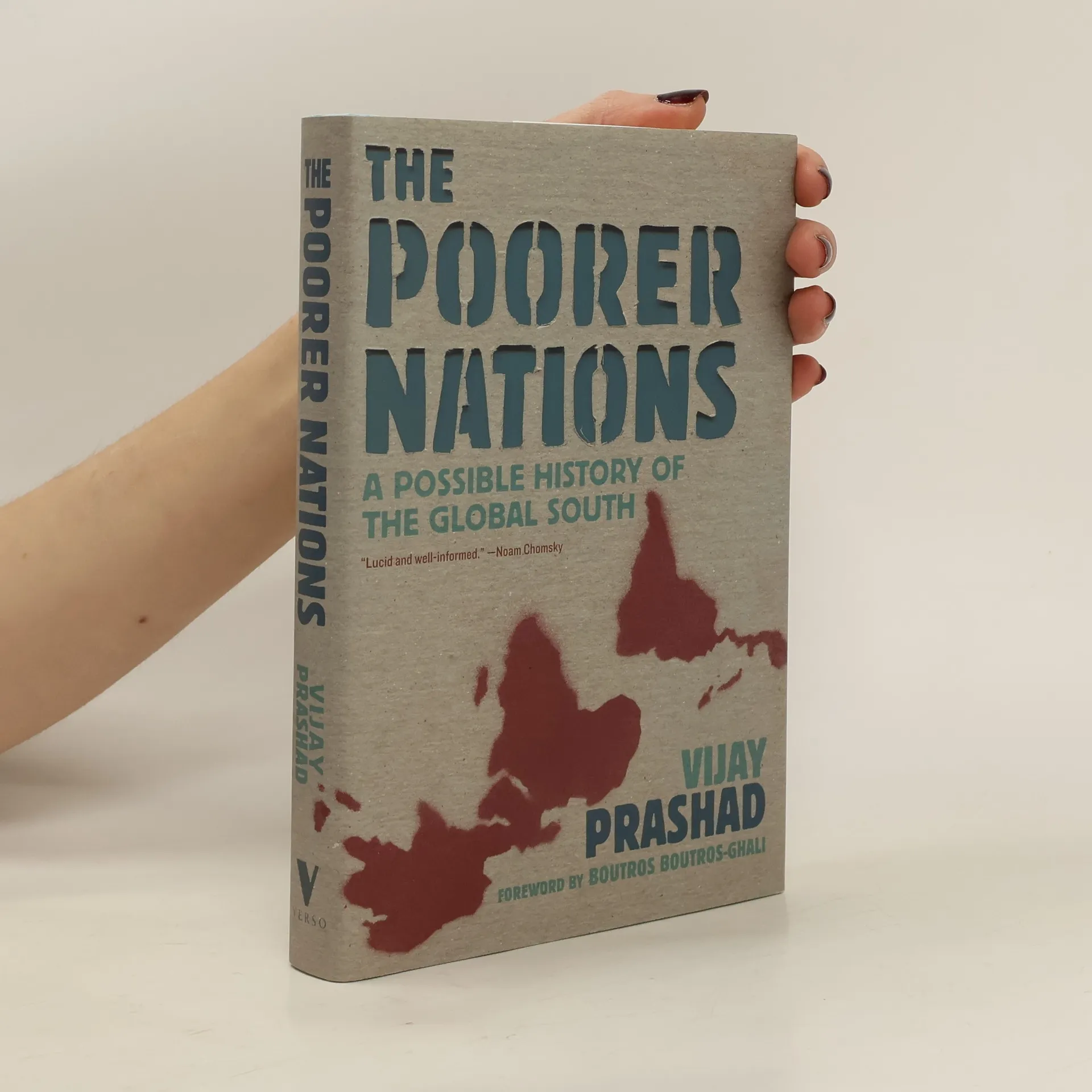
    • The Poorer Nations

      • 292 stránek
      • 11 hodin čtení

      In The Darker Nations, Vijay Prashad provided an intellectual history of the Third World and traced the rise and fall of the Non-Aligned Movement. With The Poorer Nations, Prashad takes up the story where he left off. Since the '70s, the countries of the Global South have struggled to build political movements. Prashad analyzes the failures of neoliberalism, as well as the rise of the BRICS countries, the World Social Forum, issuebased movements like Via Campesina, the Latin American revolutionary revival--in short, efforts to create alternatives to the neoliberal project advanced militarily by the US and its allies and economically by the IMF, the World Bank, the WTO, and other instruments of the powerful. Just as The Darker Nations asserted that the Third World was a project, not a place, The Poorer Nations sees the Global South as a term that properly refers not to geographical space but to a concatenation of protests against neoliberalism. In his foreword to the book, former Secretary-General of the United Nations Boutros Boutros-Ghali writes that Prashad "has helped open the vista on complex events that preceded today's global situation and standoff." The Poorer Nations looks to the future while revising our sense of the past.

      The Poorer Nations
      4,1