
Knihobot

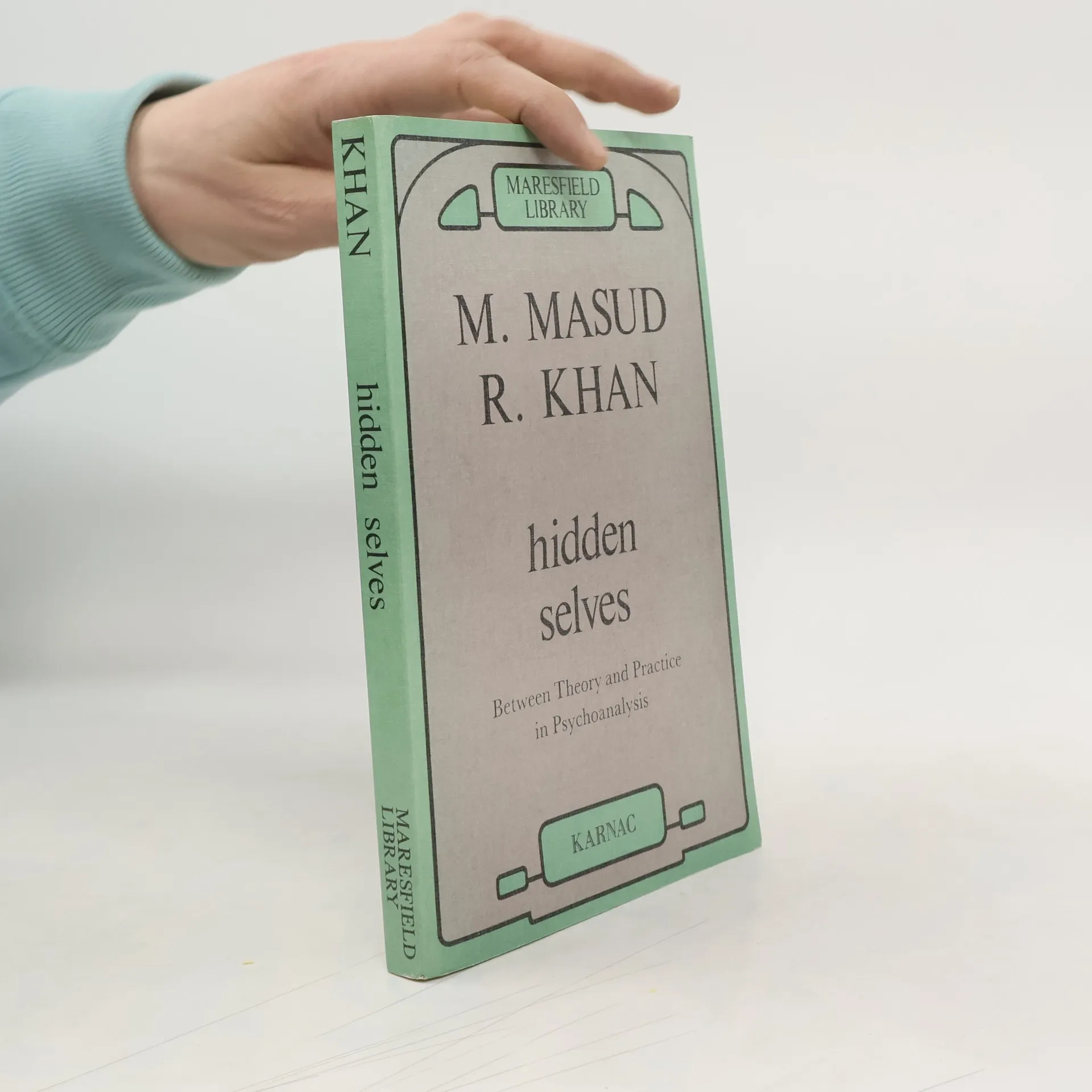
M. Masud R. Khan

    Petite Bibliothèque Payot - P113: Fragment d'une analyse
    Hidden Selves
    • " Ce fragment d'analyse est donné à titre d'exemple de la position dépressive telle qu'elle peut apparaître au cours d'une analyse.[...] " Le patient vint à l'analyse en disant qu'il ne pouvait pas parler, que cela ne coulait pas de source, qu'il ne savait pas dire des banalités et n'avait aucune faculté imaginative ou ludique et qu'il ne pouvait faire de geste spontané ni éprouver d'émoi. " Au début, tout ce que l'on peut dire, c'est qu'il venait et qu'il parlait ; son discours était circonspect, c'était de la rhétorique. Peu à peu, il devint clair qu'il écoutait des conversations intérieures et qu'il en rapportait les parties qui pouvaient m'intéresser, pensait-il. A la longue, il a fait comme une mère ou un père qui amènerait un enfant et me parlerait de lui. " Puis l'analyse se modifia en qualité, si bien que je pus avoir affaire directement à l'enfant, qui était le patient.[...] " Dans cette nouvelle phase, le matériel analytique a conduit graduellement à une névrose de transfert de type classique.[...] " La première manifestation de progrès fut rapportée par le patient lorsqu'il parla d'un sentiment tout nouveau d'affection pour sa fille. .[...]Deux fois cette semaine-là il avait versé des larmes et cela lui parut un bon présage, car il avait été incapable jusque-là de pleurer ou de rire, comme il avait été incapable d'aimer.

      Petite Bibliothèque Payot - P113: Fragment d'une analyse1992
    • Hidden Selves

      Between Theory and Practice in Psychoanalysis

      The 'hidden selves' that Masud Khan reveals to us in this third volume of his psychoanalytic writings are to be understood in two ways. Primarily, they are those aspects of the self which are inherent in, but unsuspected by, the individual concerned, and which need to be identified if that individual is to achieve a full and healthy self-awareness. More broadly, they are the ingredients of human nature which may not be evident on the surface but which can be brought out through literature or art, for example, or through the insights gained in psychoanalysis.In analysis, and over a period of time, both analyst and patient discover parts of their personality that were unknown to each other at the start. The person is not just a single 'self' but a collage of hidden selves; and one of the goals of psychoanalysis is to find out how this collage functions for the individual concerned - whether through symptomatology or through introspection. The close relationship of patient and analyst, the gradual finding of one's self through the other, was elucidated by the author in two earlier books, The Privacy of the Self and Alienation in Perversions. In this third book Masud Khan offers further evidence, mostly in the form of some remarkable case histories, of the rewards that can be achieved, by both parties, through the mutual endeavors of the psychoanalytic process.

      Hidden Selves1989