Knihobot

László Zsolnai

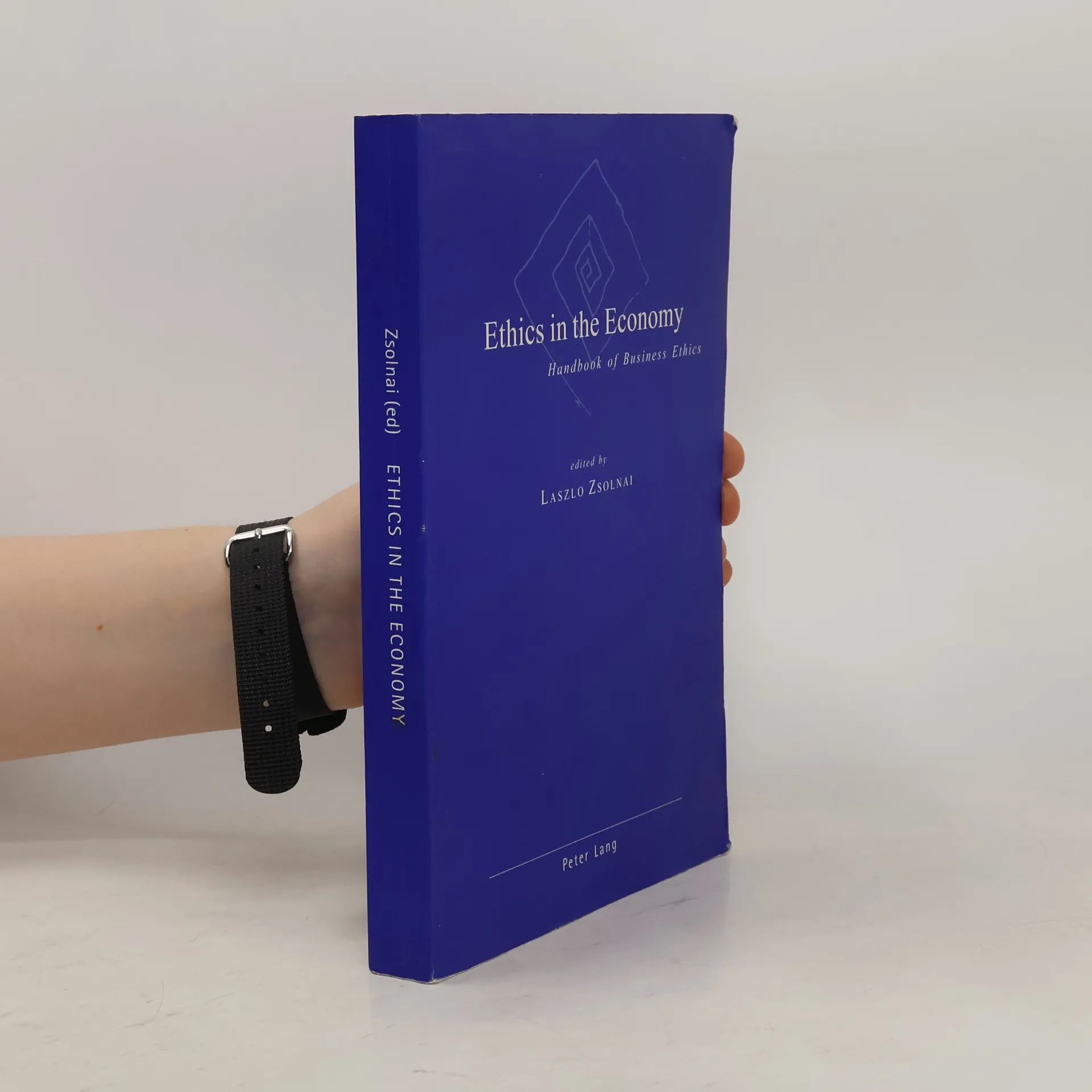
    Ethics in the Economy
    Interdisciplinary Yearbook of Business Ethics
    The European Difference
    Ethics, Meaning, and Market Society
    Post-Materialist Business
    Handbook of business ethics
    • Handbook of business ethics

      • 273 stránek
      • 10 hodin čtení
      3,5(2)Ohodnotit

      &ltI>The Handbook of Business Ethics is a substantially revised new edition of &ltI>Ethics in the Economy, currently in its third printing. With new content and revised material, the contributors rally against the concept that ethics is only an instrument for improving business efficacy. They see ethics as fundamental to all levels of economic activity, from individual and organizational to societal and global.&ltBR> Globally, the ethicality of economic actions is often highly questionable and in many respects unacceptable. The ethical nature of the economy should be considerably improved, but there is an inherent paradox: if we want to develop the ethicality of our economic affairs only as a means of achieving higher efficiency, in the final analysis we will fail. We have the chance to improve the ethical quality of our economic activities only if our motivation is genuinely ethical, that is, only if we want to realize ethical conduct for its own sake.

      Handbook of business ethics
    • Post-Materialist Business

      Spiritual Value-Orientation in Renewing Management

      • 90 stránek
      • 4 hodiny čtení

      Focusing on a spiritual approach to business and management, this book explores a pluralistic view of spirituality. It highlights inspiring case studies of alternative organizations that transcend materialism, emphasizing their commitment to serving the common good, society, nature, and future generations. Through these examples, the text advocates for a transformative mindset in the business world.

      Post-Materialist Business
    • Ethics, Meaning, and Market Society

      • 94 stránek
      • 4 hodiny čtení

      Focusing on the interplay between ethics and market society, this book explores critical themes relevant to economics, business, ecology, and social dynamics. It serves as a resource for advanced students, academics, and professionals, providing insights into ethical considerations in contemporary issues. The text aims to foster a deeper understanding of the moral implications of market practices and their impact on society, making it a valuable contribution to the discourse on ethics in various fields.

      Ethics, Meaning, and Market Society
    • The European Difference

      • 124 stránek
      • 5 hodin čtení

      This book explores the business ethics initiatives and insights from member universities of the Community of European Management Schools (CEMS). Authored by leading European business ethics professors, it serves as a guide to the European business ethics movement and highlights the collaboration with various international companies.

      The European Difference
    • This volume comprises the work of twenty scholars and practitioners from Europe, America, Asia and Africa. Contributors represent a diversity of fields including organizational science, economics, systems theory, personality psychology, business ethics, finance, management, philosophy, political science, sociology, and ecology. All the papers stand for a more human and ethical approach to economics and business.The first part contains challenging papers on the myth of rationality, corporate social responsibility, critical pragmatism, moral disengagement mechanisms, and ethical decision-making. The papers listed under ‘Innovative Practices and Policy Reforms’ address issues of authenticity in business, sustainable investments, ethical consumerism, and happiness in economics. The Opinions section focuses on the ecological sustainability of business. The Debate section concentrates on the ethics management paradox, which states that opportunistic ethical initiatives fail. Only genuine ethics works in business.

      Interdisciplinary Yearbook of Business Ethics
    • Ethics in the Economy

      Handbook of Business Ethics

      • 331 stránek
      • 12 hodin čtení

      The first part contains challenging papers on the myth of rationality, corporate social responsibility, critical pragmatism, moral disengagement mechanisms, and ethical decision-making. The papers listed under 'Innovative practices and policy reforms' address issues of authenticity in business, sustainable investments, ethical consumerism, and happiness in economics. The opinions section focuses on the ecological sustainability of business. The debate section concentrates on the ethics management paradox, which states that opportunistic ethical initiatives fail. Only genuine ethics work in business.

      Ethics in the Economy
    • Buddhism points out that emphasizing individuality and promoting the greatest fulfillment of the desires of the individual conjointly lead to destruction. The book promotes the basic value-choices of Buddhism, namely happiness, peace and permanence. Happiness research convincingly shows that not material wealth but the richness of personal relationships determines happiness. Not things, but people make people happy. Western economics tries to provide people with happiness by supplying enormous quantities of things and today’s dominating business models are based on and cultivates narrow self-centeredness.But what people need are caring relationships and generosity. Buddhist economics makes these values accessible by direct provision. Peace can be achieved in nonviolent ways. Wanting less can substantially contribute to this endeavor and make it happen more easily. Permanence, or ecological sustainability, requires a drastic cutback in the present level of consumption and production globally. This reduction should not be an inconvenient exercise of self-sacrifice. In the noble ethos of reducing suffering it can be a positive development path for humanity.

      Ethical Principles and Economic Transformation