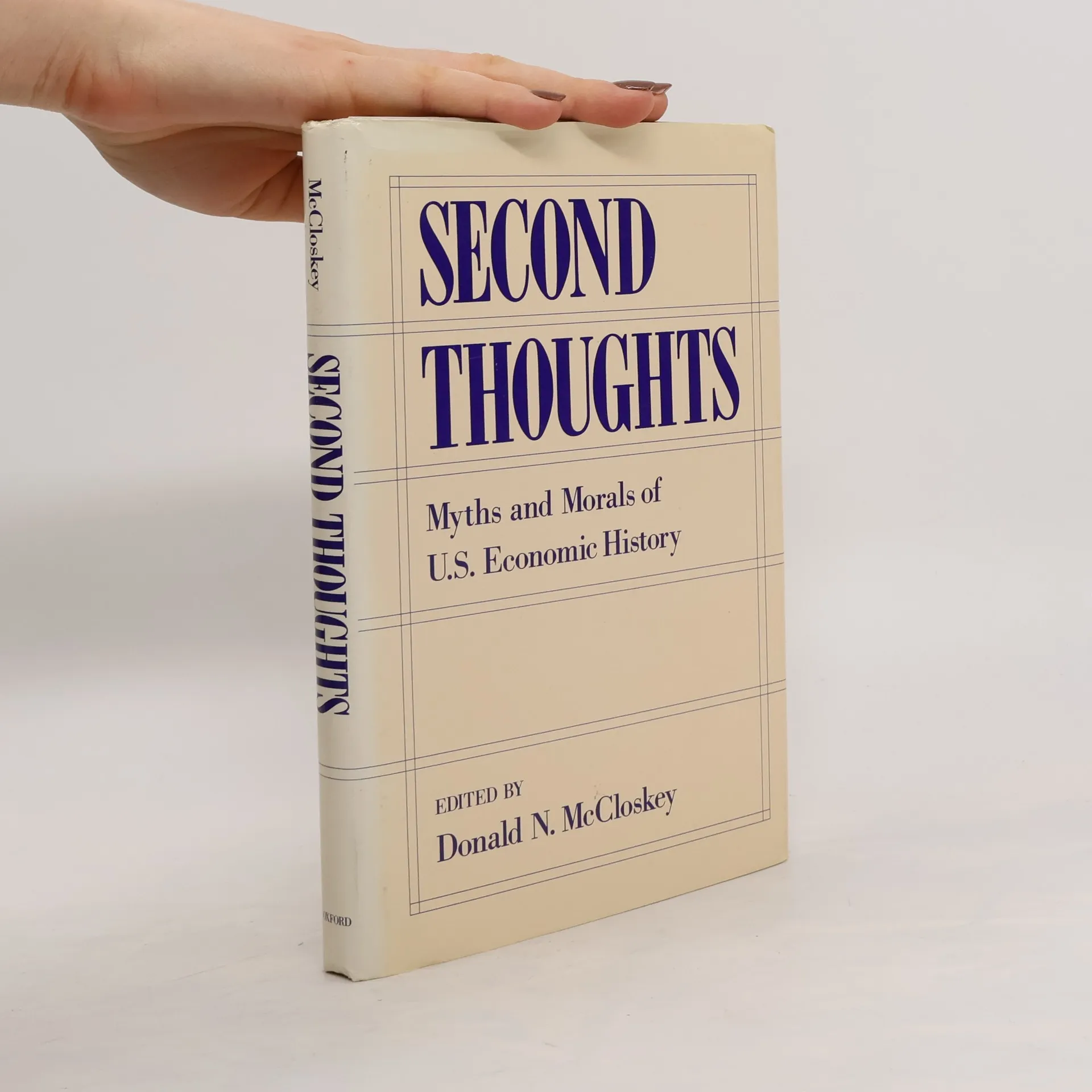
Introduction The Argument in Brief -- Economics Is in Scientific Trouble -- An Antique, Unethical, and Badly Measured Behaviorism Doesn't Yield Good Economic Science or Good Politics -- Economics Needs to Get Serious about Measuring the Economy -- The Number of Unmeasured "Imperfections" Is Embarrassingly Long -- Historical Economics Can Measure Them, Showing Them to Be Small -- The Worst of Orthodox Positivism Lacks Ethics and Measurement -- Neoinstitutionalism Shares in the Troubles -- Even the Best of Neoinstitutionalism Lacks Measurement -- And "Culture," or Mistaken History, Will Not Repair It -- That Is, Neoinstitutionalism, Like the Rest of Behavioral Positivism, Fails as History and as Economics -- As It Fails in Logic and in Philosophy -- Neoinstitutionalism, in Short, Is Not a Scientific Success -- Humanomics Can Save the Science -- But It's Been Hard for Positivists to Understand Humanomics -- Yet We Can Get a Humanomics -- And Although We Can't Save Private Max U -- We Can Save an Ethical Humanomics.
Deirdre N. McCloskey Pořadí knih (chronologicky)
Deirdre Nansen McCloskey je známá svými vlivnými pracemi, které zkoumají vztah mezi myšlenkami, ekonomikou a společenským pokrokem. Její analýzy se často zaměřují na to, jak se v průběhu historie měnily ekonomické a kulturní normy, aby pochopila, jak obohacují svět. Klade důraz na sílu lidského ducha a inovací, spíše než na pouhý hromadění kapitálu či institucionální změny.




"In Bettering Humanomics: A New and Old Approach to Economic Science, Deirdre Nansen McCloskey offers a critique of contemporary economics and a proposal for a better humanomics. McCloskey argues for an economic science that accepts the models and mathematics, the statistics and experiments of the current orthodoxy, but also attests to the immense amount we can still learn about human nature and the economy. From observing human actions in social contexts, to the various understandings attained by studying history, philosophy, and literature, McCloskey presents the myriad ways in which we think about life and how we justify and understand our actions in a synergistically human approach towards economic theory and practice"-- Provided by publisher
Leave Me Alone and I'll Make You Rich
- 232 stránek
- 9 hodin čtení
"Deirdre McCloskey is one of our best-known economic historians and an advocate for free market capitalism and the power of ideas in shaping our economy. Leave Me Alone and I'll Make You Rich collects the provocative arguments put forward by McCloskey in a trilogy published by the Press that mounts a vigorous defense of capitalism as told through the story of the rise of the bourgeois. Co-authored with Art Carden, Leave Me Alone and I'll Make You Rich is a libertarian take on economic development and the role of government and, indeed, tells a different story of market expansion and democratization than that of Thomas Piketty or Joseph Stiglitz. Carden and McCloskey succinctly demonstrate the power of new technologies and new ideas about democracy, liberty, and dignity for all people in fueling economic growth and prosperity in modernizing Europe"-- Provided by publisher
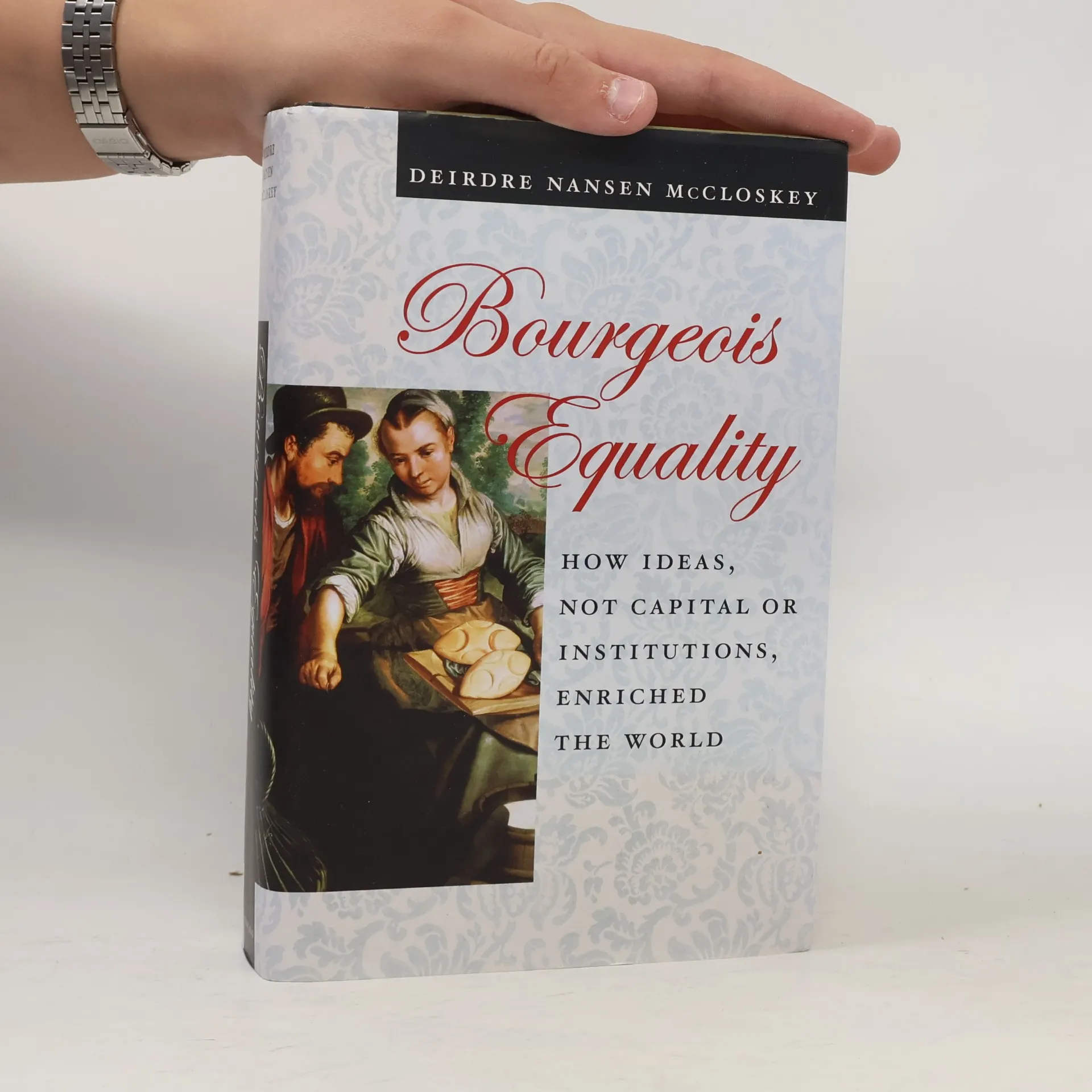
Bourgeois Equality
How Ideas, Not Capital or Institutions, Enriched the World
- 768 stránek
- 27 hodin čtení
Most humans today are significantly better off than their ancestors, a point emphasized by economist and historian Deirdre McCloskey in the final volume of her trilogy that champions the often-criticized virtues of the bourgeoisie. McCloskey argues that the poorest will soon experience relative wealth akin to that of Japan, Sweden, and Botswana. Contrary to the views of many economists, from Adam Smith to Thomas Piketty, who attribute the Great Enrichment since 1800 to accumulated capital, McCloskey asserts that our prosperity stems from ideas, not just material wealth. While capital is essential, she likens it to oxygen—necessary but not the driving force behind “trade-tested betterment.” She critiques the World Bank's approach of simply adding institutions, asserting that it fails to address the root cause of progress. Instead, she highlights the transformative power of ideas, particularly those promoting equal liberty and dignity for ordinary individuals. This liberalism emerged from revolutions in northwest Europe, fostering a unique respect for innovation and challenging established hierarchies. McCloskey's writing is both compelling and insightful, blending economic history with a narrative urgency that reveals the profound impact of ideas over material factors. Her work is a bold and captivating exploration of economic thought.
Proč je vzduch zadarmo a panenství drahé : kapitoly z populární ekonomie
- 184 stránek
- 7 hodin čtení
Proč jsou obézní dívky svolnější k rizikovému sexu než jejich atraktivnější vrstevnice? Proč fyzicky atraktivní lidé dostávají půjčku na nižší úrok než ti méně vzhlední? Proč se metrosexualita finančně vyplácí a proč se modroocí muži ze severu Evropy v baru zpijí spíše než Španěl či Ital? I na tyto otázky dnes hledají odpovědi ekonomové – a kniha Proč je vzduch zadarmo a panenství drahé je plná odpovědí. Ekonomie je často vnímána jako potřebná, nicméně poněkud „sucharská“ věda. Lukáš Kovanda nechce bořit mýty. Možná je jen lehce nabourat. Cílem jeho „učebnice pop-ekonomie“ je dokázat, že ekonomie je vlastně docela zajímavá a třeba i vzrušující věda, která má hodně co říci k celé škále společenských otázek.
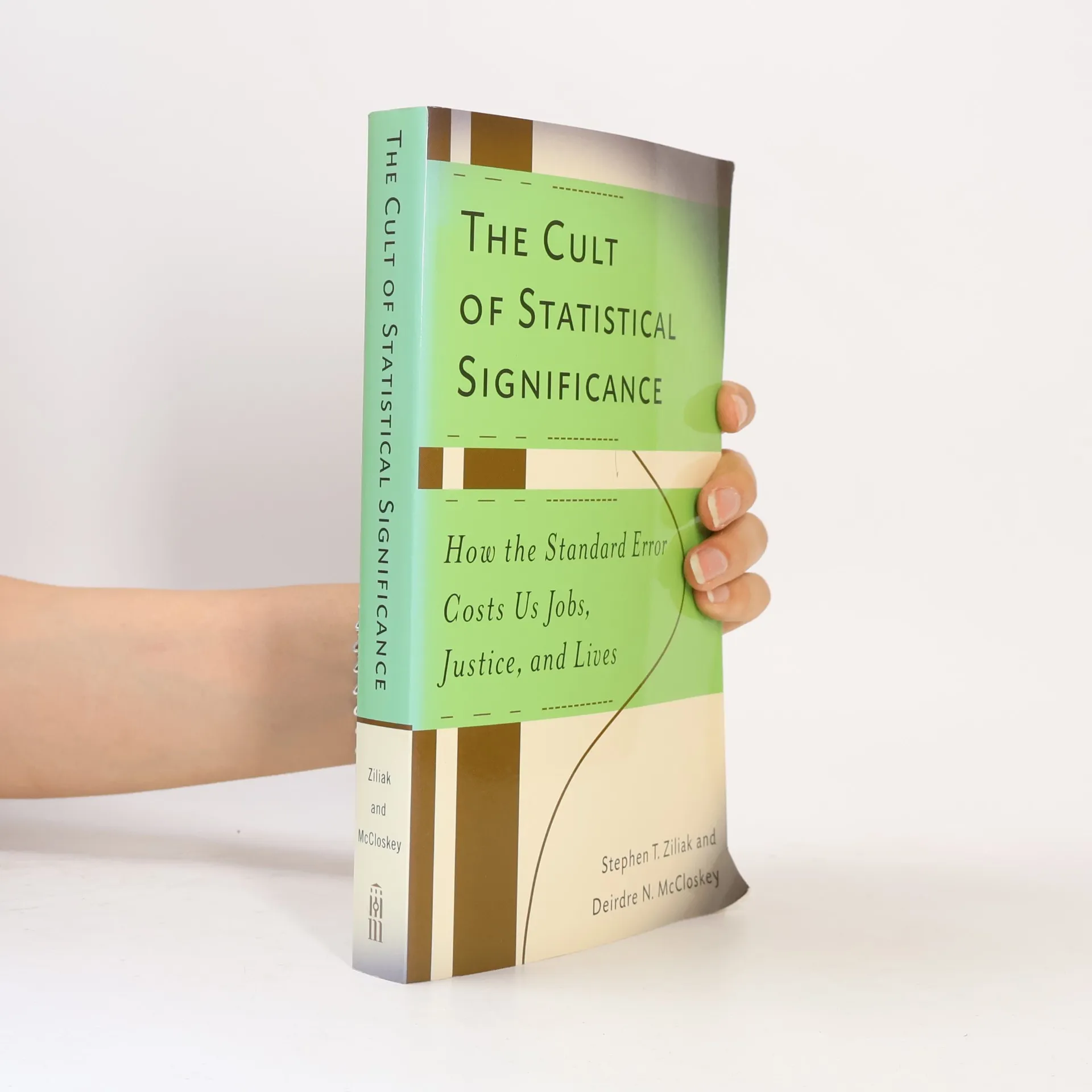
The Cult of Statistical Significance
- 321 stránek
- 12 hodin čtení
How the most important statistical method used in many of the sciences doesn't pass the test for basic common sense
The Bourgeois Virtues
- 634 stránek
- 23 hodin čtení
For a century and a half artists and intellectuals of Europe have scorned the bourgeoisie. Applying a tradition of virtue ethics to our lives in modern economies, this title affirms American capitalism without ignoring its faults and celebrates the bourgeois lives we live, without supposing that they must be lives without ethical foundations.
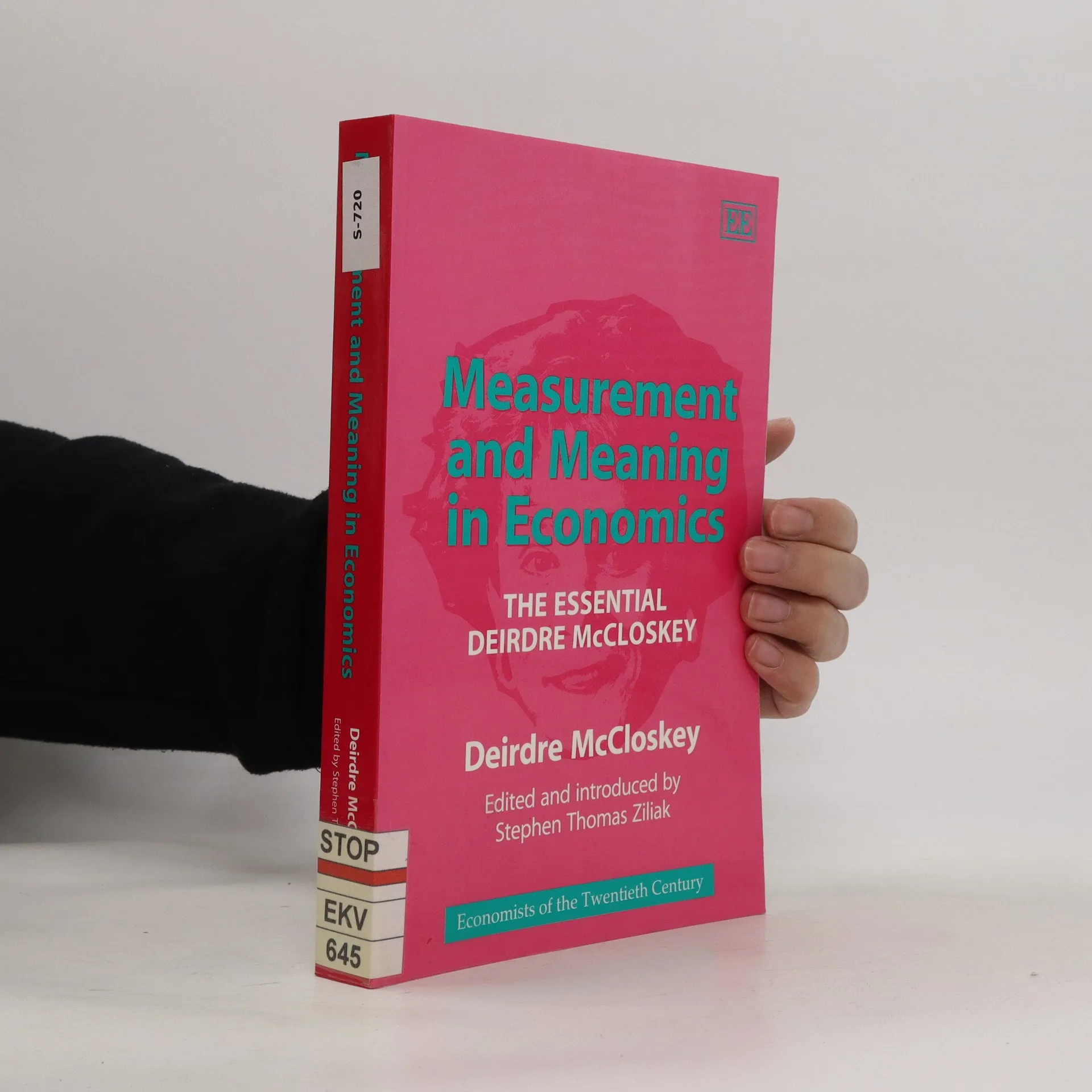
Measurement and Meaning in Economics
- 416 stránek
- 15 hodin čtení
This essential book, now available in paperback, collects the writings of Deirdre McCloskey on economic history and the rhetoric of economics. The essays have been presented to show McCloskey's evolution over time: from economist to critic, positivist to postmodernist, conventional economist to feminist economist, man to woman. Measurement and Meaning in Economics allows the reader to experience an astonishing personal and intellectual journey with one of today's most fascinating economists. McCloskey argues that economics has become a historical and narrowly scientific, which is a harmful development for a moral science. In all of the papers presented in this volume she writes with historical consciousness and critical understanding in an attempt to repair the dysfunctional relationship between economics and the humanities. This book should be read not only by students and scholars of economic history and philosophy, but by all those concerned with the state of economics and its place in the social sciences.
Economical Writing
- 112 stránek
- 4 hodiny čtení
A valuable short guide for mastering the craft of academic writing! Students and young professionals who care about direct, clear expression should read this lucid, delightful gem by an author who practices what she advises. McCloskey s systematic treatment provides a range of insights and practical advice for better writing by scholars in every field.
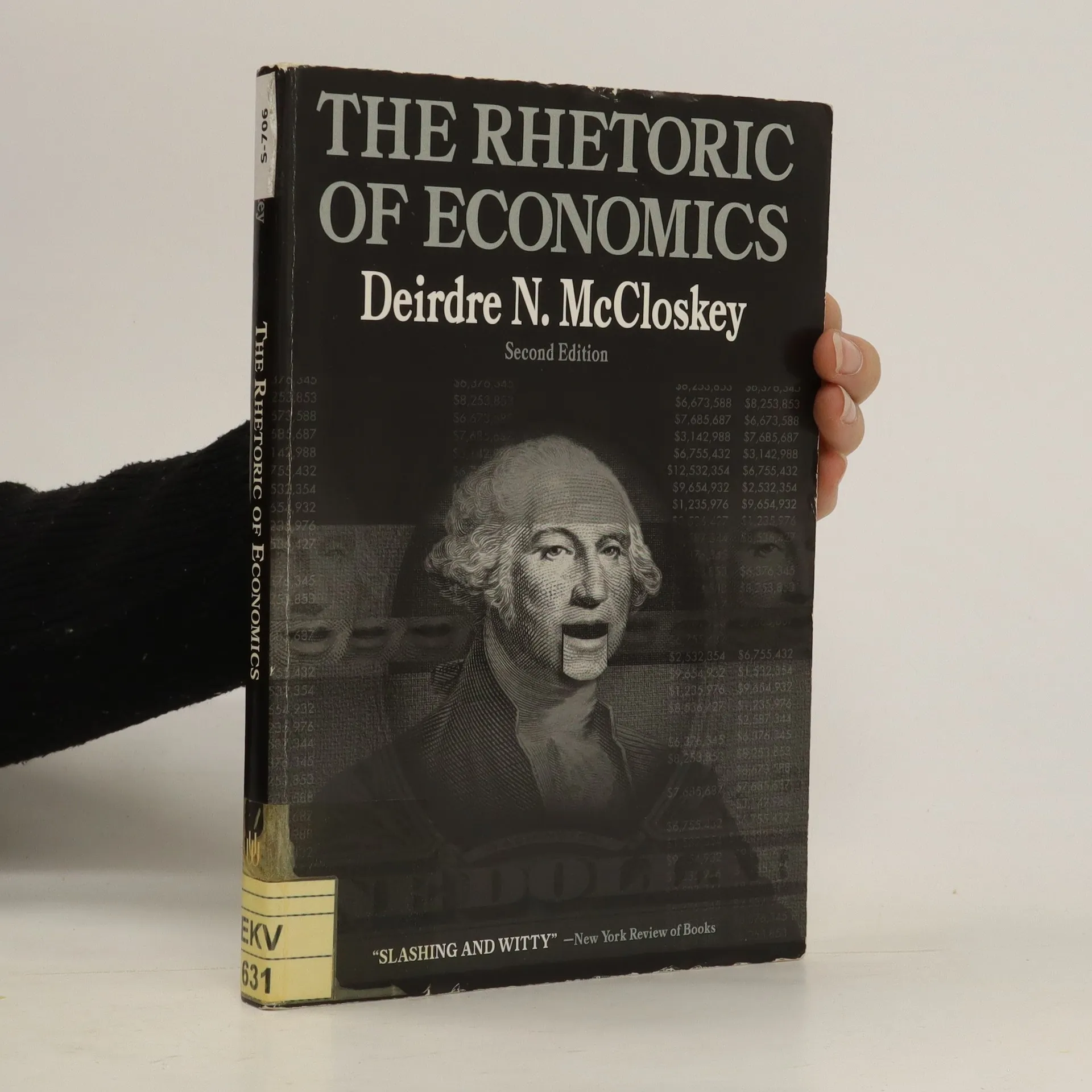
The Rhetoric of Economics
- 248 stránek
- 9 hodin čtení
A classic in its field, this pathbreaking book humanized the scientific rhetoric of economics to reveal its literary soul. In this completely revised second edition, Deirdre N. McCloskey demonstrates how economic discourse employs metaphor, authority, symmetry, and other rhetorical means of persuasion. The Rhetoric of Economics shows economists to be human persuaders, poets of the marketplace, even in their most technical and mathematical moods.
This book examines the past as a way of preparing for the future. McCloskey has brought together leading economic historians who show that commonly accepted perceptions of our economic past can be wrong and, therefore, misleading. The contributors (including Robert Higgs, Julian and Rita Simon, Elyce Rotella, Terry Anderson, Barry Eichengreen, Price Fishback, Susan Phillips and J. Richard Zecher) address a wide range of issues: Teapot Dome scandal, banking regulation, "new" immigration problems, A T & T and deregulation, Third World development policies, the role of "big" government, technological innovation, and property rights. Each essay explores the role of government policy in the outcome of events. Written in nontechnical prose, this book is an essential reference for those interested in our economic past.
Aplikovaná teorie ceny
- 551 stránek
- 20 hodin čtení
1907. The book begins: In a small drawing-room, whose windows looked out upon a wintry Boston street, three people were sitting. It was a room rather empty and undecorated, but its intense warmth seemed in some degree to furnish it; one couldn't associate austerity with such an almost tropical temperature. There were rows of books on white shelves, a pale Donatello cast on the wall, and two fine bronze vases filled with roses on the mantelpiece. Over the roses hung a portrait in oils, very sleek and very accurate, of a commanding old gentleman in uniform, painted by a well-known German painter, and all about the room were photographs of young women, most of them young mothers, with smooth heads and earnest faces, holding babies. Outside, the snow was heaped high along the pavements and thickly ridged the roofs and lintels. After the blizzard the sun was shining and all the white glittered. The national colors, to a patriotic imagination, were pleasingly represented by the red, white and blue of the brick houses, the snow, and the vivid sky above.