

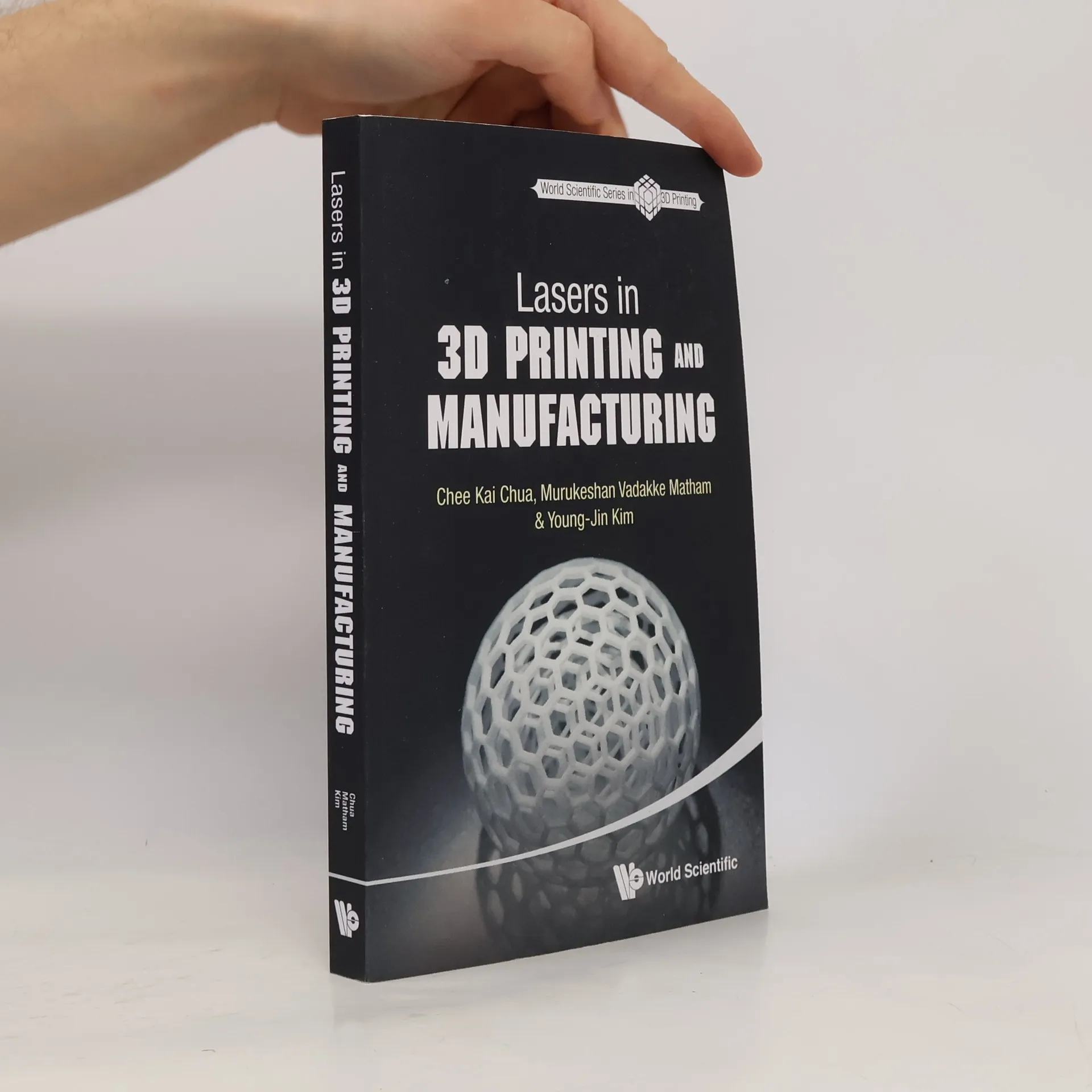

World Scientific Series in 3D Printing - 2: Lasers in 3D Printing and Manufacturing
- 280 stránek
- 10 hodin čtení
Additive Manufacturing (AM), popularly known as 3D printing, is playing an increasingly significant role in the manufacturing arena. AM has revolutionized how prototypes are to be made and small batch manufacturing should be carried out. Due to high flexibility and high efficiency of lasers, laser-assisted Manufacturing (LAM) and AM technologies are recently getting much attention over traditional methods. This textbook is a timely information resource for undergraduates, postgraduates and researchers who are interested in this emerging technology. The book will cover the basics of lasers, optics and materials used for manufacturing and 3D printing. It will also include several case studies for readers to apply their understanding of the topics, provide sufficient theoretical background and insights to today's key laser-assisted AM processes and conclude with the future prospects of this exciting technology. This is the first textbook tailored specifically for Lasers in 3D Printing and Manufacturing with detailed explanations. The book will focus on laser-assisted 3D printing and Additive Manufacturing (AM) from basic principles of lasers, optics and AM materials to advanced AM technologies, including in-depth discussion on critical aspects throughout the laser-assisted AM processes, such as optical system design, laser-material interaction and laser parameters' optimization.