


Knihobot

Kurt Gödel

    28. duben 1906 – 14. leden 1978

    Kurt Gödel byl rakousko-americký logik, matematik a filozof, který zásadně ovlivnil vědecké a filozofické myšlení 20. století. Je známý především svými dvěma větami o neúplnosti, které ukázaly, že v každém dostatečně silném formálním systému existují pravdivá tvrzení, jež nelze z axiomů dokázat. K prokázání těchto vět vyvinul Gödel svou metodu, dnes známou jako Gödelovo kódování, která přiřazuje přirozená čísla formálním výrazům. Jeho práce v oblasti teorie důkazů také objasnila souvislosti mezi různými logickými systémy a prokázal, že hypotézu kontinua nelze z přijatých axiomů teorie množin vyvrátit.

    Kurt Gödel
    Principia Mathematica
    Zeiteinteilung (Maximen) I und II / Time Management (Maxims) I and II / Kurt Gödel: Philosophische Notizbücher / Philosophical Notebooks Band 2
    Collected works 2
    Collected works 1
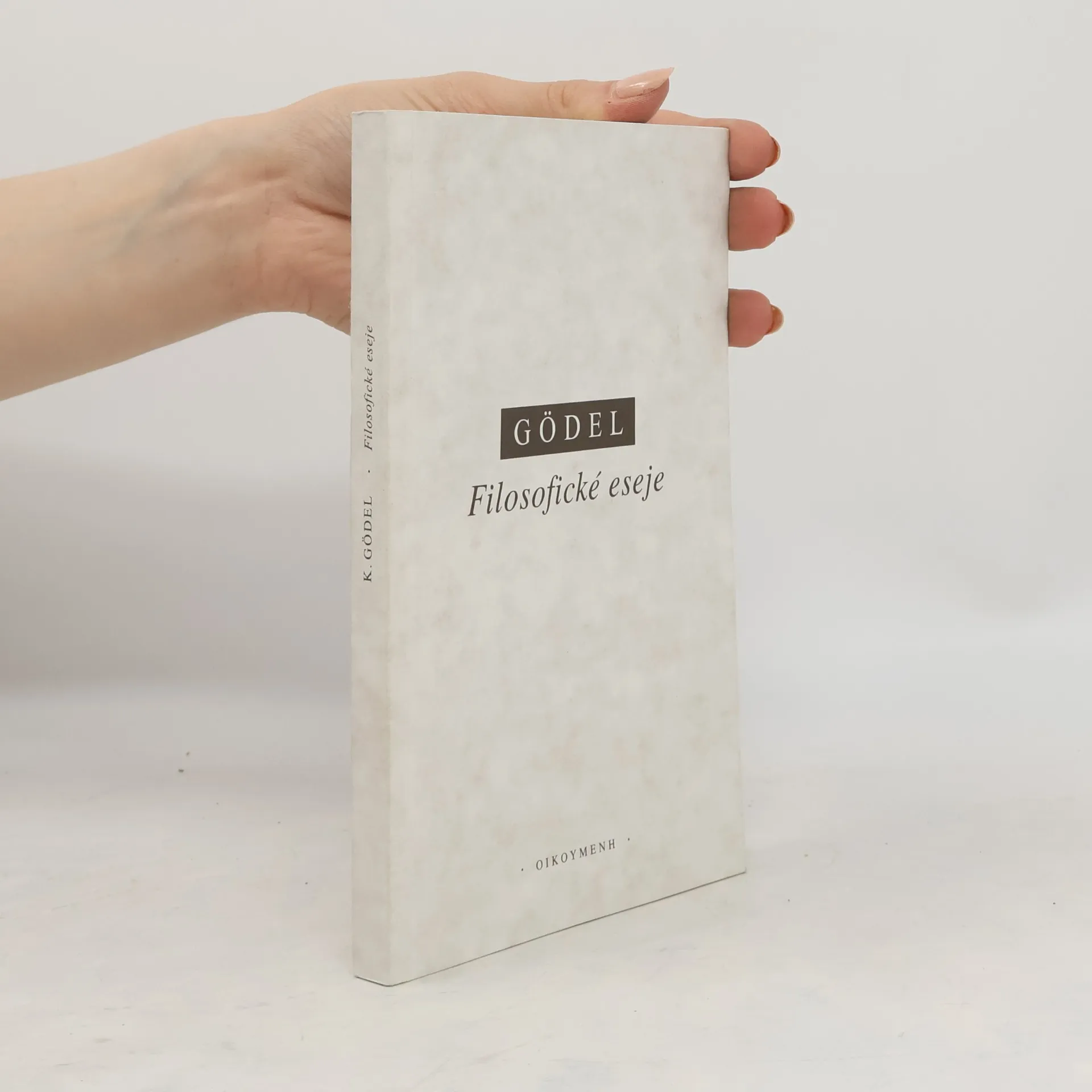
    Filosofické eseje
    Úplnost a neúplnost
    • Úplnost a neúplnost

      • 138 stránek
      • 5 hodin čtení
      5,0(1)Ohodnotit

      Další kniha z řady základních textů evropské vzdělanosti iniciovaná Petrem Vopěnkou. A po desetiletích teprve druhá přeložená kniha zásadních textů jednoho z největších matematiků, logiků a myslitelů dvacátého století. Gödelovy věty (z roku 1931) o neúplnosti jsou i přes svojí stručnost stále vlivným textem nejen exaktních věd (zejm. matematické logiky). Přesahují do filosofie (a nejen matematiky), neboť svou podstatou stanovují omezenost i tak exaktní vědy, kterou matematika je (a ve svém důsledku třeba i nemožnost dokázat úplnou bezespornou teorii, což má důsledky i pro aritmetiku přirozených čísel). Kniha vedle těchto stěžejních textů obsahuje úvodní poznámku a bohatou předmluvu Vítězslava Švejdara, na závěr je doplněna autorovou bibliografií.
      Úplnost a neúplnost
    • Soubor publikovaných i nepublikovaných filosofických esejů jednoho z největších logiků 20. století.

      Filosofické eseje
    • Kurt Gödel (1906 - 1978) was a preeminent logician of the twentieth century, renowned for his pivotal contributions to the completeness of logic, the incompleteness of number theory, and the consistency of the axiom of choice and the continuum hypothesis. His work also encompassed constructivity, the decision problem, and the foundations of computability theory, alongside a distinctive philosophical perspective on mathematics. Less recognized is his exploration of unique cosmological models that suggest the theoretical possibility of time travel into the past. The Collected Works serves as a significant compilation of Gödel's intellectual legacy. The first two volumes present his published works in full, both in original form and translation, while the third volume includes a selection of unpublished articles and lecture texts from Gödel's Nachlass. The final two volumes feature Gödel's correspondence on logical, philosophical, and scientific topics, with Volume IV covering A to G and Volume V covering H to Z, along with a complete inventory of his Nachlass. Each volume includes introductory notes with extensive commentary, English translations of German texts, and a comprehensive bibliography. This edition aims to be accessible to a broad audience, making it an essential resource for professionals and students in various fields, as well as anyone interested in the insights of one of the twentieth century's great minds.

      Collected works 1
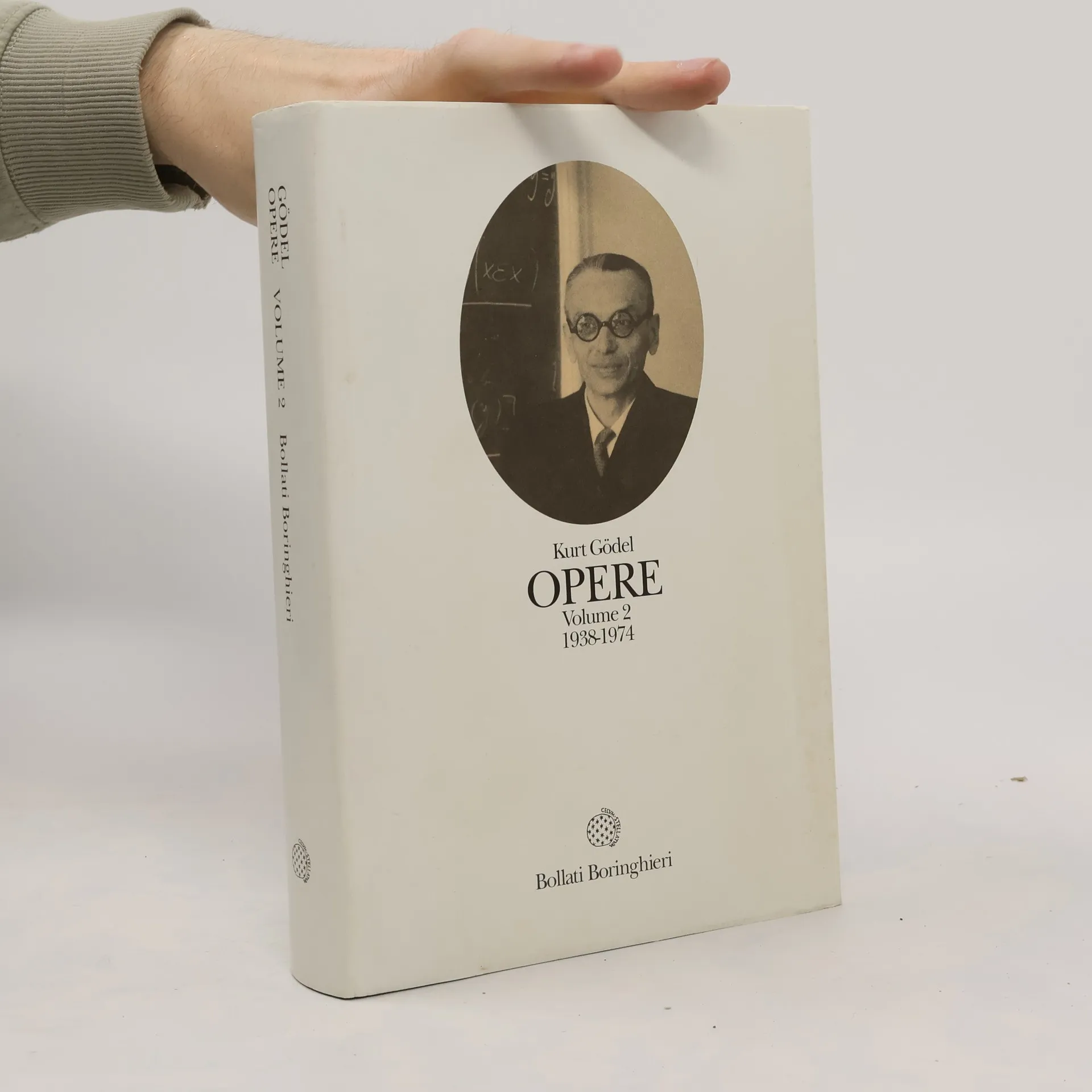
    • Kurt Gödel (1906-1978) was the most outstanding logician of the twentieth century. This second volume of a comprehensive edition of Gödel's works collects the remainder of his published work, covering the period 1938-1974. (Volume I included all of his publications from 1929-1936). Each article or closely related group of articles is preceded by an introductory note that elucidates it and places it in historical context. The aim is to make the full body of Gödel's work as accessible and useful to as wide an audience as possible, without in any way sacrificing the requirements of historical and scientific accuracy.

      Collected works 2
    • Die Maximen Philosophie von Kurt Gödel, niedergeschrieben zwischen 1934 und 1955, umfasst philosophische Überlegungen und angewandte Individualethik. Band 2 der historisch-kritischen Edition behandelt Gödels Ethik und deren Verbindung zur Stoa sowie antiker Diätetik. Eine Einführung bietet Kontext zu seinen Gedanken.

      Zeiteinteilung (Maximen) I und II / Time Management (Maxims) I and II / Kurt Gödel: Philosophische Notizbücher / Philosophical Notebooks Band 2
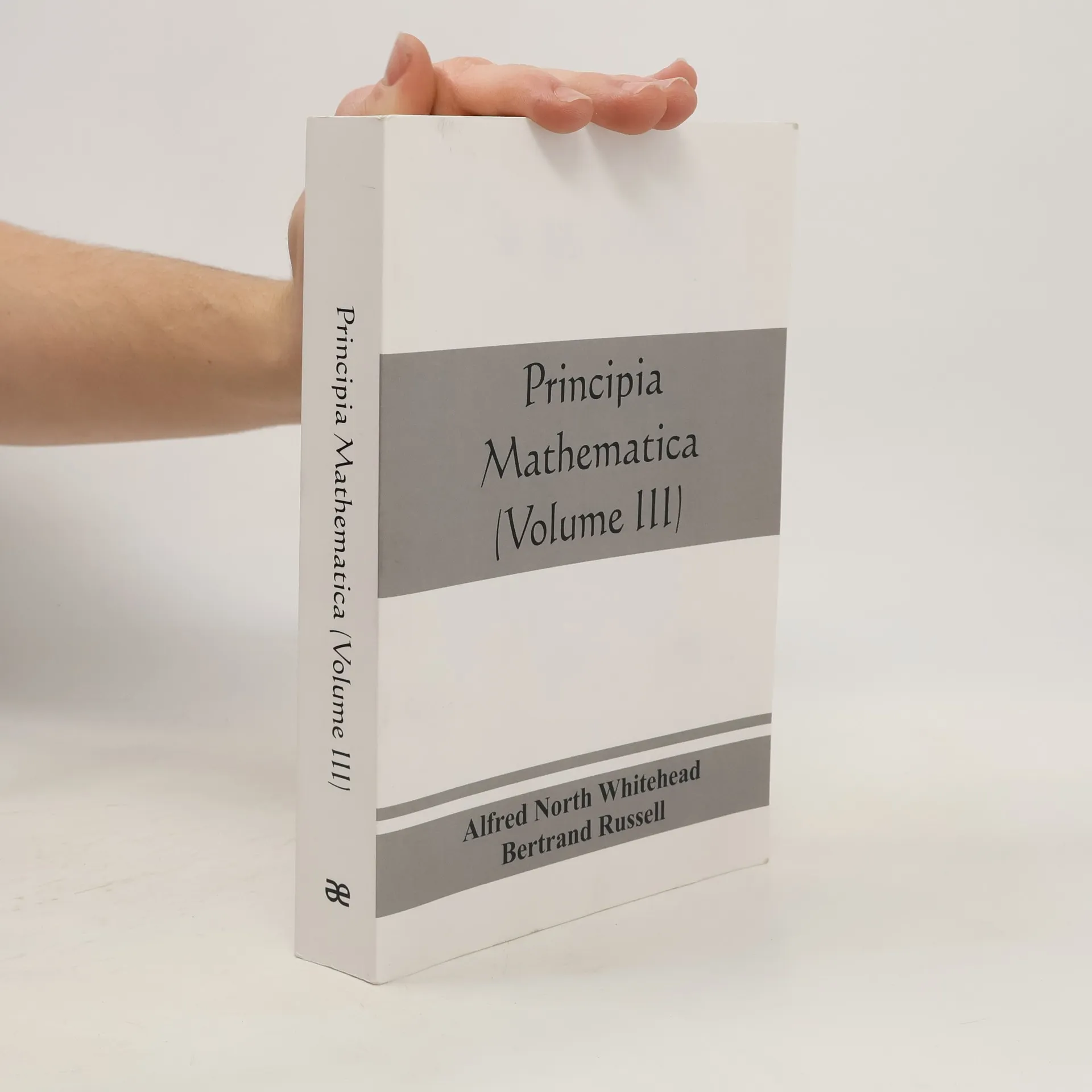
    • An Unabridged, Digitally Enlarged Printing Of Volume I of III: Part I - MATHEMATICAL LOGIC - The Theory Of Deduction - Theory Of Apparent Variables - Classes And Relations - Logic And Relations - Products And Sums Of Classes - Part II - PROLEGOMENA TO CARDIANL ARITHMITIC - Unit Classes And Couples - Sub-Classes, Sub-Relations, And Relative Types - One-Many, Many-One, And One-One Relations - Selections - Inductive Relations

      Principia Mathematica
    • Der Mathematiker Kurt Gödel hat über einen Zeitraum von 22 Jahren (1934-1955) philosophische Bemerkungen, die so genannten Maximen Philosophie (Max Phil), niedergeschrieben. Sie sind in 15 Notizbüchern in der Kurzschrift Gabelsberger überliefert. Das erste Heft enthält allgemeine philosophische Überlegungen, die Hefte zwei und drei bestehen aus Gödels Individualethik. Die dann folgenden zeigen, dass Gödel eine Wissenschaftsphilosophie entworfen hat, in der er seine Erörterungen zu Physik, Psychologie, Biologie, Mathematik, Sprache, Theologie und Geschichte in den Kontext einer Metaphysik stellt. Erstmals wird nun an der Kurt-Gödel-Forschungsstelle der Berlin-Brandenburgischen Akademie der Wissenschaften eine vollständige, historisch-kritische Edition von Gödels Philosophischen Notizbüchern vorbereitet. Im Rahmen dieser Edition erscheint jährlich ein Band. Band 5 ist schon deshalb besonders interessant, weil Gödel zu Beginn von ›Maximen V‹ seine Zufriedenheit damit erkennen lässt. Er bekundet, dass er hier zu eigenständigem Denken gelangt ist, das nicht in erster Linie in Auseinandersetzung mit anderen Autoren zustande gekommen ist. Darüber hinaus findet sich hier, neben zahlreichen bemerkenswerten philosophischen Überlegungen, eine bisher unbekannte Deutung seines (zweiten) Unvollständigkeitssatzes, die über die mathematische hinausreicht.

      Kurt Gödel: Philosophische Notizbücher/Philosophical Notebooks/Maximen V/Maxims V
    • Der Mathematiker Kurt Gödel hat über einen Zeitraum von 22 Jahren (1934-1955) philosophische Bemerkungen, die so genannten Maximen Philosophie (Max Phil), niedergeschrieben. Sie sind in 15 Notizbüchern in der Kurzschrift Gabelsberger überliefert. Das erste Heft enthält allgemeine philosophische Überlegungen, die Hefte zwei und drei bestehen aus Gödels Individualethik. Die dann folgenden zeigen, dass Gödel eine Wissenschaftsphilosophie entworfen hat, in der er seine Erörterungen zu Physik, Psychologie, Biologie, Mathematik, Sprache, Theologie und Geschichte in den Kontext einer Metaphysik stellt. Erstmals wird nun an der Kurt-Gödel-Forschungsstelle der Berlin-Brandenburgischen Akademie der Wissenschaften eine vollständige, historisch-kritische Edition von Gödels Philosophischen Notizbüchern vorbereitet. Im Rahmen dieser Edition erscheint jährlich ein Band. In Band 4 setzt Gödel sich mit Grundlagenfragen der Mathematik und Logik sowie der Philosophie der Mathematik auseinander. Zudem stehen das Verhältnis verschiedener wissenschaftlicher Disziplinen zueinander und deren spezifische Fragestellungen im Zentrum seiner Überlegungen. Zu nennen sind hier insbesondere Philosophie, Psychologie, aber auch Theologie.

      Kurt Gödel: Philosophische Notizbücher/Philosophical Notebooks/Maximen IV/Maxims IV