Upanishads
- 288 stránek
- 11 hodin čtení
Composed in Sanskrit between 900 and 600 BC, the Upanishads are man's oldest works of philosophy. The translations presented here are the oldest and most important of those that exist.



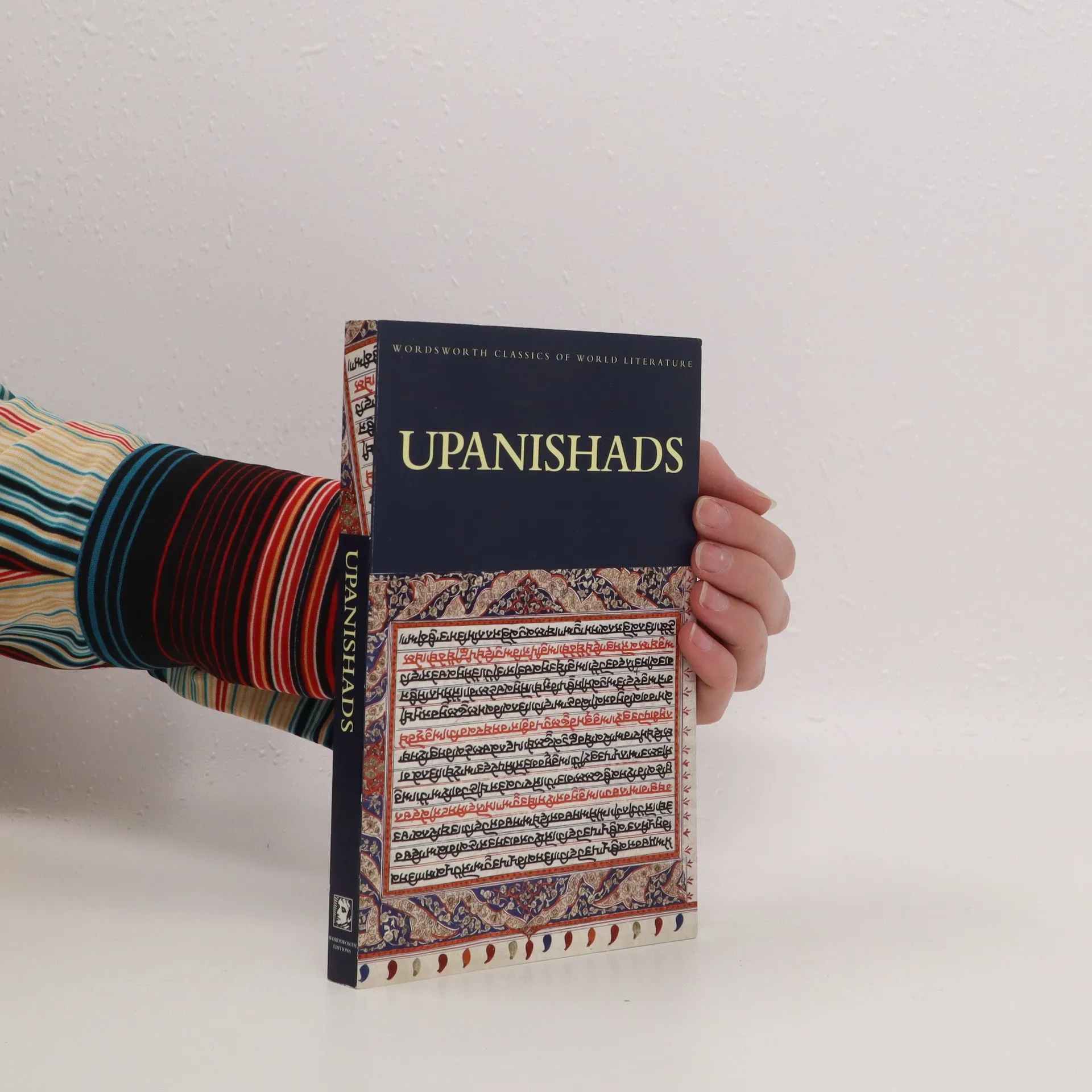

Composed in Sanskrit between 900 and 600 BC, the Upanishads are man's oldest works of philosophy. The translations presented here are the oldest and most important of those that exist.
This work has been selected by scholars as being culturally important, and is part of the knowledge base of civilization as we know it. This work is in the "public domain in the United States of America, and possibly other nations. Within the United States, you may freely copy and distribute this work, as no entity (individual or corporate) has a copyright on the body of the work. Scholars believe, and we concur, that this work is important enough to be preserved, reproduced, and made generally available to the public. We appreciate your support of the preservation process, and thank you for being an important part of keeping this knowledge alive and relevant.
The Dhammapada (Pali; Prakrit: Dhamapada; Sanskrit Dharmapada) is a versified Buddhist scripture traditionally ascribed to the Buddha himself. It is one of the best-known texts from the Theravada canon. The title, Dhammapada, is a compound term composed of dhamma and pada, each word having a number of denotations and connotations. Generally, dhamma can refer to the Buddha's "doctrine" or an "eternal truth" or "righteousness" or all "phenomena"; and, at its root, pada means "foot" and thus by extension, especially in this context, means either "path" or "verse" (cf. "foot (prosody)") or both. English translations of this text's title have used various combinations of these and related words.