Walking Switzerland - The Swiss Way
- 286 stránek
- 11 hodin čtení
Ultimate guide to 85 accessible dayhikes & multi-day hikes in 10 regions.




Ultimate guide to 85 accessible dayhikes & multi-day hikes in 10 regions.
The human imagination never ceases to be captivated by the quest for its own roots. Who were our ancestors? In the evolutionary clash of brains and brawn, what was it that prevailed and made us, Homo sapiens, uniquely human? Today scientists cite language as the distinctively human feature. But what is language a sign, a grunt? a sound with collective symbolic meaning? This remarkable book seeks to set the record straight with a critical refinement of the language theory, providing us for the first time with a scientific explanation of how Eve came to speak at all.Wrestling with the age-old question of why such a large gulf exists between humans and other animals, Philip Lieberman mines both the fossil record and modern neuroscientific techniques to chart the development of the anatomy and brain mechanisms necessary for human language as we know it. Eschewing any notion of a language gene or instinct, he pursues instead an evolutionary path in which environment acts on a biological capacity to reveal the interconnectedness of systems that make us most human: precise motor skills, speech, language, and complex thought. Eve Spoke challenges the dominant scientific theories of language's origins and forges a new understanding of the role of language in our evolution.
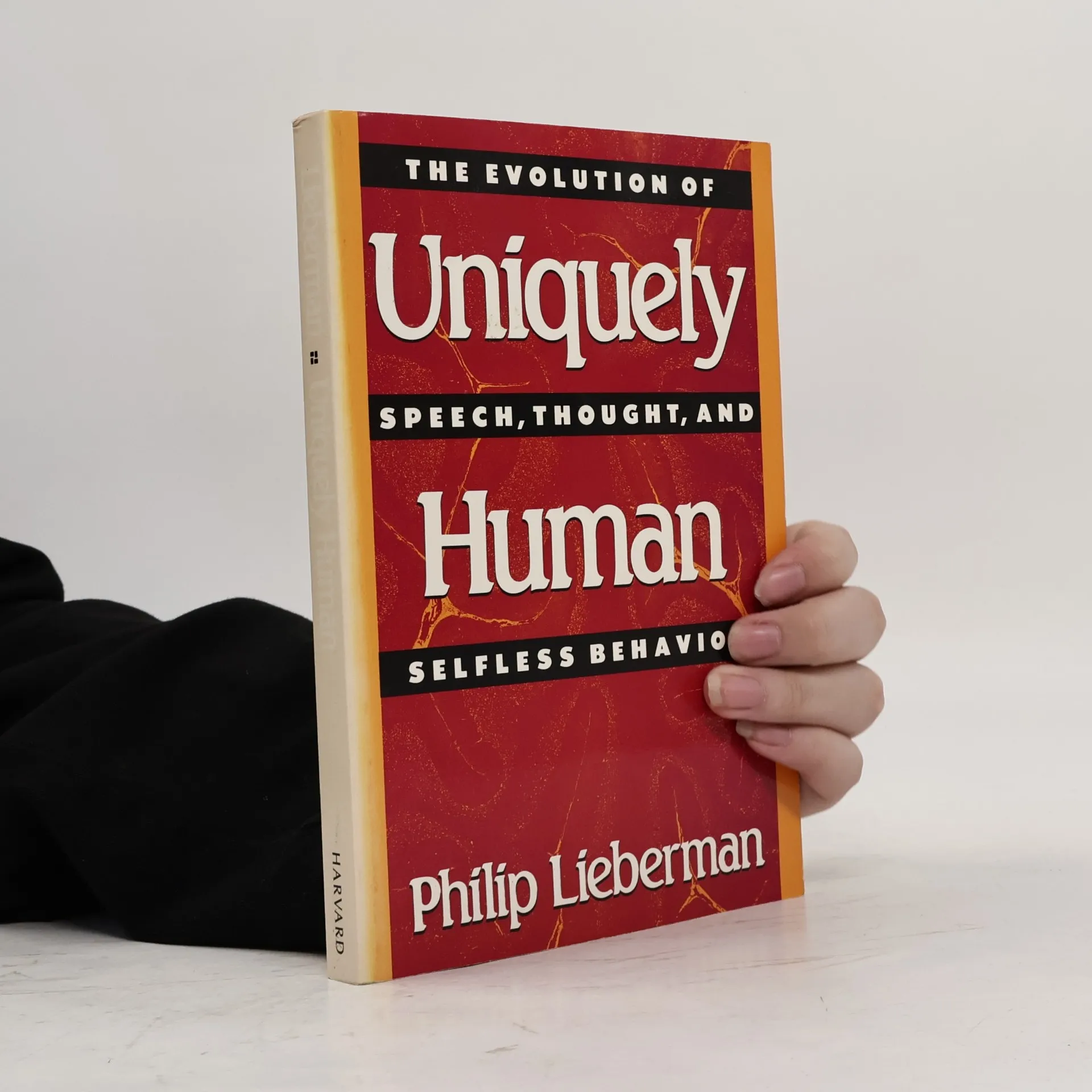
In a stimulating synthesis of cognitive science, anthropology, and linguistics, Philip Lieberman explores fundamental questions of human nature: How and why are humans distinct from other species? Can Darwinian evolution explain our linguistic and cognitive abilities? He examines how our language and thought processes differ from those of earlier hominids like *Homo erectus* and Neanderthals. Lieberman argues that evolution for rapid vocal communication shaped modern humans by developing the modern brain. Earlier hominids lacked the speech and syntax necessary for conveying complex thoughts swiftly. He discusses how natural selection influenced older brain mechanisms to create structures that regulate speech and enable complex syntax, enhancing language creativity. These unique brain mechanisms also boost cognitive abilities, allowing for abstract thinking and complex planning, which are essential for true altruism and moral behavior. Lieberman supports his claims by integrating Darwin's comparative method, insights from archaeology and child development, and advanced research techniques, including computerized brain scanning and models that recreate ancient speech sounds. This exploration will provoke fresh thought and debate on how humanity evolved.