The translation is based on the most authoritative edition of the Greek text. 'Lives of the Eminent Philosophers' is a crucial source for much of what we know about the origins of philosophy in ancient Greece. Accompanied by dozens of artworks and newly commissioned essays that shed light on Diogenes' context and influence, this new, complete translation provides a revealing glimpse into the philosophers of Plato's Academy, Aristotle's Lyceum, and Epicurus' Garden
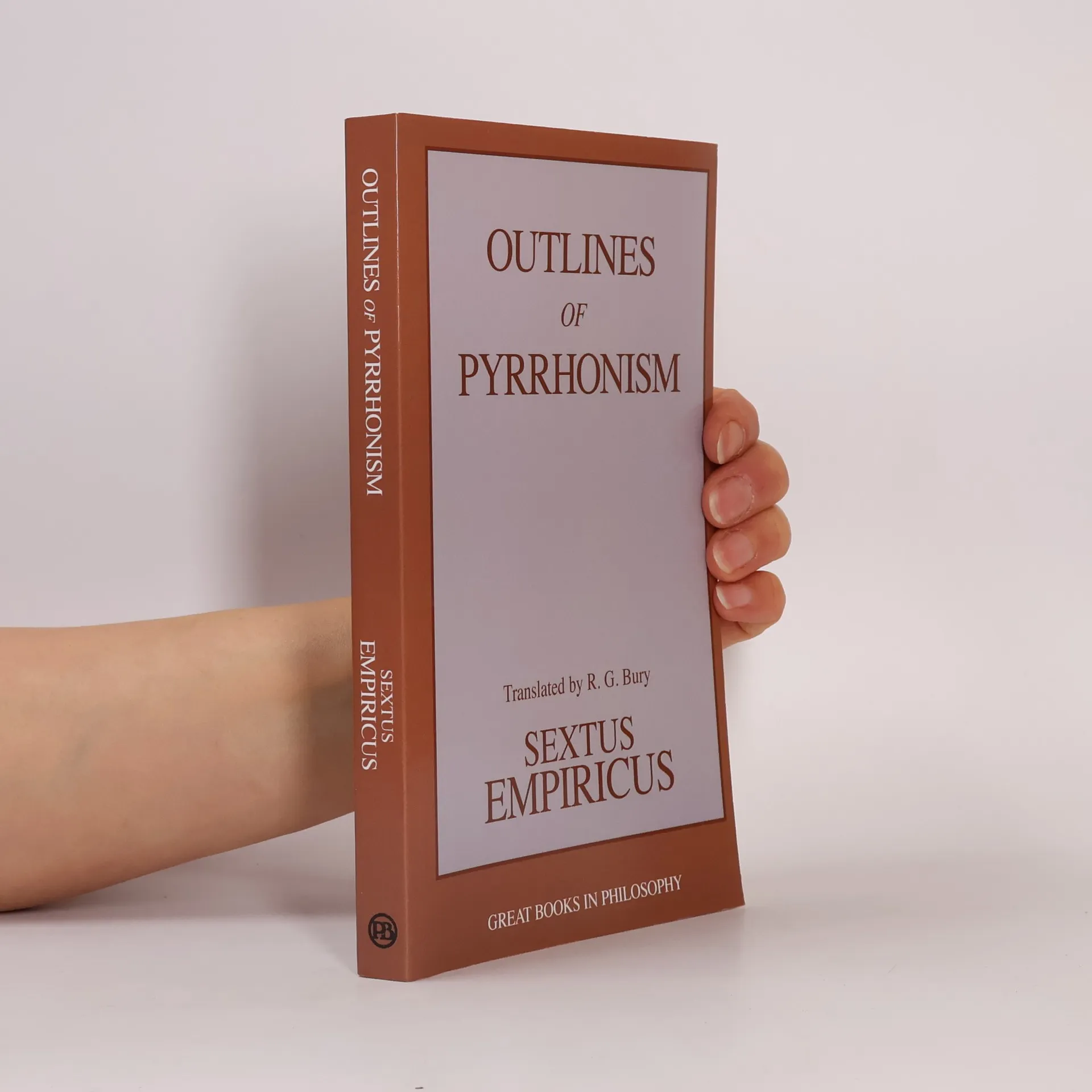
Throughout history philosophers have sought to define, understand, and delineate concepts important to human well-being. One such concept is "knowledge." Many philosophers believed that absolute, certain knowledge, is possible—that the physical world and ideas formulated about it could be given solid foundation unaffected by the varieties of mere opinion. Sextus Empiricus stands as an example of the "skeptic" school of thought whose members believed that knowledge was either unattainable or, if a genuine possibility, the conditions necessary to achieve it were next to impossible to satisfy. In other words, in the absence of complete knowledge, one must make do with the information provided by an imperfect world and conveyed to the mind through sense impressions that can often deceive us. Throughout his life Sextus Empiricus entered into intellectual combat with those who confidently claimed to possess indubitable knowledge. For skeptics, the best one can hope to achieve is a reasonable suspension of judgment—remaining ever mindful that claims to knowledge require careful scrutiny, thoughtful analysis, and critical review if we are to prevent ourselves and others from plunging headlong into mistaken notions.
Aristoteles, de grondlegger van de biologie, organiseerde een grootschalig onderzoeksproject om de dieren- en plantenwereld in kaart te brengen. Zijn geschriften, waaronder Over dieren, weerspiegelen zijn zoektocht naar regelmaat en systematiek, met de mens in een prominente rol. Hij streeft ernaar te begrijpen waarom dieren bepaalde kenmerken vertonen en zich op specifieke manieren gedragen, waarbij de begrippen 'noodzaak' en 'doel' centraal staan. Aristoteles legt de nadruk op materiële oorzaken en de functies die deze kenmerken dienen voor de instandhouding en voortplanting van organismen.
Zijn biologische geschriften zijn niet alleen empirisch, maar ook filosofisch van belang, omdat ze een levendige illustratie bieden van zijn theoretische uitgangspunten en de problemen die daarbij optreden. Ondanks zijn neiging tot ordenen, erkent hij de rijkdom en variatie van de natuur. De vertaalde werken - De partibus animalium, De incessu animalium, en De motu animalium - bieden een uitstekende kennismaking met Aristoteles als bioloog en filosoof. De eerste behandelt de wetenschappelijke studie van levende natuur, gevolgd door een vergelijkende beschrijving van lichaamsdelen en hun functies. De laatste twee werken focussen op het vermogen van dieren om zich te bewegen, waarbij het inwendige mechanisme en de uiterlijke variëteit aan bewegingen worden besproken. Over dieren is het tweede deel van de serie Aristoteles in Nederlandse ve