Knihobot

Jean-Pierre Mahé

    Histoire de l'Arménie, des origines à nos jours
    Nag Hammadi and Manichaean Studies - 55: Gnostica, Judaica, Catholica
    The Way of Hermes
    • The Way of Hermes

      New Translations of The Corpus Hermeticum and The Definitions of Hermes Trismegistus to Asclepius

      • 132 stránek
      • 5 hodin čtení

      Hermetic philosophy emphasizes the excellence of the soul through understanding, as articulated by Hermes in his teachings. The Corpus Hermeticum, a vital blend of Greek and Egyptian thought, is a cornerstone of the Western esoteric tradition. Composed in Greek between the first and third centuries A.D., it was later translated into Latin during the Renaissance by Marsilio Ficino. These writings, attributed to Hermes Trismegistus, were pivotal for Hermetic societies in Late Antique Alexandria, aiming to awaken gnosis—the realization of unity between the individual and the Supreme. This new translation of The Corpus Hermeticum captures the original's inspirational intent, while The Way of Hermes also includes the first English translation of the recently rediscovered manuscript, The Definitions of Hermes Trismegistus to Asclepius. This collection of aphorisms serves to strengthen the mind during meditation. With the right mental orientation, one can achieve a state of pure perception, revealing the true face of God. This document holds significant value for contemporary students of gnostic studies, offering insights into the spiritual path's workings. The work features contributions from notable scholars in Hermetic studies and Classical history.

      The Way of Hermes
      4,3
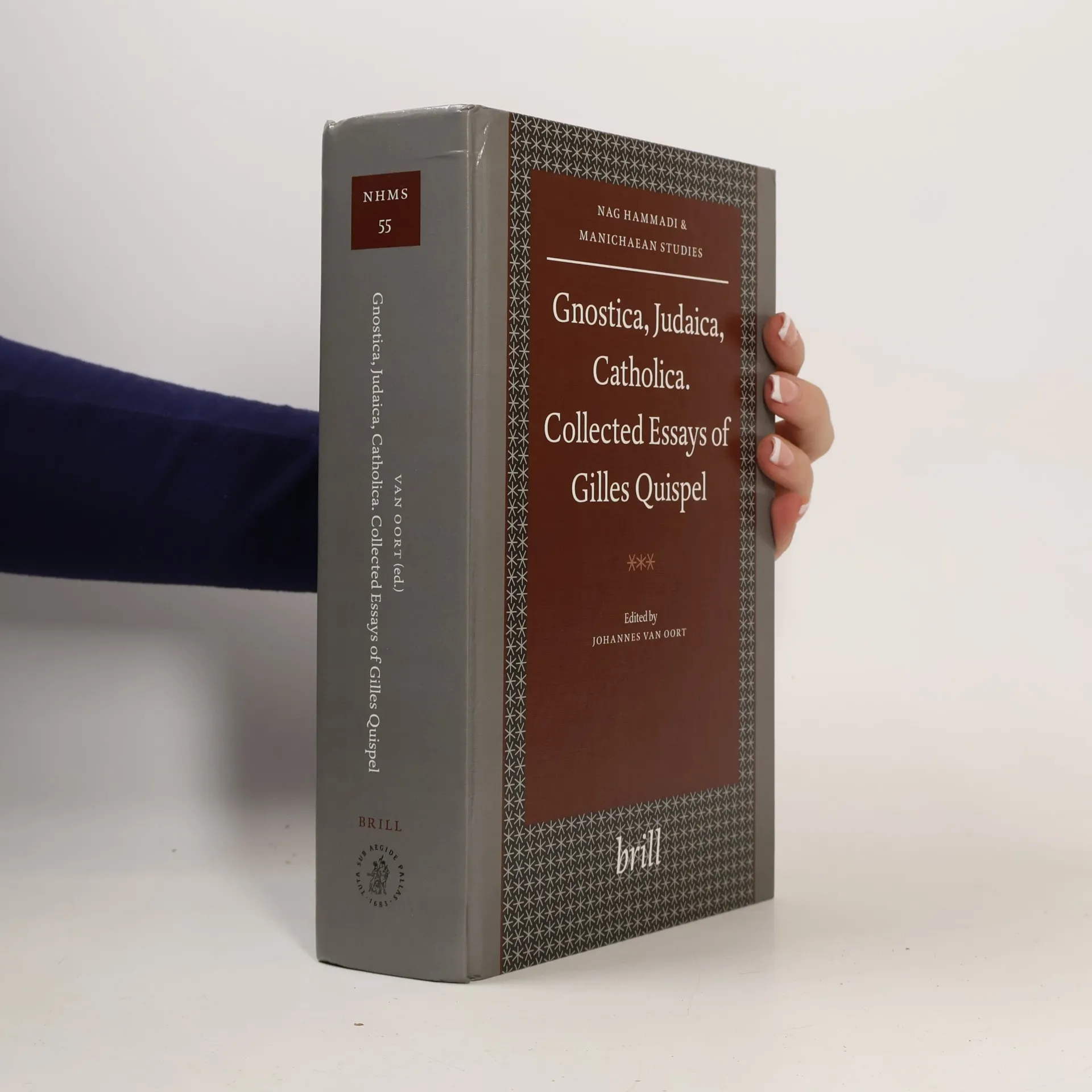
    • Nag Hammadi and Manichaean Studies - 55: Gnostica, Judaica, Catholica

      Collected Essays of Gilles Quispel

      • 869 stránek
      • 31 hodin čtení

      This volume brings together a rich & varied collection of essays by Gilles Quispel (1916-2006), Professor of the History of the Early Church at Utrecht University from 1951 until retirement in 1983. During his illustrious career, Quispel was also visiting Professor at Harvard University in 1964/5, & visiting Professor at the Catholic University of Leuven from 1969 until 1974. The 50 essays collected in this volume testify to most of the prominent themes from Professor Quispel's scholarly career: the writings of the Nag Hammadi library in general & the Gospel of Thomas in particular; Tatian's Diatessaron & its influences; the Hermetica; Mani & Manichaeism; the Jewish origins of Gnosticism; & Gnosis & the future of Christianity. This volume also makes a number of his less known earlier publications (mainly presented under the heading 'Catholica') available to the international community. Until shortly before he died, Quispel remained active in his study of the Gospel of Thomas. He had been one of the 1st to acquire the Coptic text of the Gospel of Thomas, of which he published the 1st translation in 1959 & his final translation in 2005. He was also active in researching the Diatessaron, & Valentinus the Gnostic. One of his most recent essays--published here for the 1st time--is on 'the Muslim Jesus.'

      Nag Hammadi and Manichaean Studies - 55: Gnostica, Judaica, Catholica
    • L'Arménie est une nation "à la lisière des mondes", sur la ligne de partage entre les grandes civilisations de l'Orient méditerranéen et de l'océan Indien. Appréhender la réalité d'un pays dont les frontières ont été si variables, montrer la continuité de sa culture nourrie par tant d'influences étrangères, la personnalité d'une nation dispersée aux quatre coins du monde au cours des âges, tel est le défi de cette histoire de l'Arménie. Quinze chapitres, depuis les premières monarchies jusqu'à l'actuelle république, en passant par les invasions, le génocide et l'époque soviétique, composent ce récit enrichi au fil des pages d'émouvants témoignages qui croisent des archives toujours passionnantes. Mais le pays d'Ararat a connu, depuis Noé, plusieurs déluges et plusieurs renaissances successives. Loin d'engloutir le passé, ces cataclysmes l'ont gravé dans les couches les plus profondes de la conscience d'un peuple à l'identité singulière, resté fidèle à lui-même malgré les vicissitudes des siècles.

      Histoire de l'Arménie, des origines à nos jours