

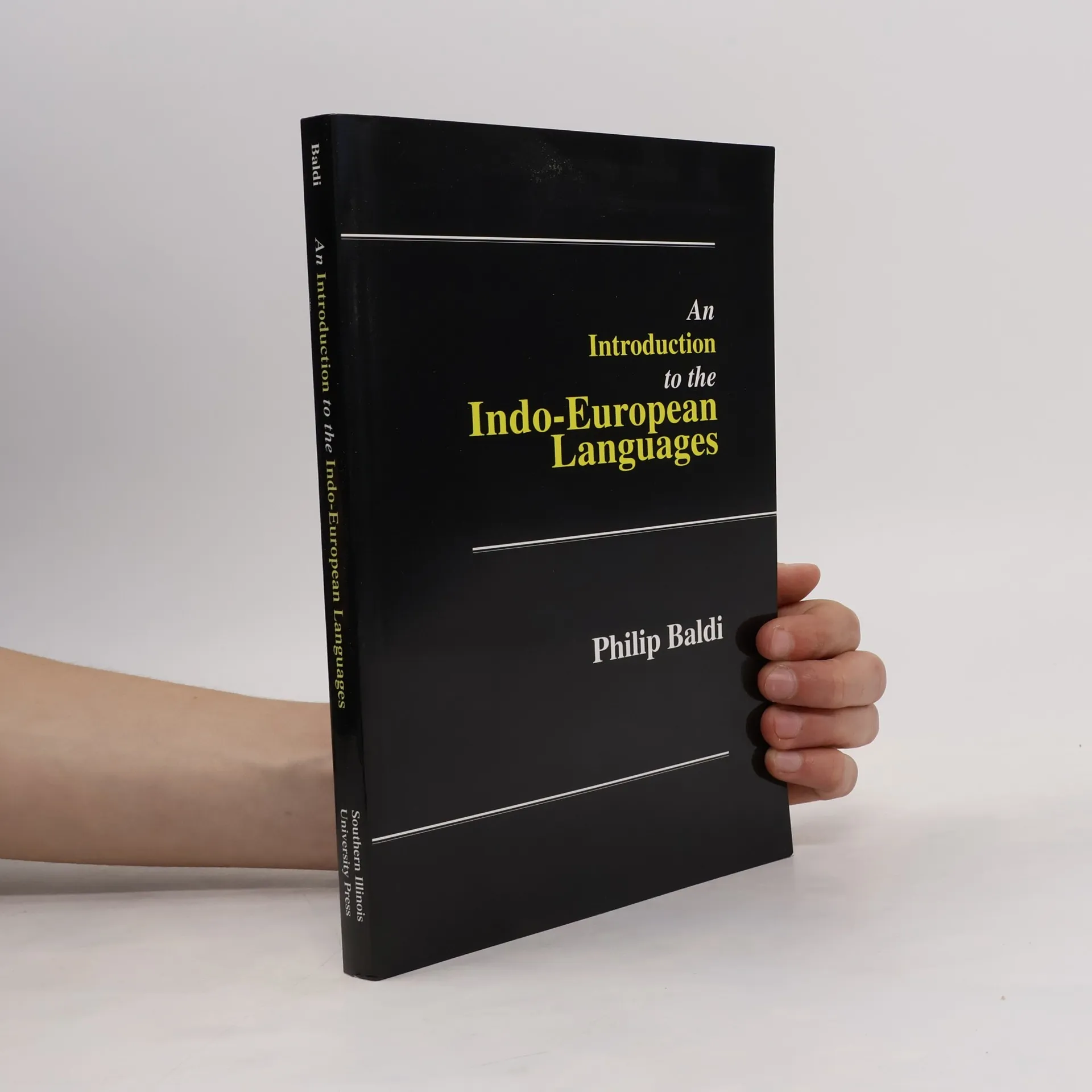
An Introduction to the Indo-European Languages
- 240 stránek
- 9 hodin čtení
This comprehensive linguistic survey synthesizes extensive information from specialized handbooks on Indo-European groups. It begins with an introduction to the Indo-European language family, covering its discovery and analysis techniques, along with a structural overview of Proto-Indo-European, the parent language. Each of the 11 major branches—Italic, Celtic, Indo-Iranian, Greek, Armenian, Albanian, Baltic, Slavic, Germanic, Tocharian, and Anatolian—receives a dedicated chapter. These chapters outline the external history, peoples, dialects, and significant historical context of each branch. Following this, a structural sketch of the key language(s) is presented (e.g., Old Irish for Celtic, Sanskrit and Avestan for Indo-Iranian, Latin and Osco-Umbrian for Italic), detailing phonology, morphology, and syntax. Sample texts with interlinear and free translations are included for each language. Special issues, such as the connections between Italic and Celtic or Baltic and Slavic, are discussed where relevant. The final chapter outlines the "minor" Indo-European languages like Illyrian and Thracian. The book also features extensive bibliographies, a current map of Indo-European language distribution, and a detailed family tree diagram illustrating the relationships within the language family.