
Knihobot

Joseph Mazur

    Joseph Mazur
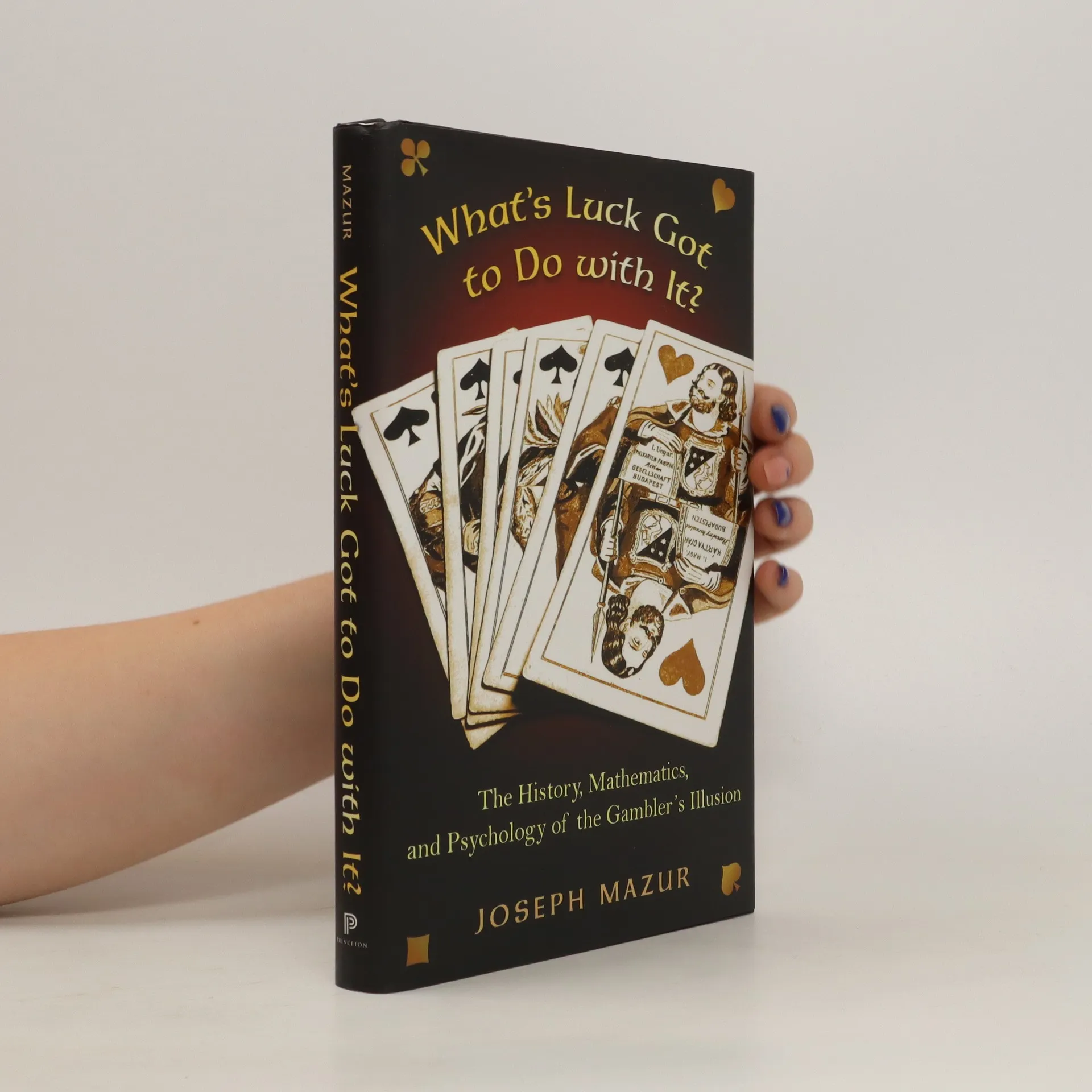
    What's luck got to do with it? the history, mathematics, and psychology of the gambler's illusion
    The Clock Mirage
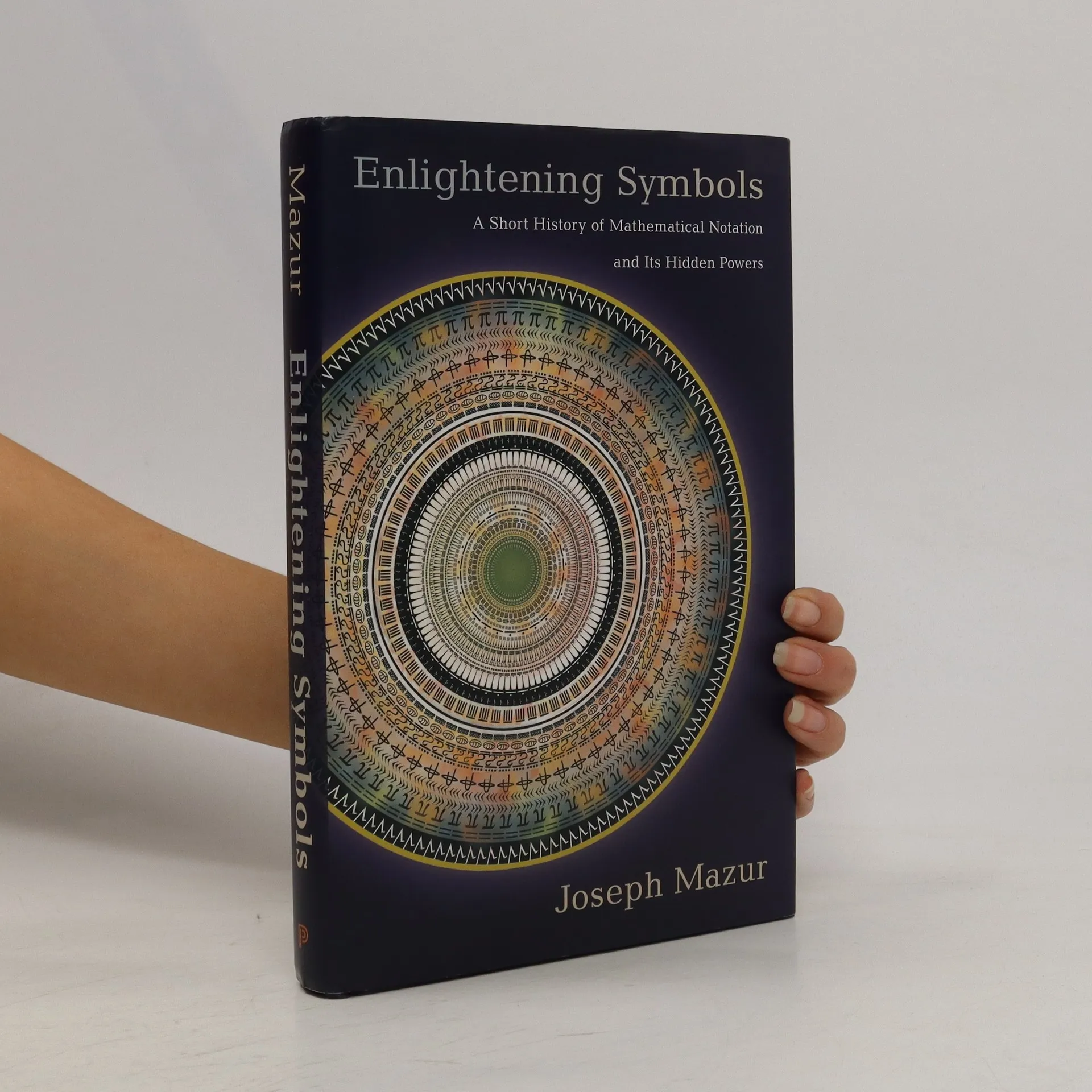
    Enlightening Symbols
    Fluke. The Math and Myth of Coincidence
    Zeno's Paradox
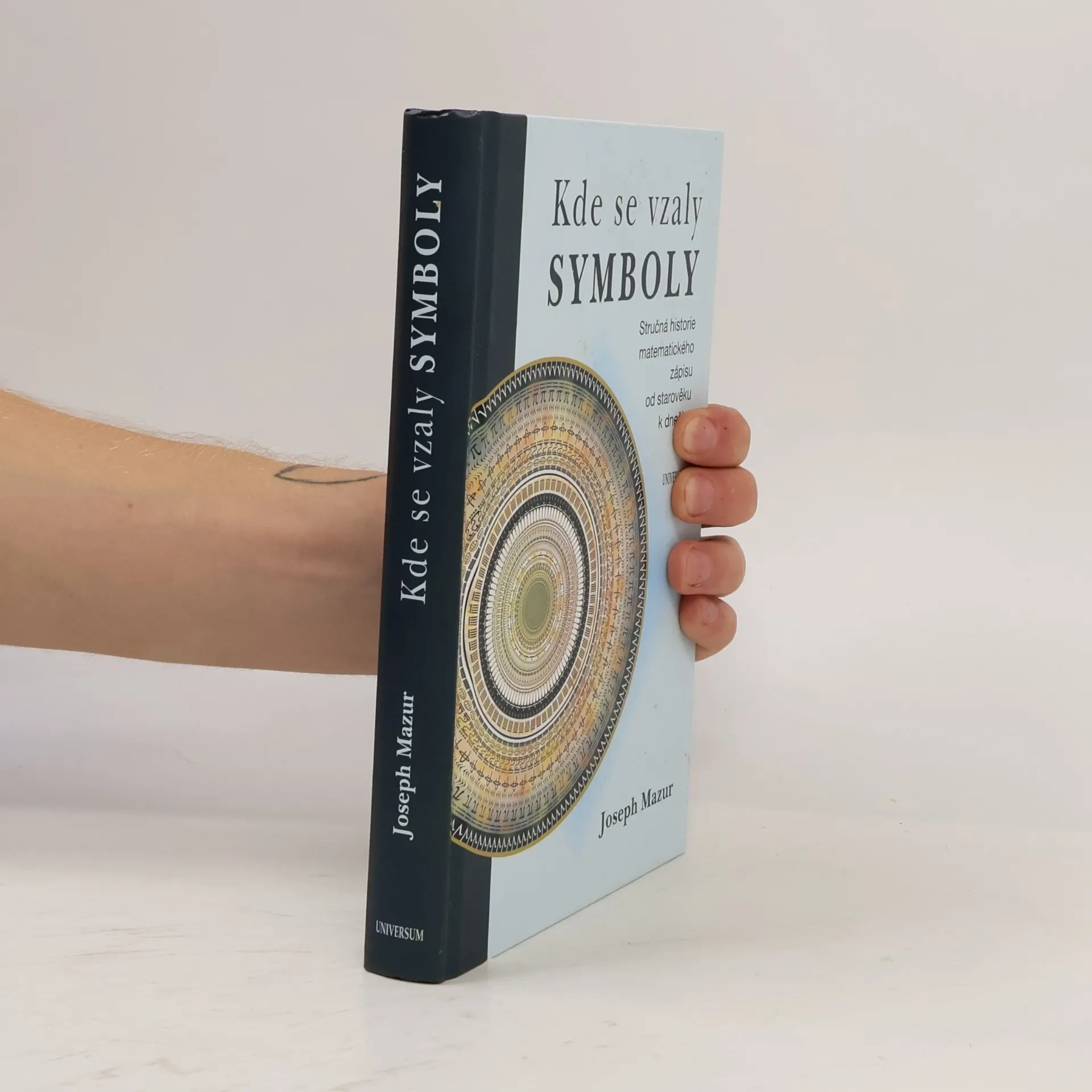
    Kde se vzaly symboly: Stručná historie matematického zápisu od starověku k dnešku
    • Všichni běžně používáme základní matematické symboly, jako je plus, minus a rovná se, ale jen málokdo ví, že řada z nich se objevila teprve v šestnáctém století. S čím matematikové pracovali předtím? A jak se matematický zápis vyvinul do podoby, kterou známe dnes? Kniha Symboly tajemství zbavené líčí fascinující příběh vývoje našeho systému matematické notace. Ukazuje, jak se symboly používaly na začátku, jak se časem nahrazovaly jinými a jaký vliv měly tyto změny na matematické myšlení. Nejzajímavější však je, jak tyto symboly ovlivňují (skrze podobnost, asociaci, totožnost, připomínání a opakované obrazy) nás samotné, jak vedou skrze podvědomé asociace k novým myšlenkám, jak vytvářejí spojení mezi zkušenostmi a neznámem a jak přispívají ke sdílení základní matematiky.

      Kde se vzaly symboly: Stručná historie matematického zápisu od starověku k dnešku
    • Zeno's Paradox

      • 272 stránek
      • 10 hodin čtení
      3,8(89)Ohodnotit

      The fascinating story of an ancient riddle and what it reveals about the nature of time and spaceThree millennia ago, the Greek philosopher Zeno constructed a series of logical paradoxes to prove that motion is impossible. Today, these paradoxes remain on the cutting edge of our investigations into the fabric of space and time. Zeno's Paradox uses the motion paradox as a jumping-off point for an exploration of the twenty-five-hundred-year quest to uncover the true nature of the universe. From Galileo to Einstein to Stephen Hawking, some of the greatest minds in history have tackled the problem and made spectacular breakthroughs, but through it all, the paradox of motion remains.

      Zeno's Paradox
    • Enlightening Symbols

      • 285 stránek
      • 10 hodin čtení
      3,5(82)Ohodnotit

      This book offers a compelling exploration of the historical and mental revolutions that shaped humanity's most valuable symbols—mathematical expressions. It delves into the origins of mathematical notation, revealing that these symbols are far more than mere marks on paper; they are integral to a complex language that enhances our understanding of mathematics. The author guides readers through the history of mathematical symbols, illustrating how these conventions have significantly influenced the evolution of mathematical knowledge. The narrative traces the development of a universal symbolic language among mathematicians, connecting arithmetic, algebra, and geometry in a way that evokes the power of poetry. The book is filled with intriguing stories and delightful observations, providing a richer understanding of mathematics and its history. It highlights the importance of notation in the abstraction we use today, making it an essential and engaging read for anyone interested in the intersection of mathematics and civilization. Overall, this thoughtful work serves as both an informative tour of mathematical history and a celebration of the symbols that have shaped our understanding of the world.

      Enlightening Symbols
    • The Clock Mirage

      • 272 stránek
      • 10 hodin čtení
      3,4(84)Ohodnotit

      "What is time? This question has fascinated philosophers, mathematicians, and scientists for thousands of years. Why does time seem to speed up with age? What is its connection with memory, anticipation, and sleep cycles? Award-winning author and mathematician Joseph Mazur provides an engaging exploration of how the understanding of time has evolved throughout human history and offers a compelling new vision, submitting that time lives within us. Our cells, he notes, have a temporal awareness, guided by environmental cues in sync with patterns of social interaction. Readers learn that, as a consequence of time's personal nature, a forty-eight-hour journey on the Space Shuttle can feel shorter than a six-hour trip on the Soyuz capsule, that the Amondawa of the Amazon do not have ages, and that time speeds up with fever and slows down when we feel in danger. With a narrative punctuated by personal stories of time's effects on truck drivers, Olympic racers, prisoners, and clockmakers, Mazur's journey is filled with fascinating insights into how our technologies, our bodies, and our attitudes can change our perceptions. Ultimately, time reveals itself as something that rides on the rhythms of our minds. 'The Clock Mirage' presents an innovative perspective that will force us to rethink our relationship with time, and how best to use it"--Jacket

      The Clock Mirage
    • Mathematician Mazur traces the history of gambling from the earliest known archaeological evidence of dice-playing among Neolithic peoples to the first systematic mathematical games of change during the Renaissance, and explains the mathematics behind gambling--including the laws of probability, statistics, and betting against expectations. Photos.

      What's luck got to do with it? the history, mathematics, and psychology of the gambler's illusion