
Knihobot

Kees Doets

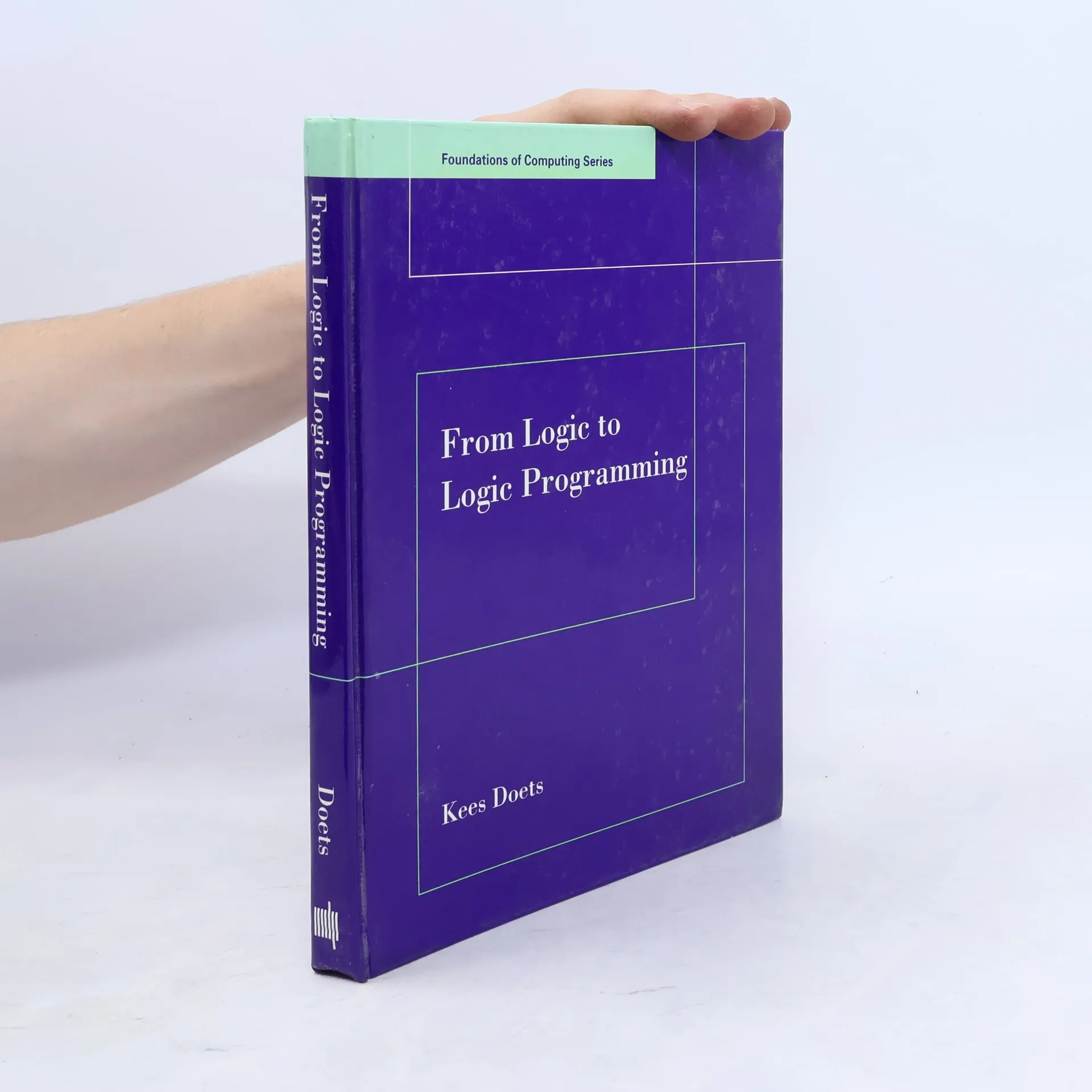
    Foundations of Computing: From Logic to Logic Programming
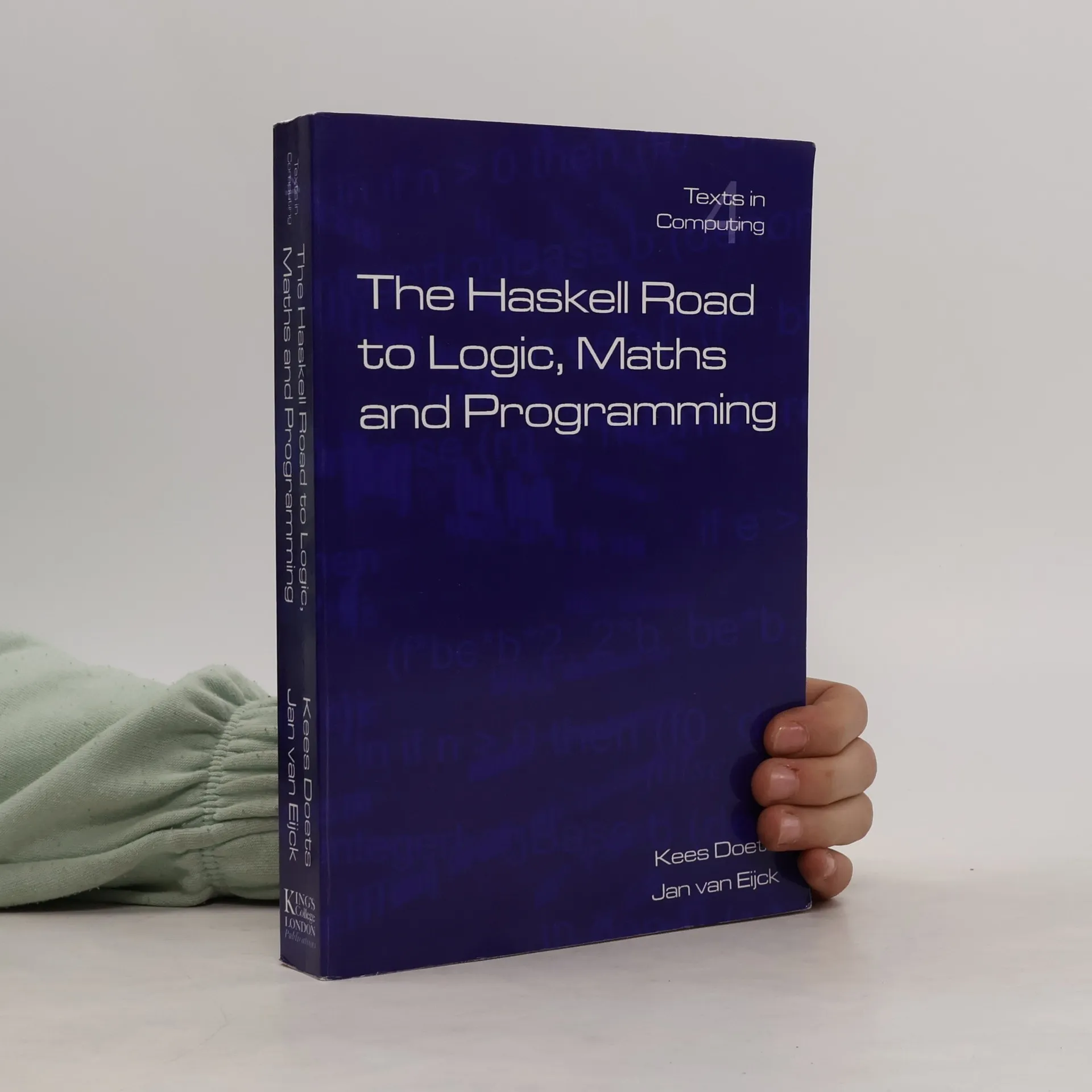
    The Haskell road to logic, maths and programming
    • The purpose of this book is to teach logic and mathematical reasoning in practice, and to connect logical reasoning with computer programming in Haskell. Haskell emerged in the last decade as a standard for lazy functional programming, a programming style where arguments are evaluated only when the value is actually needed. Haskell is a marvellous demonstration tool for logic and maths because its functional character allows implementations to remain very close to the concepts that get implemented, while the laziness permits smooth handling of infinite data structures.This book does not assume the reader to have previous experience with either programming or construction of formal proofs, but acquaintance with mathematical notation, at the level of secondary school mathematics is presumed. Everything one needs to know about mathematical reasoning or programming is explained as we go along. After proper digestion of the material in this book the reader will be able to write interesting programs, reason about their correctness, and document them in a clear fashion. The reader will also have learned how to set up mathematical proofs in a structured way, and how to read and digest mathematical proofs written by others.

      The Haskell road to logic, maths and programming
      3,7
    • This mathematically-oriented introduction to the theory of logic programming presents a systematic exposition of the resolution method for propositional, first-order, and Horn-clause logics, together with an analysis of the semantic aspects of the method. It is through the inference rule of resolution that both proofs and computations can be manipulated on computers, and this book contains elegant versions and proofs of the fundamental theorems and lemmas in the proof theory of logic programming. Advanced topics such as recursive complexity and negation as failure and its semantics are covered, and streamlined setups for SLD- and SLDNF-resolution are described. No other book treats this material in such detail and with such sophistication. Doets provides a novel approach to resolution that is applied to the first-order case and the case of (positive) logic programs. In contrast to the usual approach, the concept of a resolvent is defined nonconstructively, without recourse to the concept of unification, allowing the soundness and completeness proofs to be carried out in a more economic way. Other new material includes computability results dealing with analytical hierarchy, results on infinite derivations and an exposition on general logic programs using 3-valued logic.

      Foundations of Computing: From Logic to Logic Programming