

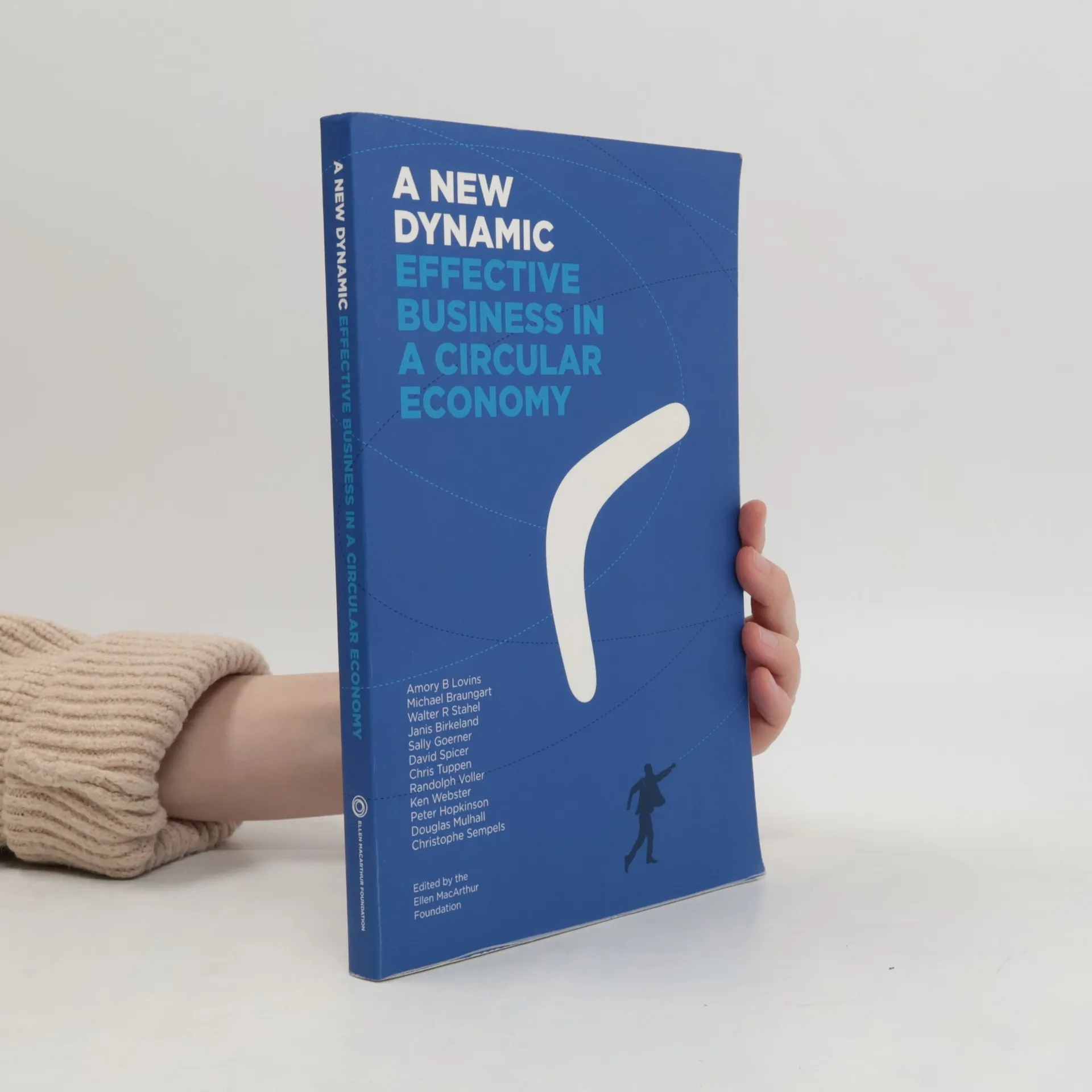
Upward trending and volatile materials and energy prices, difficult credit conditions and the myriad opportunities of the digital revolution are combining to make a circular economy the key value driver for the coming decades. A New Dynamic makes the contemporary case for a profound shift from throughput to 'roundput', from ownership to access. The circular economy is enabled by disruptive information technology and the design of materials and products to flow in effective cycles and at high quality - 'made to be made again'. The size of the prize is in the billions of dollars of materials cost savings per year. A New Dynamic features some of the leading writers and practitioners in the field including Walter Stahel, Michael Braungart, Amory Lovins and Chris Tuppen. The volume contains contributions on understanding the model, business case studies, the performance economy, history and development and the entrepreneurial opportunities of these fluid times. This book is a mandated reader for the MBA in Innovation, Enterprise and the Circular Economy at Bradford University School of Management.
Michael Braungart Knihy

The Upcycle : Beyond Sustainability - Designing For Abundance
- 227 stránek
- 8 hodin čtení
From the authors "Cradle to Cradle," the next step, in how society must change the way it uses resources. Drawing on the lessons gained from 10 years of using the cradle-to-cradle concept, McDonough and Braungart envision the next step in the solution to our ecological crisis.
Cradle to cradle
- 192 stránek
- 7 hodin čtení
Michael Braungart and William McDonough propose a plan for our planet in this stunning new edition of their radical ecological manifesto. This book proposes a new vision for modern industry. Instead of our current wasteful and polluting methods of manufacturing, we could be taking nature as a model for making things. With the right redesign, objects that have come to the end of their useful lives should provide the basis for something new. In designing and producing products we need to stop worrying about being 'less bad' and start finding ways of actually being good. PATTERNS OF LIFE: SPECIAL EDITIONS OF GROUNDBREAKING SCIENCE BOOKS
Environmental and human catastrophe looms ever larger for planet Earth. From the need to build sustainable cities to house growing billions to transforming the international trade system to tackling run-away climate change, positive, powerful action is needed now to turn a deepening global crisis into an opportunity for change. This book, the first major output by leading lights from the World Future Council (WFC), a new international lobby for future generations, seeks nothing less than a complete transformation of how humans relate to the world and one another.
Die nächste industrielle Revolution
- 245 stránek
- 9 hodin čtení
Im Zentrum des Buches steht das Konzept der ökologisch effektiven und sozio-ökonomisch erfolgreichen Produktionsweise des Chemikers Michael Braungart und des Architekten William McDonough: „Cradle to Cradle“ – Von der Wiege zur Wiege. Das heißt: Produkte werden so konzipiert, dass sie nicht zu Abfall werden, sondern nach Gebrauch wieder zu möglichst 100 % einsetzbar sind. Die Materialien bleiben als Nähr- und Rohstoffe Teil eines intelligenten, höchst effektiven Recyclingsystems aus technischen und biologischen Kreisläufen – mit positiven Effekten für Umwelt, Gesundheit und Ökonomie. Die vielfach ausgezeichneten ökologischen Vordenker haben mit diesem Konzept Leitlinien entwickelt, an denen sich bereits heute kleine, mittlere und weltweit bekannte Unternehmen orientieren. In diesem Buch werden sowohl das innovative Konzept als auch Firmen vorgestellt, die nach Cradle to Cradle produzieren und somit wertvolle Anregungen für eine nachhaltige, ökologisch-durchdachte Ökonomie der Zukunft geben können.
Cradle to Cradle in bedrijf
- 180 stránek
- 7 hodin čtení
Inleiding tot een concept voor duurzame productontwikkeling dat uitgaat van herhaald hergebruik van materialen, geïllustreerd met vijftien praktijkvoorbeelden van Nederlandse organisaties en bedrijven.