

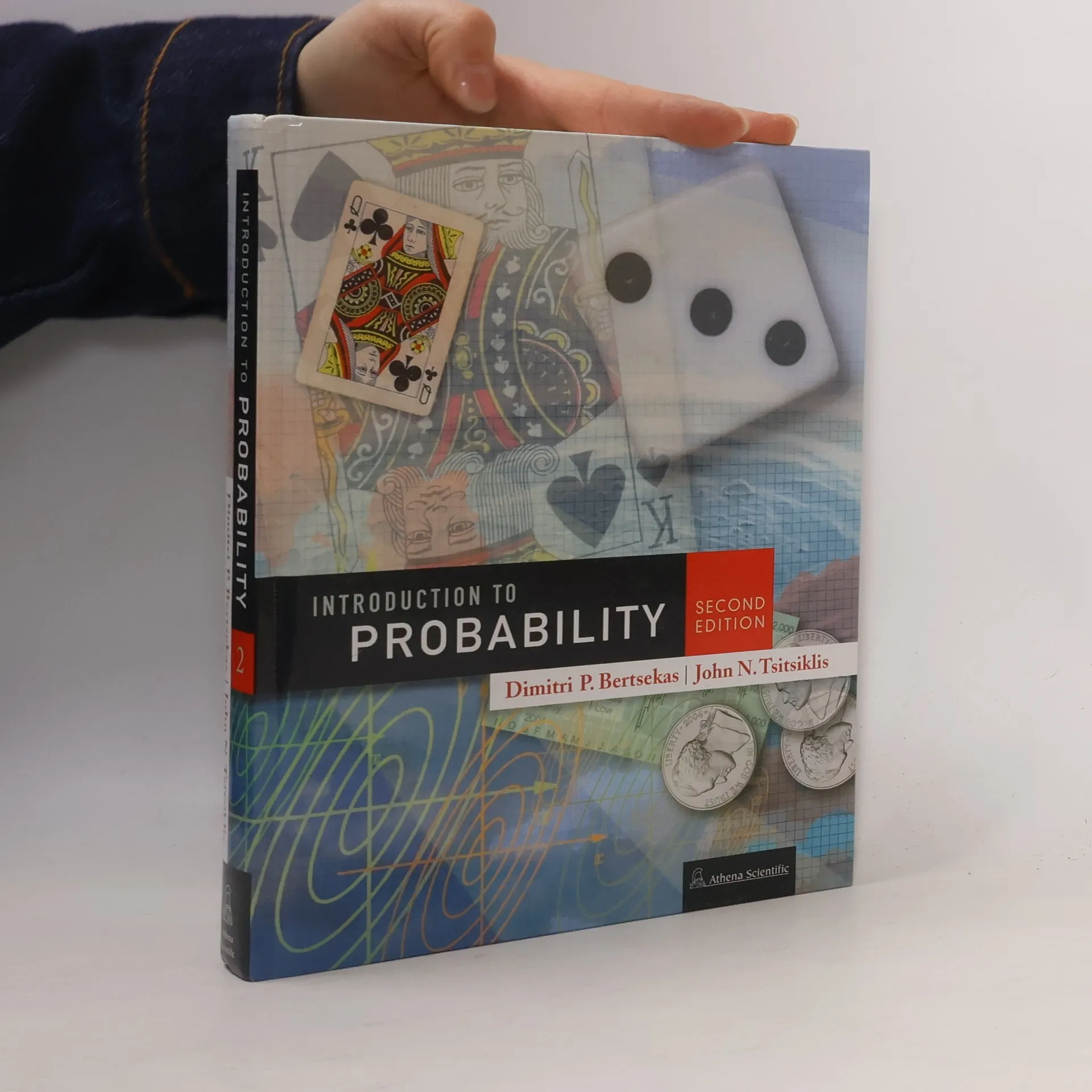
An intuitive, yet precise introduction to probability theory, stochastic processes, statistical inference, and probabilistic models used in science, engineering, economics, and related fields. This is the currently used textbook for an introductory probability course at the Massachusetts Institute of Technology, attended by a large number of undergraduate and graduate students, and for a leading online class on the subject. The book covers the fundamentals of probability theory (probabilistic models, discrete and continuous random variables, multiple random variables, and limit theorems), which are typically part of a first course on the subject. It also contains a number of more advanced topics, including transforms, sums of random variables, a fairly detailed introduction to Bernoulli, Poisson, and Markov processes, Bayesian inference, and an introduction to classical statistics. The book strikes a balance between simplicity in exposition and sophistication in analytical reasoning. Some of the more mathematically rigorous analysis is explained intuitively in the main text, and then developed in detail (at the level of advanced calculus) in the numerous solved theoretical problems.
Dimitri P. Bertsekas Pořadí knih (chronologicky)
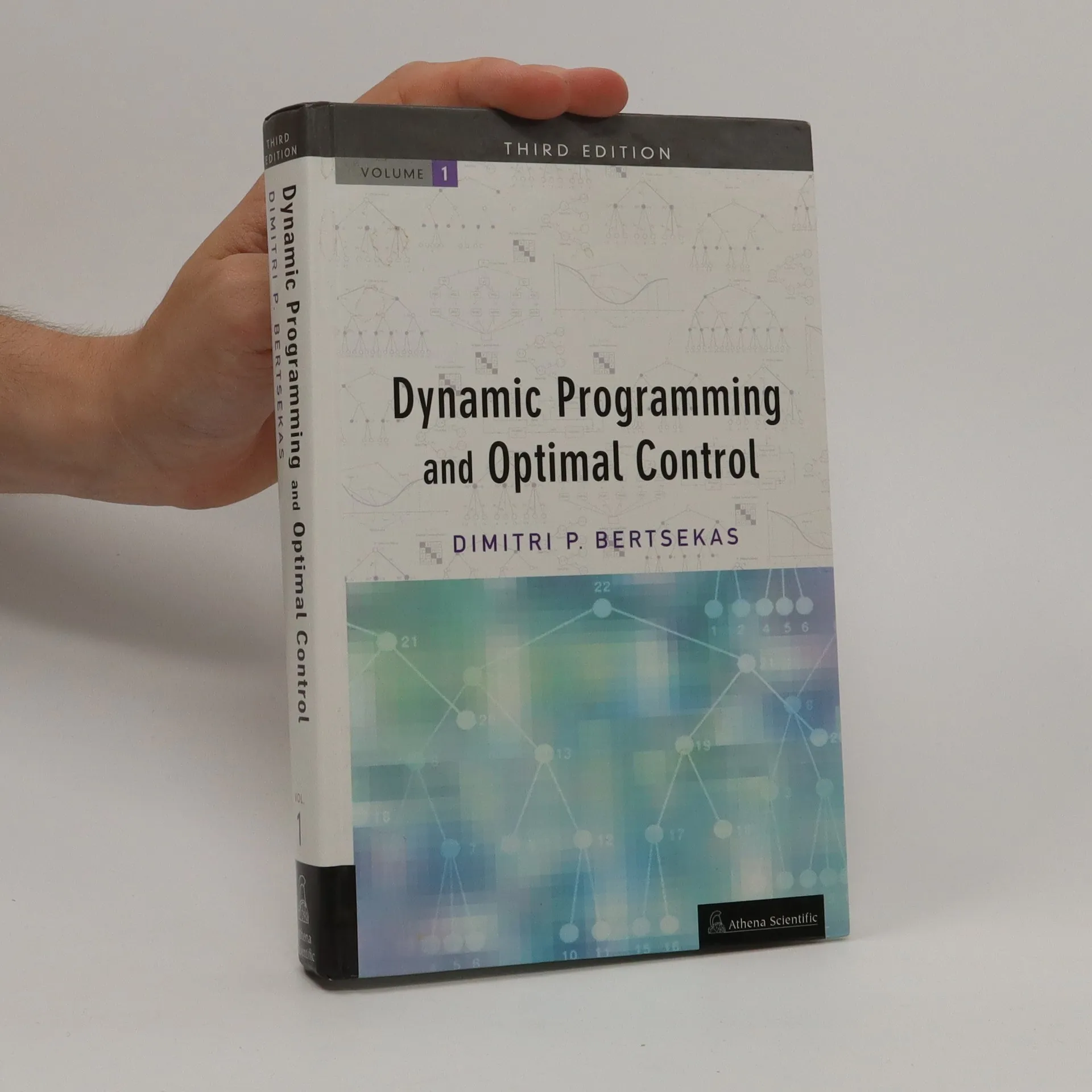
"The leading and most up-to-date textbook on the far-ranging algorithmic methododogy of Dynamic Programming, which can be used for optimal control, Markovian decision problems, planning and sequential decision making under uncertainty, and discrete/combinatorial optimization. The treatment focuses on basic unifying themes, and conceptual foundations. It illustrates the versatility, power, and generality of the method with many examples and applications from engineering, operations research, and other fields. It also addresses extensively the practical application of the methodology, possibly through the use of approximations, and provides an extensive treatment of the far-reaching methodology of Neuro-Dynamic Programming/Reinforcement Learning. The first volume is oriented towards modeling, conceptualization, and finite-horizon problems, but also includes a substantive introduction to infinite horizon problems that is suitable for classroom use. The second volume is oriented towards mathematical analysis and computation, treats infinite horizon problems extensively, and provides an up-to-date account of approximate large-scale dynamic programming and reinforcement learning. The text contains many illustrations, worked-out examples, and exercises."--Publisher's website.