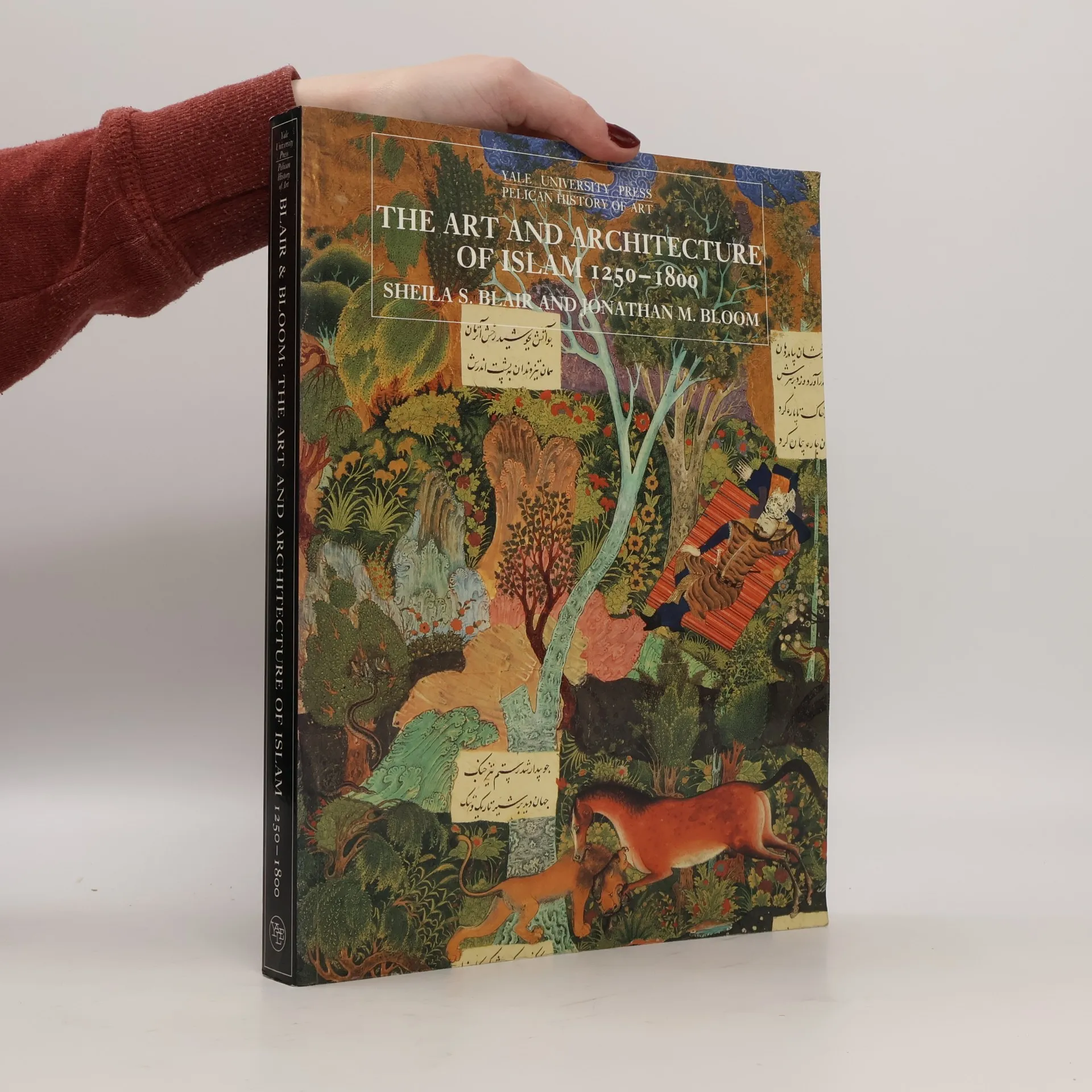
In this comprehensive survey, the authors highlight those characteristics that connect the various arts of all the Islamic lands, without minimizing the differences. Dividing the time into three periods: 600-900, 900-1500 and 1500-1800, they set the artistic development in each era within its historical context and use art as a window into Islamic culture. Written in a lively and accessible style, and illustrated throughout with photographs, maps and plans, the book captures the essence of Islamic culture as expressed in its buildings, books and applied arts, and provides an essential introduction to the subject for both the student and the general reader.
Sheila Blair Pořadí knih (chronologicky)


Pelican History of Art: The Art and Architecture of Islam, 1250-1800
- 368 stránek
- 13 hodin čtení
This book surveys the architecture and arts of traditional Islamic lands from the Mongol conquests in the early thirteenth century to the onset of European colonial rule in the nineteenth century, highlighting masterpieces like the Alhambra and the Taj Mahal. Designed as a sequel to a previous work, it maintains a similar format with chronological and regional divisions, treating architecture separately from other arts. The authors examine over two hundred works of Islamic art, delving into broader social and economic contexts, including function, patronage, and meaning. They explore the transition from universal caliphs to regional rulers, emphasizing how Iranian forms and motifs became dominant in most of the Muslim world, except in the Maghrib, where traditional models persisted. By the sixteenth century, the eastern Mediterranean under the Ottomans and northern India under the Mughals gained prominence, leading to the emergence of distinct regional styles. The authors conclude with a thought-provoking essay on the diverse legacies of Islamic art in Europe and the Islamic lands during the nineteenth and twentieth centuries.