

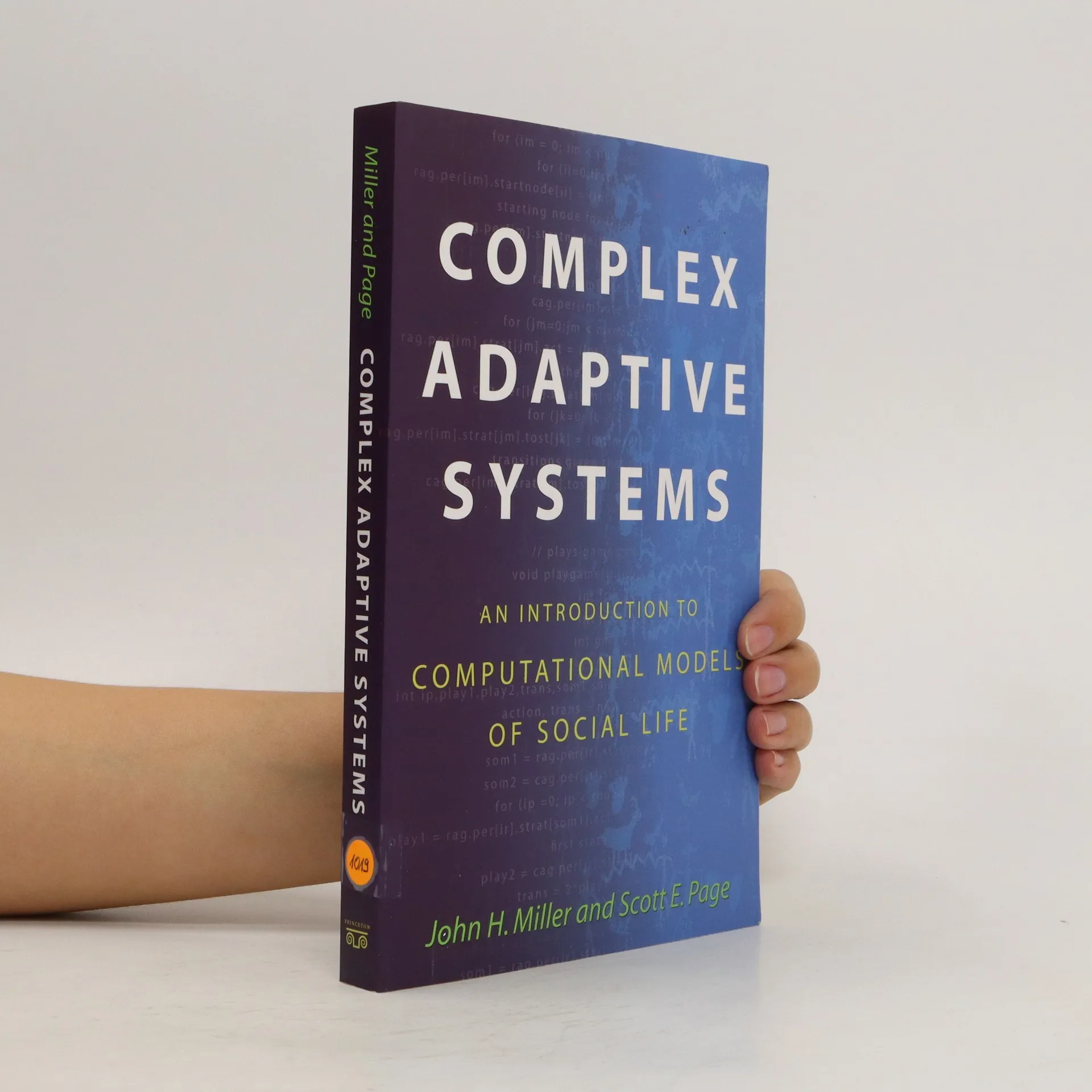
This book provides the first clear, comprehensive, and accessible account of complex adaptive social systems, by two of the field's leading authorities. Such systems--whether political parties, stock markets, or ant colonies--present some of the most intriguing theoretical and practical challenges confronting the social sciences. Engagingly written, and balancing technical detail with intuitive explanations, Complex Adaptive Systems focuses on the key tools and ideas that have emerged in the field since the mid-1990s, as well as the techniques needed to investigate such systems. It provides a detailed introduction to concepts such as emergence, self-organized criticality, automata, networks, diversity, adaptation, and feedback. It also demonstrates how complex adaptive systems can be explored using methods ranging from mathematics to computational models of adaptive agents. John Miller and Scott Page show how to combine ideas from economics, political science, biology, physics, and computer science to illuminate topics in organization, adaptation, decentralization, and robustness. They also demonstrate how the usual extremes used in modeling can be fruitfully transcended.
Scott E. Page Knihy


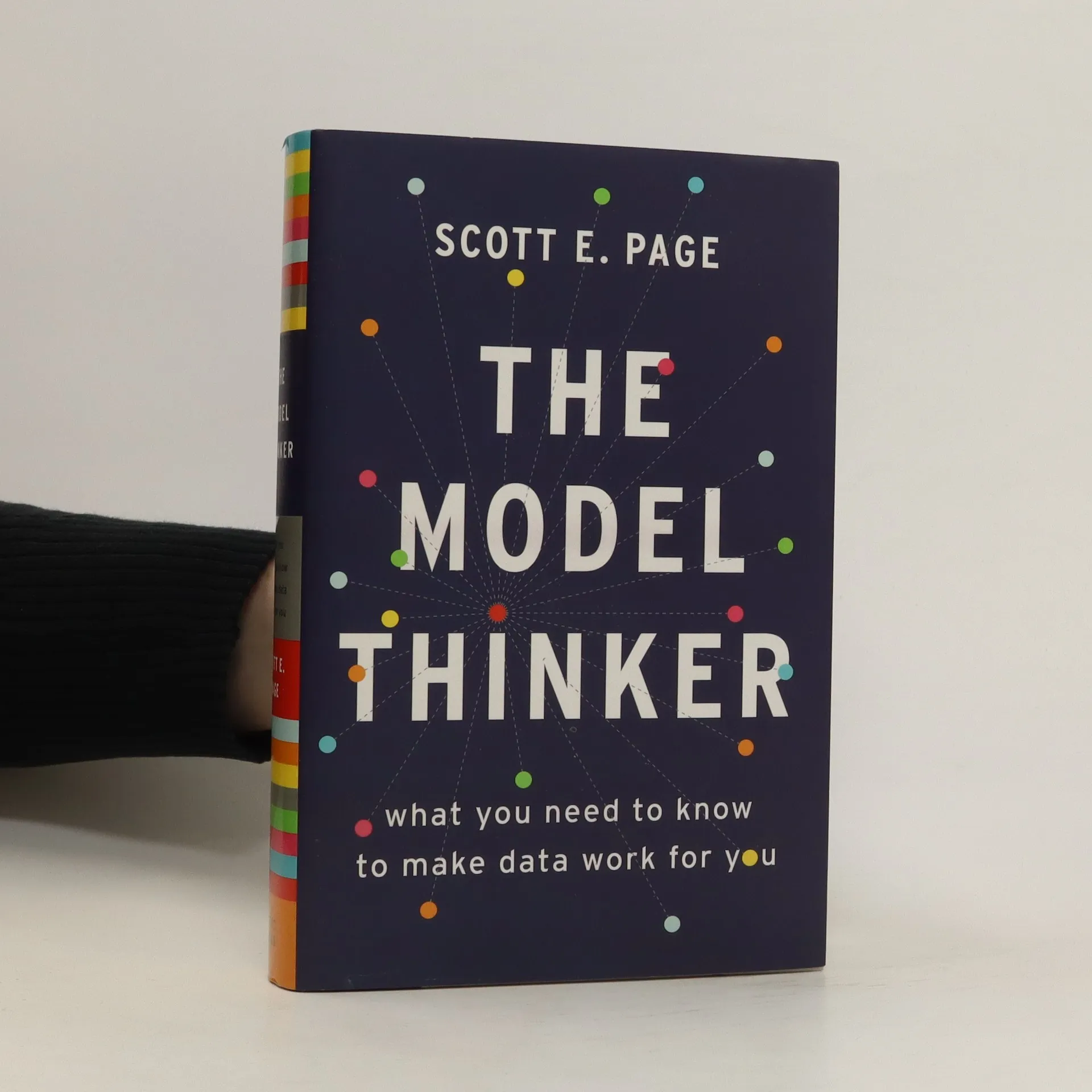
The Model Thinker : What You Need to know to Make Data Work for You
- 448 stránek
- 16 hodin čtení
How anyone can become a data ninja From the stock market to genomics laboratories, census figures to marketing email blasts, we are awash with data. But as anyone who has ever opened up a spreadsheet packed with seemingly infinite lines of data knows, numbers aren't enough: we need to know how to make those numbers talk. In The Model Thinker, social scientist Scott E. Page shows us the mathematical, statistical, and computational models--from linear regression to random walks and far beyond--that can turn anyone into a genius. At the core of the book is Page's "many-model paradigm," which shows the reader how to apply multiple models to organize the data, leading to wiser choices, more accurate predictions, and more robust designs. The Model Thinker provides a toolkit for business people, students, scientists, pollsters, and bloggers to make them better, clearer thinkers, able to leverage data and information to their advantage.
The Difference
How the Power of Diversity Creates Better Groups, Firms, Schools, and Societies - New Edition
- 456 stránek
- 16 hodin čtení
Why can teams of people find better solutions than brilliant individuals working alone? And why are the best group decisions and predictions those that draw upon the very qualities that make each of us unique? This book reveals that progress and innovation may depend more on diverse people working together and capitalizing on their individuality.
Diversity and complexity
- 291 stránek
- 11 hodin čtení
This book provides an introduction to the role of diversity in complex adaptive systems. A complex system--such as an economy or a tropical ecosystem--consists of interacting adaptive entities that produce dynamic patterns and structures. Diversity plays a different role in a complex system than it does in an equilibrium system, where it often merely produces variation around the mean for performance measures. In complex adaptive systems, diversity makes fundamental contributions to system performance. Scott Page gives a concise primer on how diversity happens, how it is maintained, and how it affects complex systems. He explains how diversity underpins system level robustness, allowing for multiple responses to external shocks and internal adaptations; how it provides the seeds for large events by creating outliers that fuel tipping points; and how it drives novelty and innovation. Page looks at the different kinds of diversity--variations within and across types, and distinct community compositions and interaction structures--and covers the evolution of diversity within complex systems and the factors that determine the amount of maintained diversity within a system. Provides a concise and accessible introduction Shows how diversity underpins robustness and fuels tipping points Covers all types of diversity The essential primer on diversity in complex adaptive systems