

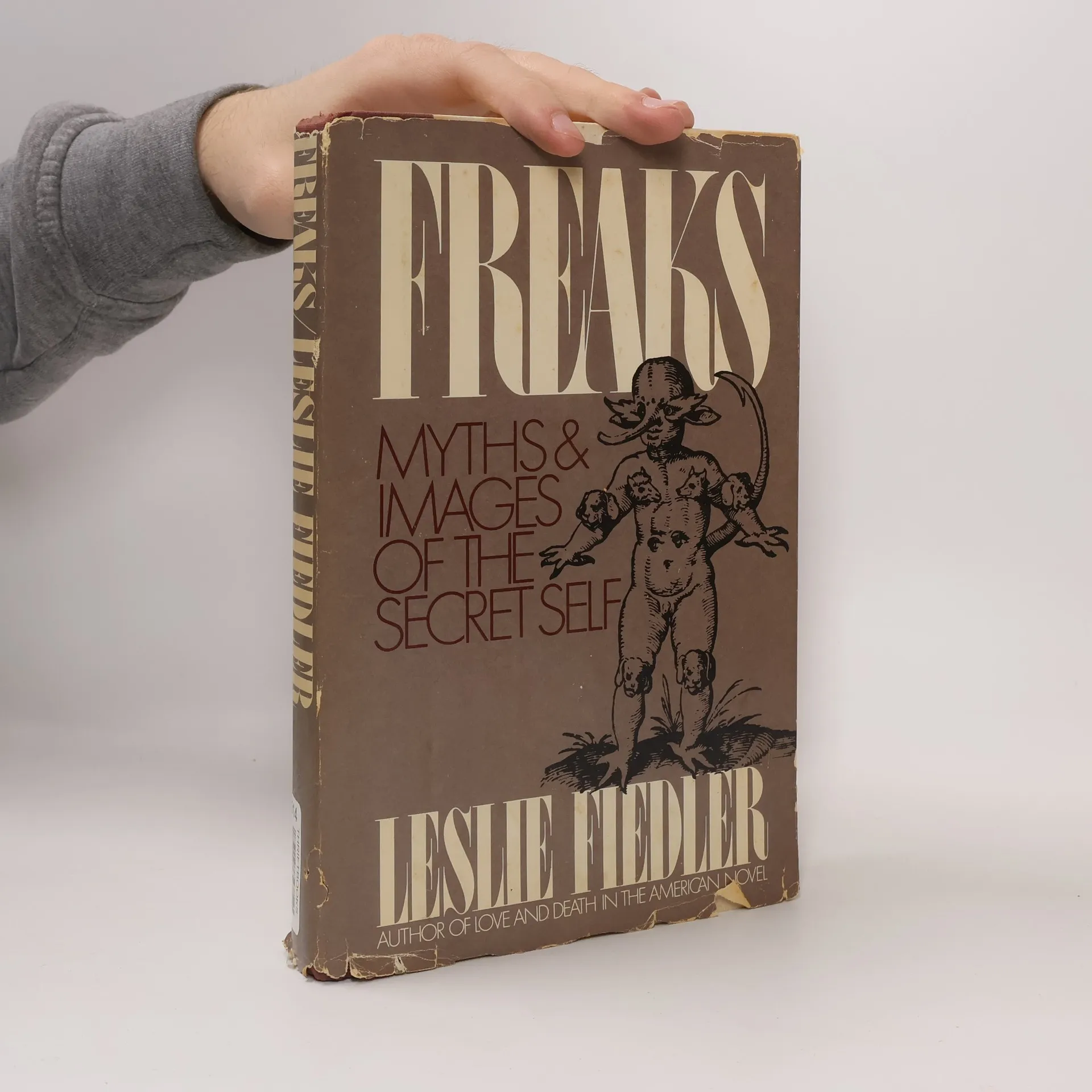
From two-headed men and dwarfs to Siamese twins, the phenomenon of the freak has fascinated people for centuries. In this classic study of the very nature of that fascination, the renowned literary and cultural critic Fiedler offers an in-depth examination of man's views of the freak from classical times to present. 150 photos and line drawings.
Leslie A. Fiedler Knihy
8. březen 1917 – 29. leden 2003
Leslie Aaron Fiedler byl americký literární kritik, jehož dílo se soustředilo na mytografii a propagaci žánrové fikce. Ve své práci také aplikoval psychologické teorie na americkou literaturu a patřil mezi rané postmodernistické kritiky. Jeho inovativní přístup zkoumal hlubší symbolické vrstvy a psychologické motivy v americké literatuře, čímž nabídl čtenářům nové perspektivy. Fiedlerova práce definovala raný postmodernismus v literární kritice a nadále ovlivňuje chápání amerických literárních děl.
But it would be unfair to the reader to reveal what happens when a gang of professional crooks gets wind of the scheme and moves to muscle in on this bettors' dream of a long-odds situation. Worked out with all the meticulous detail, terror, and suspense of a nightmare, the tale is, on one level, comparable to a Graham Greene thriller; on another, it explores a group of people, their relationships fears, and loves. For as Leslie A. Fiedler says in his introduction, "John Hawkes.. . makes terror rather than love the center of his work, knowing all the while, of course, that there can be no terror without the hope for love and love's defeat . . . ."
The Innocents Abroad
- 510 stránek
- 18 hodin čtení
One of the most famous travel books ever written about Europe and the Holy Land by an American, "The Innocents Abroad" is Mark Twain's irreverent and incisive commentary on the "New Barbarians" 'encounter with the "Old World." Twains hilarious satire is a double-edged weapon, impaling with sharp with the chauvinistic and the cosmopolitan alike. His naive Westerner is a blustering pretender to sophistication, a too-quick convert to culture. Turning the coin, the ruins of antiquity appear but a shadow of their heralded glory; the scenery of Europe and the Holy Land dwarfs in contrast to the splendor of a Western landscape. With stunning agility Twain unconsciously uses his travelogue - as Leslie A. Fiedler points out - to search out the "archetypal differences" between Americans and Europeans - the "American identity." As Mrs. Fiedler points out in his pungent Afterword, this was a quest that was to obsess Mark Twain's literary career: "over and over, he was to return to the themes of "The Innocents Abroad..." a classic work which, without ceasing to be amusing, marks a ciritcal point in the development of our literature, and especially in our attempt through literature to find out who we Americans are."
Die Rückkehr des verschwundenen Amerikaners
- 217 stránek
- 8 hodin čtení