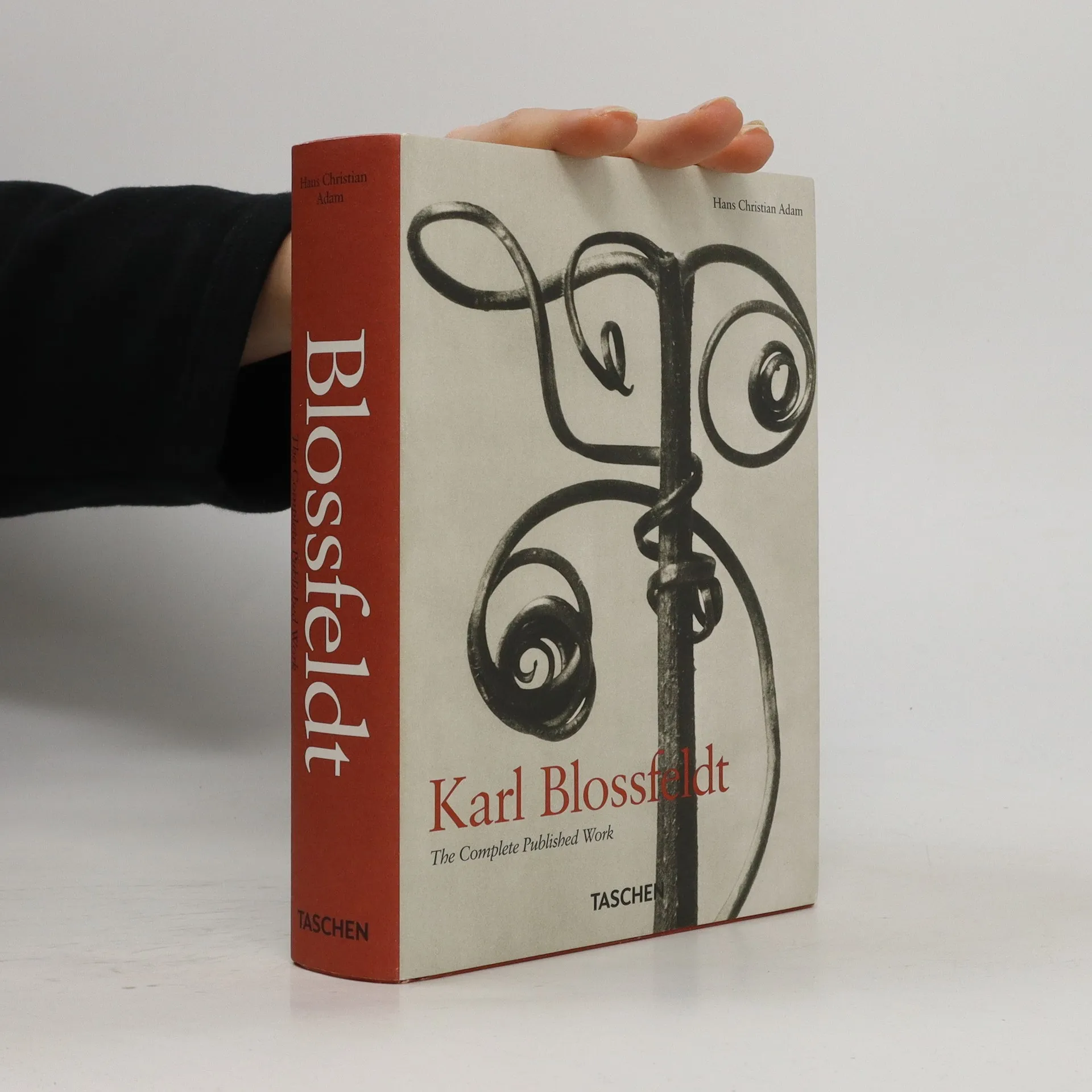
Karl Blossfeldt. The Complete Published Work
- 544 stránek
- 20 hodin čtení


Hans Christian Adam se zaměřuje na historické obrazové materiály a zkoumá především témata jako cestování a válečná fotografie. Jeho práce se vyznačuje hlubokým porozuměním vizuální kultury a jejího vývoje. Jako uznávaný odborník publikoval řadu článků a knih, které čtenářům přibližují fascinující svět fotografie. Jeho přístup odhaluje skryté příběhy a významy v historických obrazech.


"English photographer Eadweard Muybridge (1830-1904) is a pioneer in visual studies of human and animal locomotion. This book traces the life and work of Muybridge, from his early thinking about anatomy and movement to his latest photographic experiments"--From dust jacket flap.
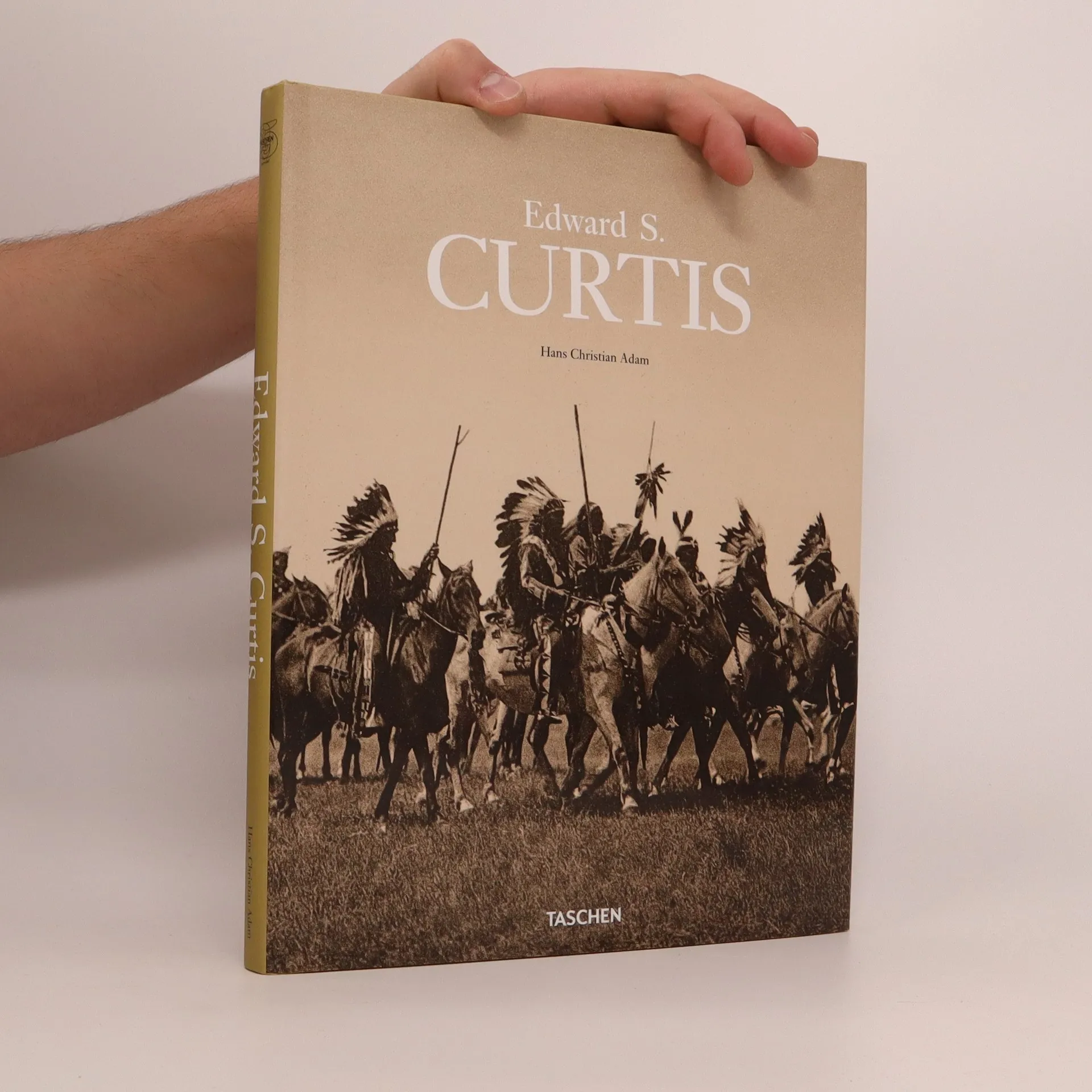
Discover the soul of American history. In thousands of breathtaking images, 19th-century photographer Edward S. Curtis’s unrivaled documentation of Native Americans creates a unique record of a long-lost era and the precious heritage of American indigenous culture.
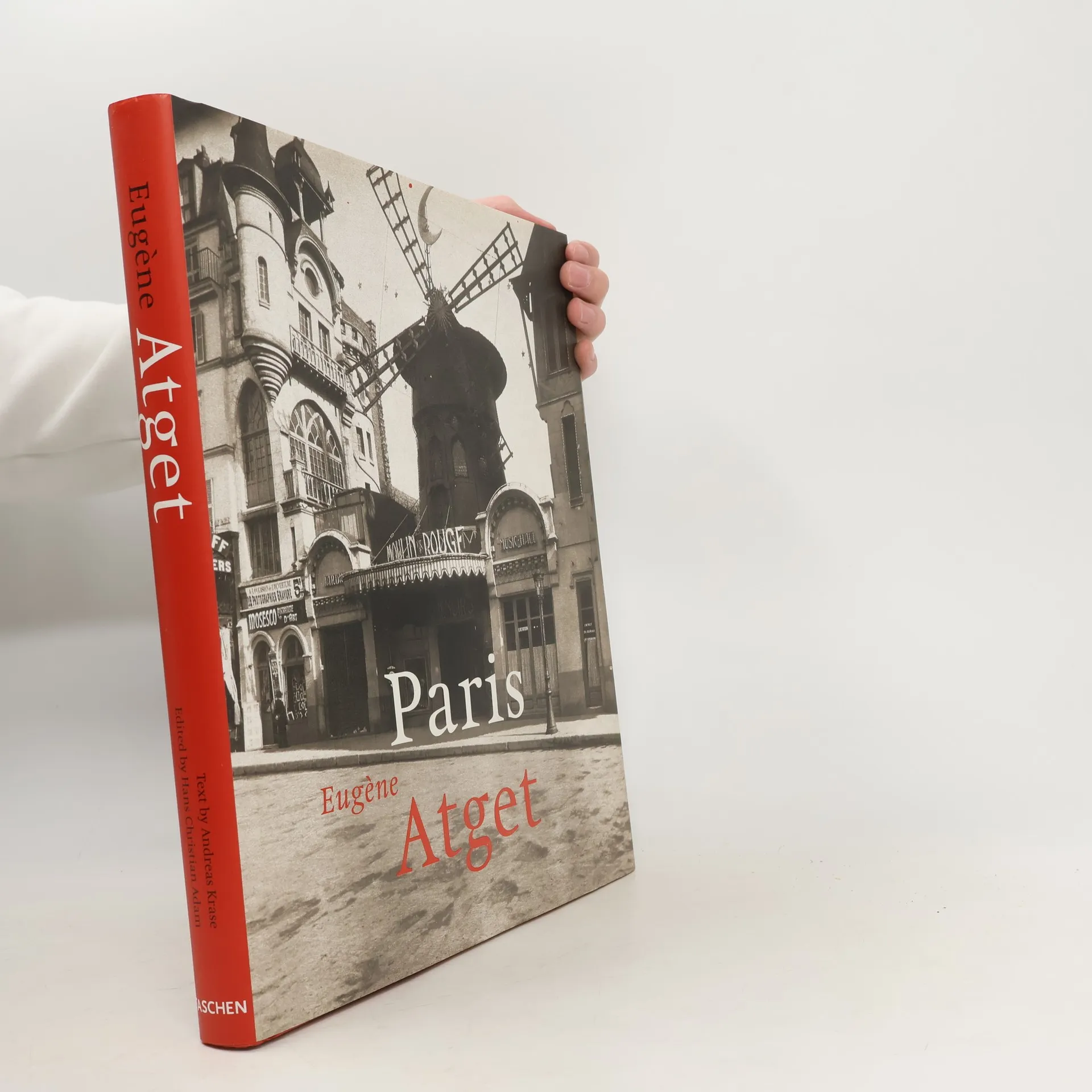
When Eugène Atget (1857–1927) roamed through Paris with a heavy plate camera, he was aware that he was documenting a vanishing world. He photographed small tradespeople, prostitutes, alleys, courtyards, and architectural details to create a comprehensive photographic documentation of his adopted home. While his images also served as souvenirs or templates for painters like Georges Braque and André Derain, Atget saw himself as an urban archaeologist. During his lifetime, he remained largely unknown, as his precise, documentary photography contrasted with the preferred painterly soft-focus style of his time. In the 1920s, the Dada and Surrealist movements, led by Man Ray, discovered his work. Four of his images were published in the Surrealist journal La Révolution surréaliste, and Man Ray and other artists acquired his photographs. Atget gained posthumous recognition through articles and a monograph by Berenice Abbott, who had met him shortly before his death through Man Ray. His influence is still felt today, and he is regarded as a pioneer of early photographic art. Approximately 500 of his photographs are gathered in this volume, with his plates preserved in institutions such as the Bibliothèque Nationale in Paris and the Museum of Modern Art in New York.
Karl Blossfeldt (1865-1932) achieved overnight fame in the late 1920s with the first publication of his photographs of plants. Those photographs, which revealed the inner structures of the organic forms, immediately made him a pioneer of New Objectivity - an innovative movement in art and photography of the 1920s and 1930s. Blossfeldt, however, was neither a trained photographer nor a botanist. He was a sculptor and art professor who did his photographic work to generate teaching material for his students. The publication of this book is the result of an extraordinary event - the 1997 discovery in Blossfeldt's estate of 61 previously unknown collages, in virtually mint condition, of photographic contact prints arranged on large cardboard sheets. Blossfeldt apparently used these to study the relation and similarity of the photographs and to compare them graphically and aesthetically. On some Blossfeldt had made marks or handwritten notations. Others show lines for cropping. The collages, published here, unveil a hidden treasure of modern photography and cast fresh light on the systematic approach Blossfeldt used in his photographic studies. All collages are reproduced in four colours. Introducing the book is an essay by Swiss art historian Ulrike Meyer-Stump, a contributing curator to the exhibitions at the Kunsthaus in Zurich
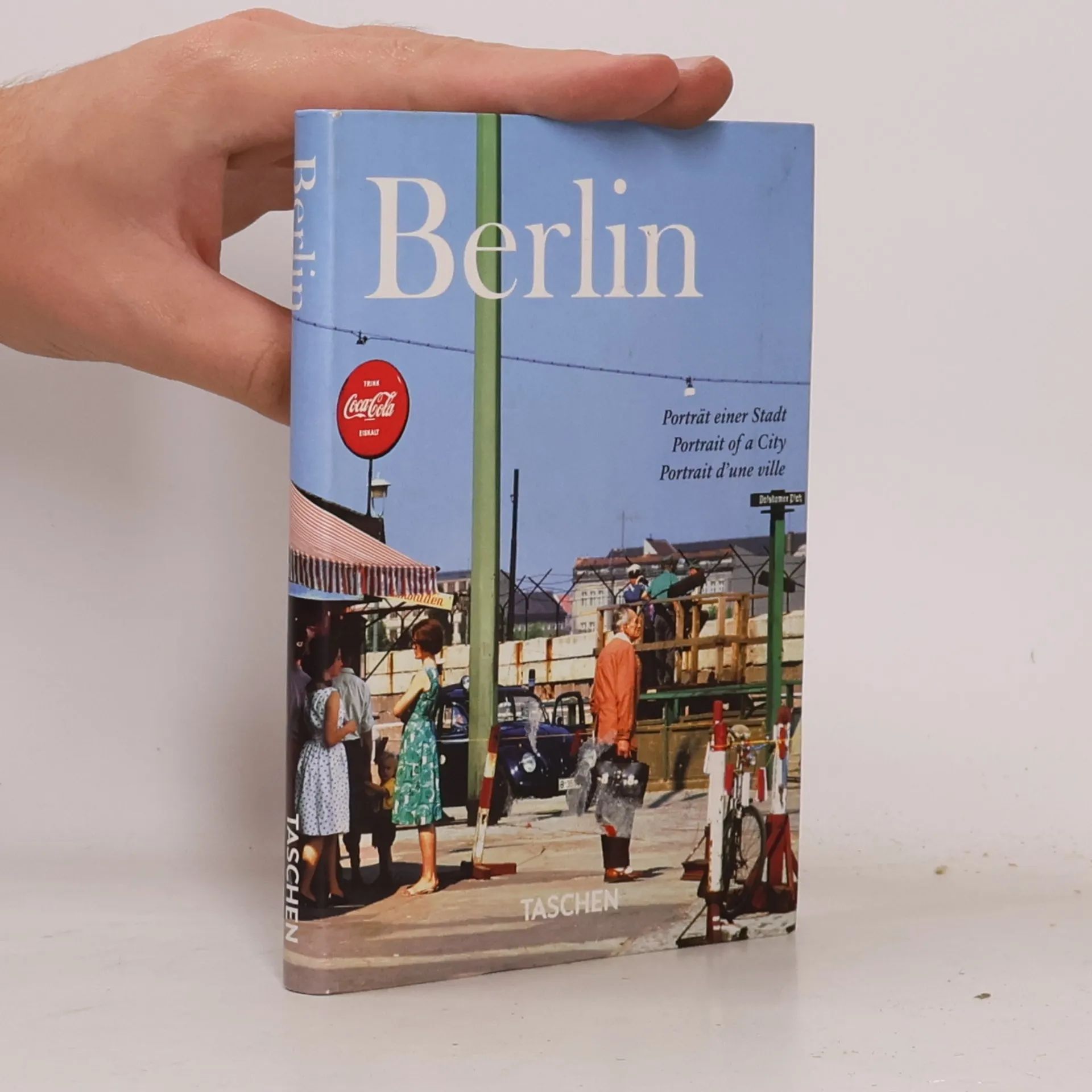
Berlin hat zwei Weltkriege überstanden, wurde während des Kalten Krieges durch die Mauer geteilt und nach deren Fall wiedervereint: Heute ist die Stadt eines der Kultur- und Machtzentren Europas. Dieses Buch präsentiert die Geschichte Berlins von 1860 bis heute in Fotografien, Porträts und Luftaufnahmen. Mehr noch als historische Ereignisse stehen dabei die Menschen im Fokus: in ihren hoffnungsvollen und entschlossenen Gesichtern spiegelt sich Berlins unsterbliche Seele.Über diese Reihe: Jeder Band aus TASCHENs Piccolo-Reihe Portrait of a City fängt die Vitalität und Geschichte einer berühmten Stadt ein und kondensiert sie zu einer mit 150 Fotos, informativen Bildunterschriften und inspirierenden Zitaten gespickten liebevollen Hommage.
Unraveling the mystery of Eugene Atget's life and work (1857-1927) is easier said than done. Now considered to be one of history's most important photographers, Atget (1857-1927) was relatively unknown until well after his death. We know that he made his living selling his prints, mainly to architects, artists, and institutions, but his categorical, obsessive method of photographing Paris street by street (doorknob by doorknob in some cases) lacks clear explanation.Atget wrote in 1920, "I may say that I have in my possession all of Old Paris". Indeed, he knew the city like the back of his hand and had the pictures to prove it. He captured the historical, atmospheric Paris: churches, monuments, and buildings, as well as bars, shop windows, street-peddlers, and prostitutes. Traversing all of its layers, he immortalized the true spirit of Old Paris.Why did he choose to spend his life roaming the streets with his heavy camera equipment, systematically cataloguing everything Parisian? The answer, if it can be discovered, must be found in the pictures themselves. Whether he intended to or not, Atget has left us with an impeccable record of turn-of-the-century Paris, not to mention a huge collection of stunningly beautiful photographs. This new book features 200 of Atget's most impressive images, many of which have rarely been seen before. Take a trip back in time and immerse yourself in Atget's Paris.
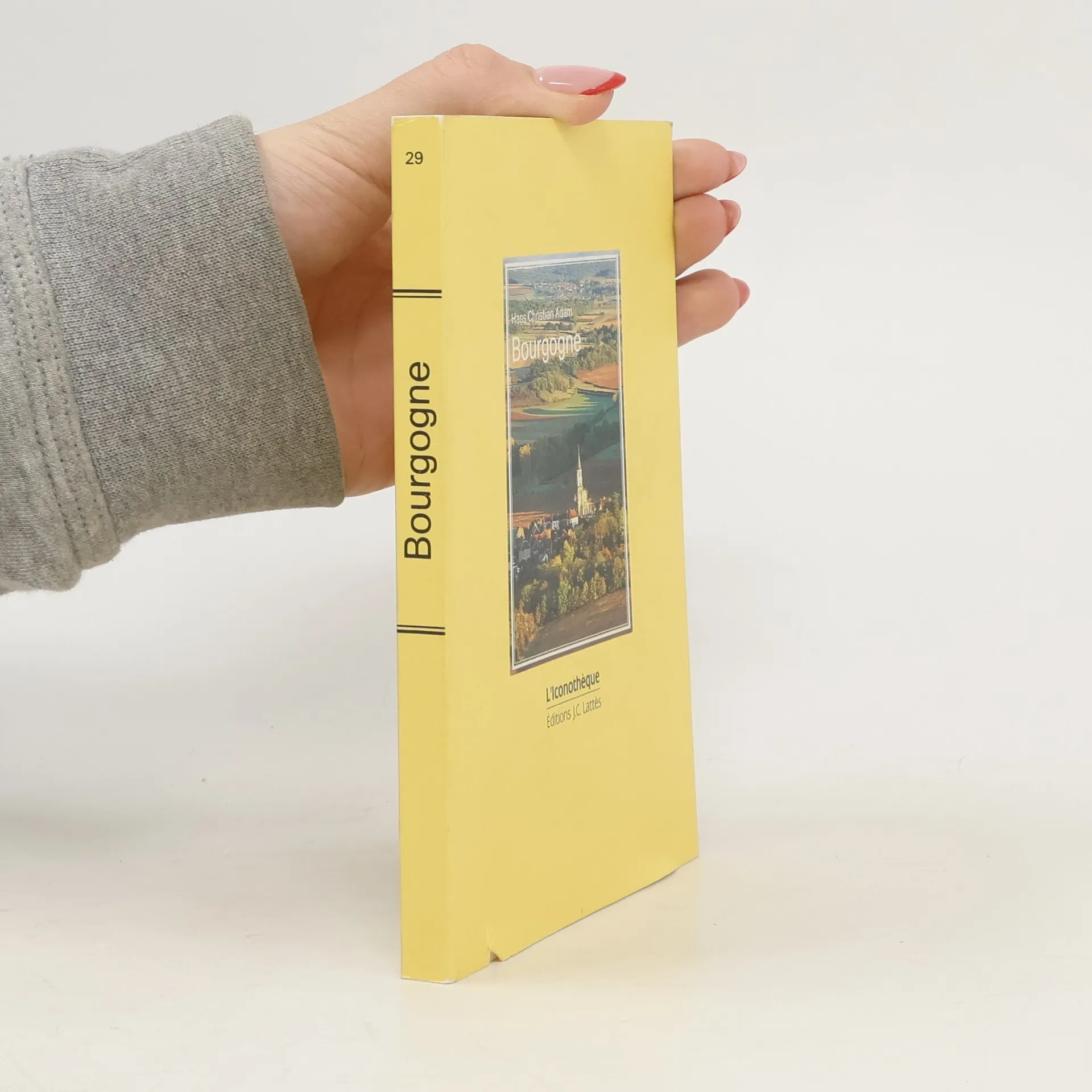
Rayon : Province Editeur : J.C. Lattès Date de parution : 1992 Description : In-12, 166 pages, broché, occasion, très bon état. Envois quotidiens du mardi au samedi. Les commandes sont adressées sous enveloppes bulles. Photos supplémentaires de l'ouvrage sur simple demande. Réponses aux questions dans les 12h00. ATTENTION : Les expéditions de plus de 2 kilos se voient appliquer un supplément de port. Un envoi en Mondial Relay est possible en France et en Europe. IMPORTANT : Le service économique d'envoi de livres à l'international "livres et brochures" prendra fin au 1er juillet 2025. Clients internationaux, profitez des derniers mois de ce tarif très avantageux. N'hésitez pas à vous renseigner avant de passer commande. Librairie Le Piano-Livre. Merci. Référence catalogue X1343. Please let us know if you have any questions. Thanks
Cet ouvrage est une réédition numérique d’un livre paru au XXe siècle, désormais indisponible dans son format d’origine.
Rare Book
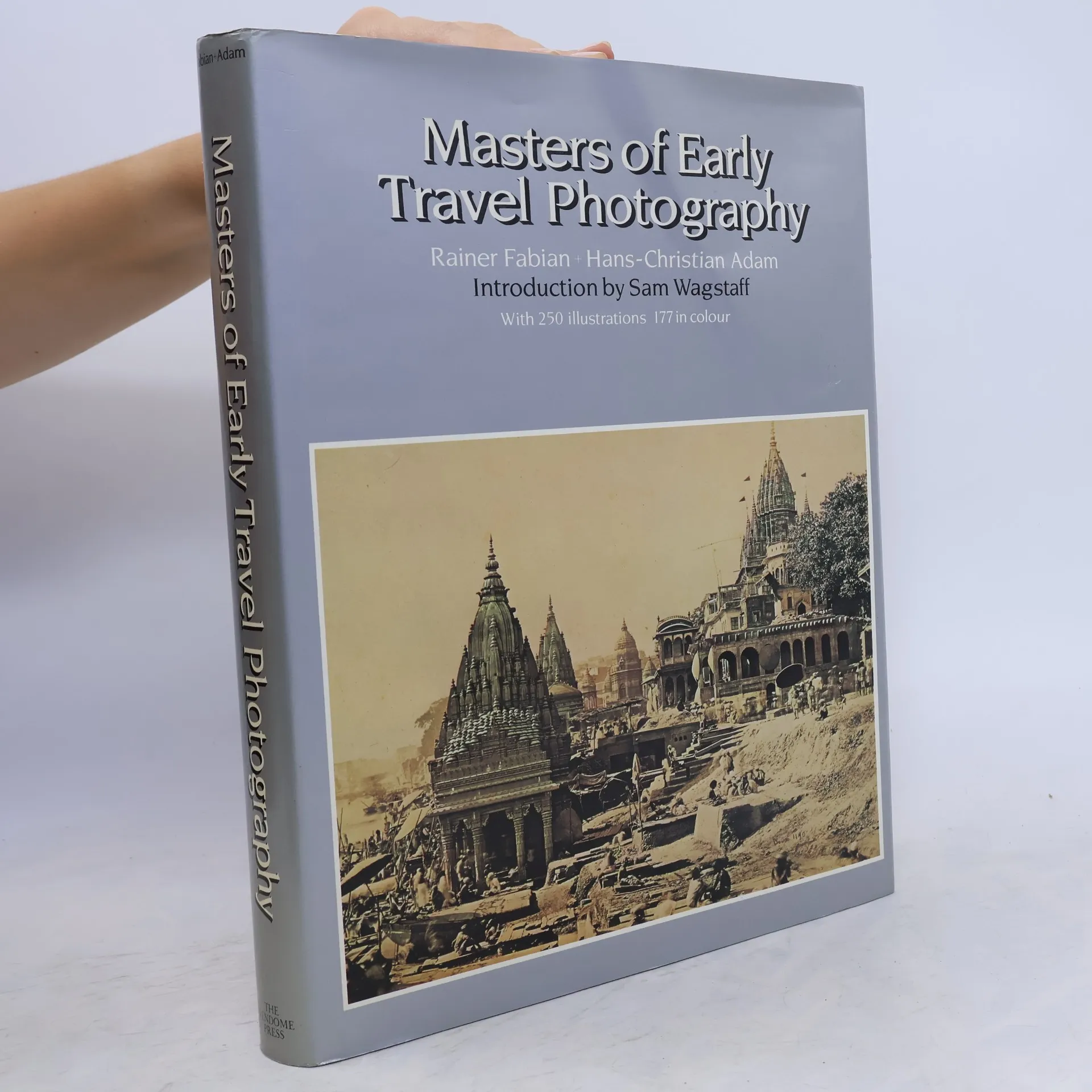
Photographs taken between the 1850s and 1920s show the cultures and landscapes of Egypt, Greenland, Japan, Brazil, China, India, the American West, and the Middle East