
Matylda Kazisvětová je geniální. Uměla plynně mluvit, když jí ještě nebyly ani dva roky, a ve čtyřech už četla Nadějné vyhlídky od Charlese Dickense. Jela do Afriky s Ernestem Hemingwayem a do Indie s Rudyardem Kiplingem – cestovala po celém světě, a přitom seděla ve svém pokojíčku v anglické vesnici. Většina dospělých v jejím okolí ji přesto ignoruje nebo si myslí, že děti jsou „jakési strupy“. I rodiče o Matyldě říkají samé hrozné věci. Ve skutečnosti je Matylda inteligentní a nadaná dívka a oni jsou hloupí. Matylda naštěstí zjistí, že vládne velmi zvláštním druhem kouzelné moci!
In this now-classic work, one of the most celebrated political scientists of the twentieth century offers a powerful interpretation of the location of political power in American urban communities. For this new edition, Robert A. Dahl has written a new Preface in which he reflects on Who Governs? more than four decades after its publication. And in a new Foreword, Douglas W. Rae offers an assessment of Dahl’s achievement in this, Dahl’s greatest and most influential book. “Dahl is never dogmatic, and never imagines that the world stands still to accommodate either the democratic ideal or his own pluralistic theory of city politics. . . .Who Governs? is Dahl’s liveliest and most remarkable book.”―Douglas W. Rae, from the Foreword From reviews of the first edition: “A book that no one interested in politics can afford to ignore.”―Lewis A. Coser, Commentary “Anyone seriously concerned with current systematic political theory or with urban politics should read Who Governs?”―Hugh Douglas Price, Political Science Quarterly “A sophisticated and undogmatic treatise on democratic politics.”―Heinz Eulau, American Political Science Review “Dahl has illuminated a central question in political science, the problem of how men can govern themselves in complex societies. . . . Who Governs? will become a classic.”―from the citation of the Woodrow Wilson Foundation Award
This authoritative analysis introduces the key concepts used by contemporary political scientists. Rigorous, concise, and tightly argued, it makes use of everyday and historical examples to illustrate important and challenging conceptual material. KEY Uses the core political phenomenon of influence as a springboard to explaining politics, government, state, political systems, democracy, and the like. Explores the democratic political system and what has been learned about the conditions that facilitate or undermine democracy. Is updated throughout to treat recent developments in world events and political analysis. Discusses the important differences between democratic and nondemocratic systems. For anyone interested in learning more about how political systems and governments work.
Zvykli jsme si na tvrzení, že demokracie je nejlepším způsobem uspořádání politického systému, ale ne vždy jsme připraveni vypořádat se s problémy a obtížemi, které demokracie a její budování přináší. Je proto důležité bezpečně rozumět základním otázkám: Proč je demokracie opravdu tak důležitá, jak v různých typech společnostech funguje, co ji ohrožuje dnes a co ji pravděpodobně může ohrozit v budoucnu. Autorovi se podařilo na malé ploše shromáždit řadu zásadních informací o podstatě a reálném fungování demokracie, které ilustruje na příkladech z celého světa.
Zdroj: kosmas.cz
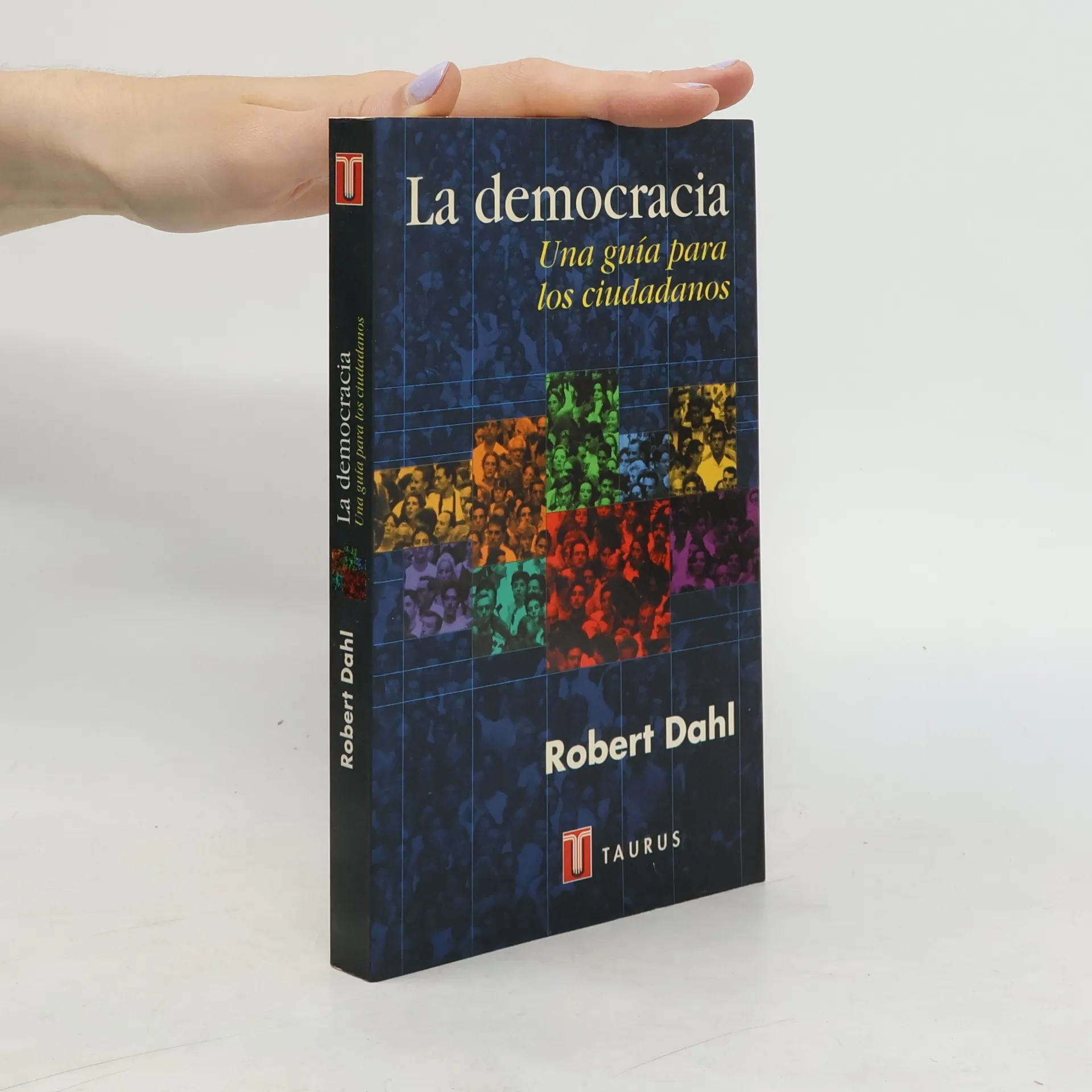
Madrid. 21 cm. 246 p. Encuadernación en tapa blanda de editorial ilustrada. Colección 'Pensamiento'. Traducción de Fernando Vallespín. Traducción On democracy. Democracia. Pensamiento (Taurus Ediciones) .. Este libro es de segunda mano y tiene o puede tener marcas y señales de su anterior propietario. 8430603425
Publikace amerického profesora politologie na univerzite v Yale. Z obsahu: Zdroje moderní demokracie, Nepřátelští kritici, Teorie demokratického procesu, Problémy v demokrat. procese, Hranice a možnosti demokracie, atd...
Like individuals, then, organizations ought to possess some autonomy, and at the same time they should also be controlled. Crudely stated, this is the fundamental problem of pluralist democracy. The purpose in this book is to explore the problem of pluralist democracy and some possible solutions.