


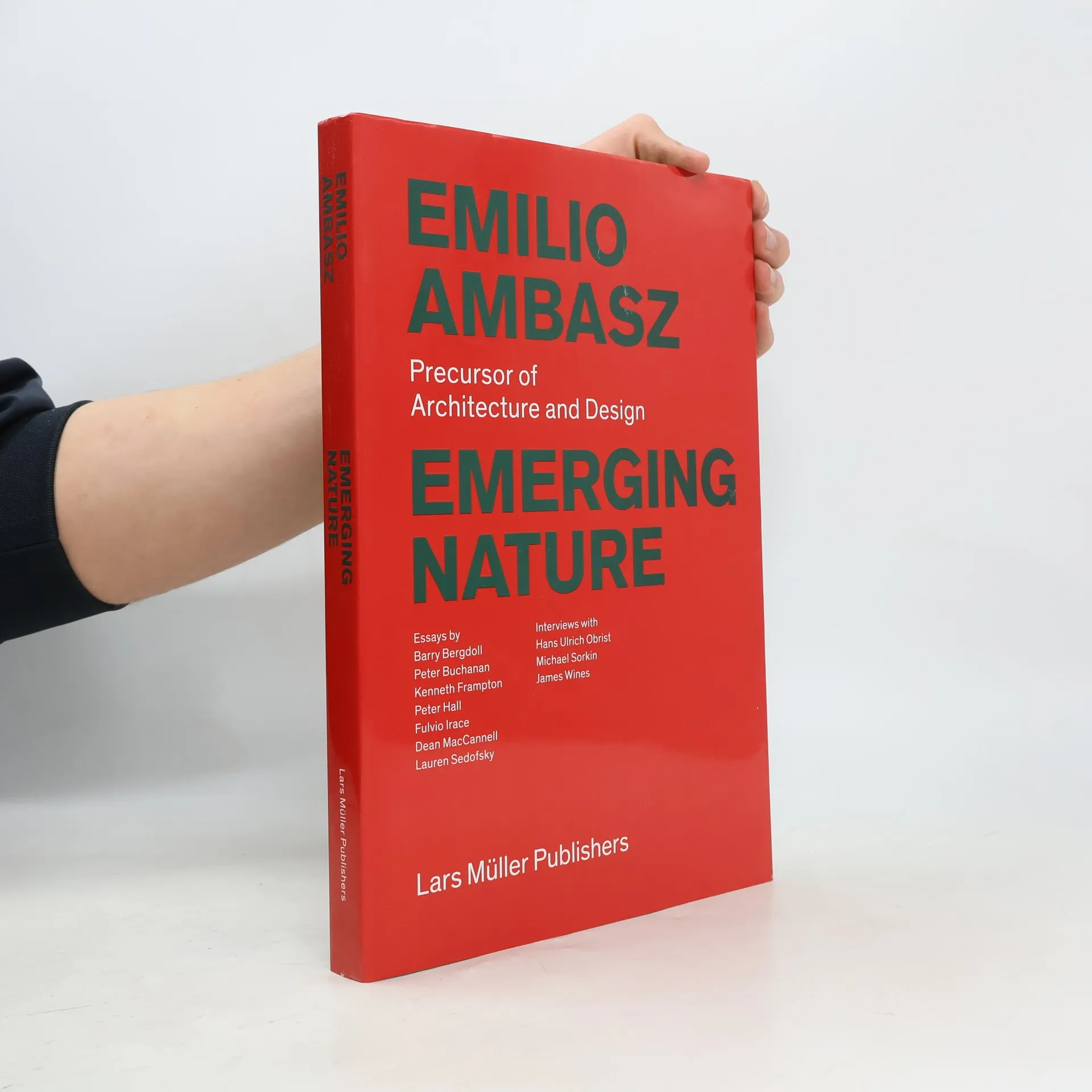

Emilio Ambasz - Emerging Nature
- 312 stránek
- 11 hodin čtení
This comprehensive volume documents the work of the Argentine architect, graphic designer, and industrial designer Emilio Ambasz. Ambasz's main concern is to integrate nature and construction into architectural design, which is why he is regarded as one of the most important pioneers of Green Architecture. In his work a combination of landscape and architecture emerges, in which his respect for the environment and ecological sustainability becomes clear. A prime example of this is the Fukuoka Prefectural International Hall in Japan: a building that houses more than 100,000 m2 of exhibition spaces, theaters, and offices is also an open green area in the form of a hanging garden. In addition to the documentation of Ambasz's architectural, graphic, industrial, and exhibition design, this publication contains essays by Barry Bergdoll, Kenneth Frampton, and Peter Buchanan, as well as three interviews with Emilio Ambasz, conducted by Michael Sorkin, James Wines, and Hans Ulrich Obrist.