

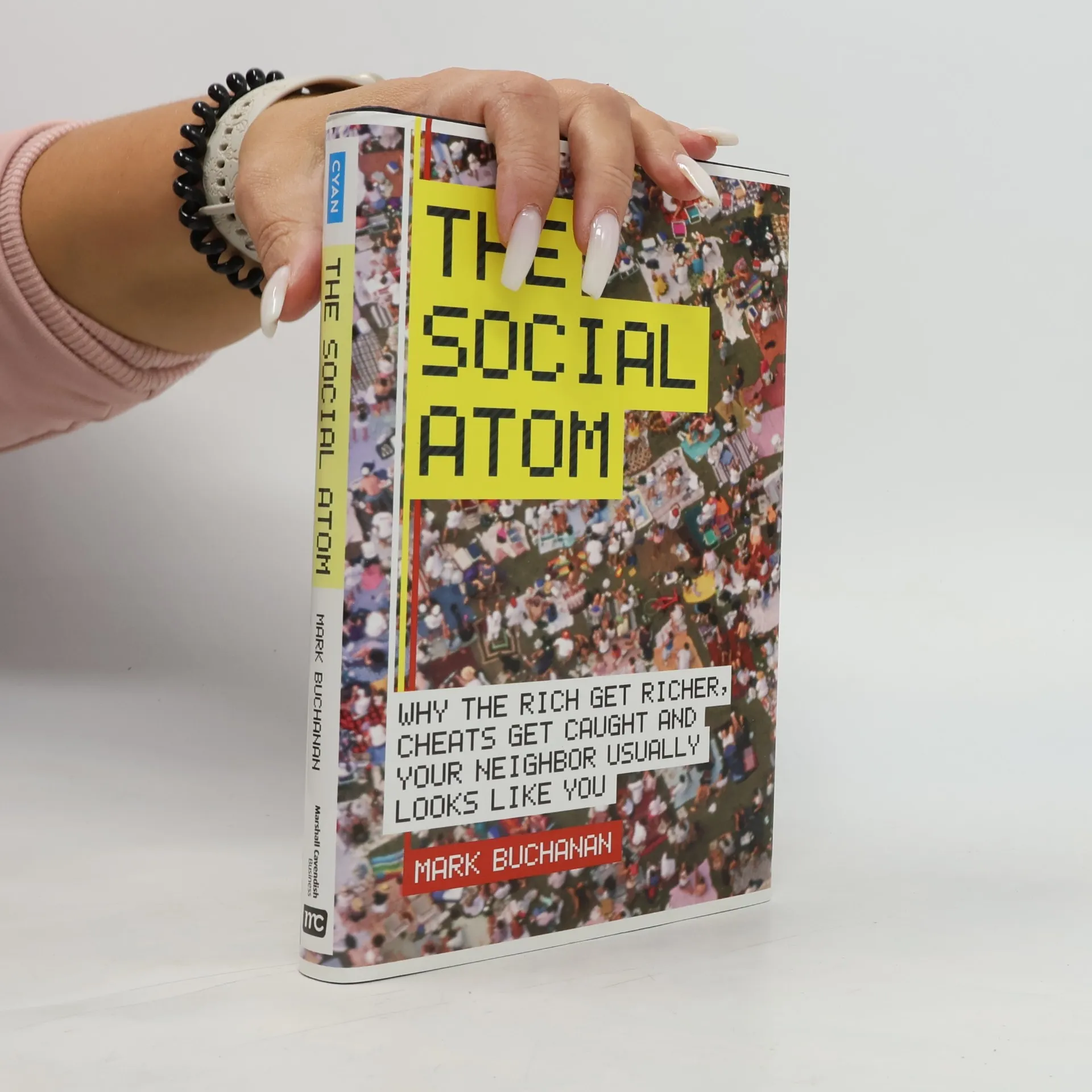


The Social Atom
Why The Rich Get Richer, Cheats Get Caught, And Your Neighbour Usually Looks Like You
Autoři
Hodnocení knihy
Více o knize
By a major science writer, The Social Atom explains - and even predicts - human behaviour and decision-making through the lens of physics. How do trends in fashions begin? Why do traffic jams appear on unobstructed road? Why do financial markets behave in a way that consistently confounds economists? Why do we end up living in racially segregated neighbourhoods? Why do friends and neighbours turn against one another in times of war? scientific enquiry, groups of individuals behave in more predictable ways. Using the tools of physics, the author discovers that the same patterns of behaviour crop up over and over again, even when the outcome is something that no particular individual would have desired.

Nákup knihy
The Social Atom, Mark Buchanan
- Jazyk

- Rok vydání
- 2007
- Vazba
- (pevná),
- Stav knihy
- Dobrá
- Cena
- 479 Kč
Doručení
Platební metody
Tady nám chybí tvá recenze.
- Titul
- The Social Atom
- Podtitul
- Why The Rich Get Richer, Cheats Get Caught, And Your Neighbour Usually Looks Like You
- Jazyk
- anglicky
- Autoři
- Mark Buchanan
- Vydavatel
- Bloomsbury Publishing PLC
- Rok vydání
- 2007
- Vazba
- pevná
- Počet stran
- 256
- ISBN10
- 0462099148
- ISBN13
- 9780462099149
- Série
- Štítky
- Byznys, Přírodní vědy, Psychologická tématika, Politika, Věda, Společnost, Žurnalistika, Finance, Chudoba, Kapitalismus, Soužití
- Původní název
- The social atom
- Hodnocení
- 3,4 z 5
- Anotace
- By a major science writer, The Social Atom explains - and even predicts - human behaviour and decision-making through the lens of physics. How do trends in fashions begin? Why do traffic jams appear on unobstructed road? Why do financial markets behave in a way that consistently confounds economists? Why do we end up living in racially segregated neighbourhoods? Why do friends and neighbours turn against one another in times of war? scientific enquiry, groups of individuals behave in more predictable ways. Using the tools of physics, the author discovers that the same patterns of behaviour crop up over and over again, even when the outcome is something that no particular individual would have desired.