

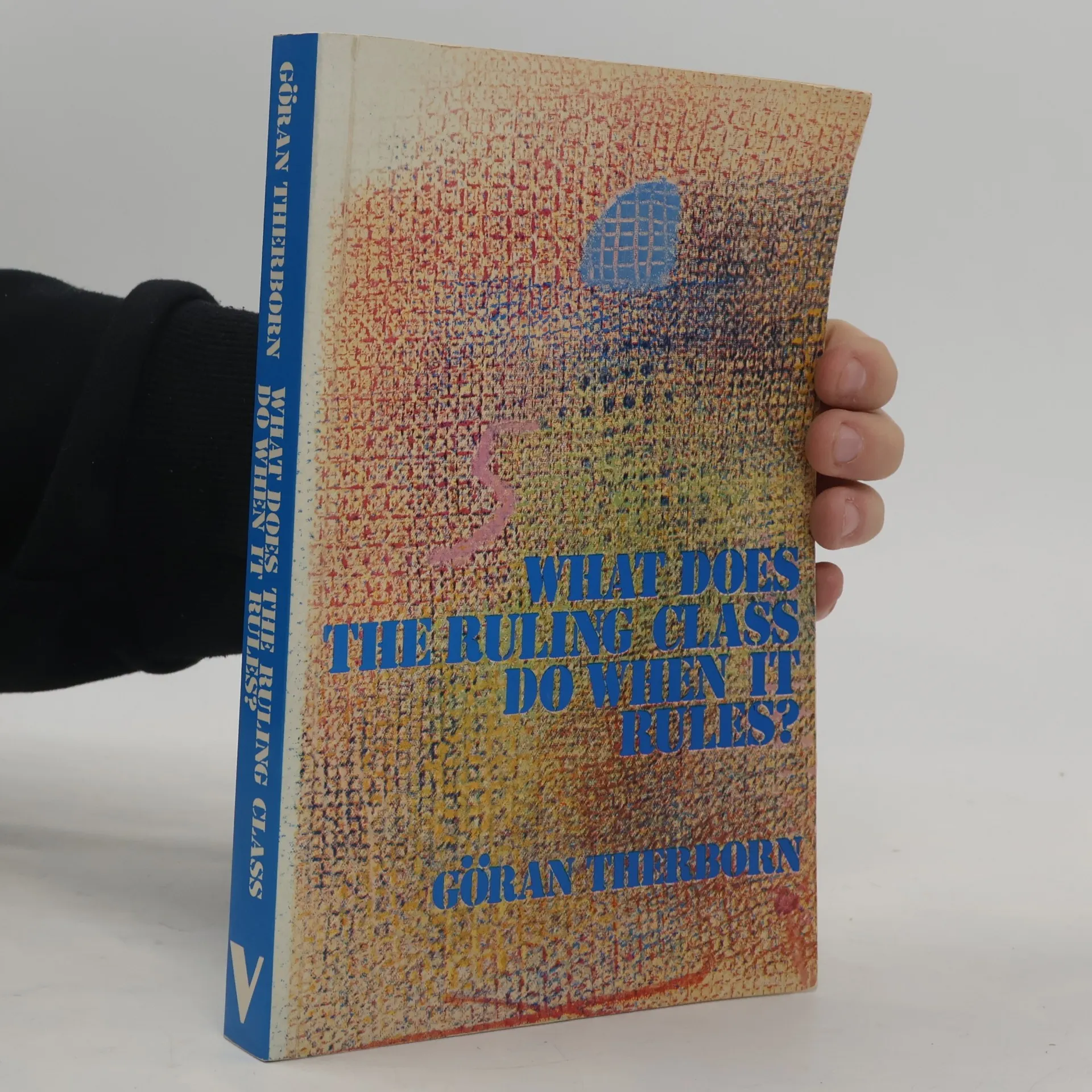
What Does the Ruling Class Do When It Rules?
State Apparatuses and State Power Under Feudalism, Capitalism and Socialism
Autoři
Více o knize
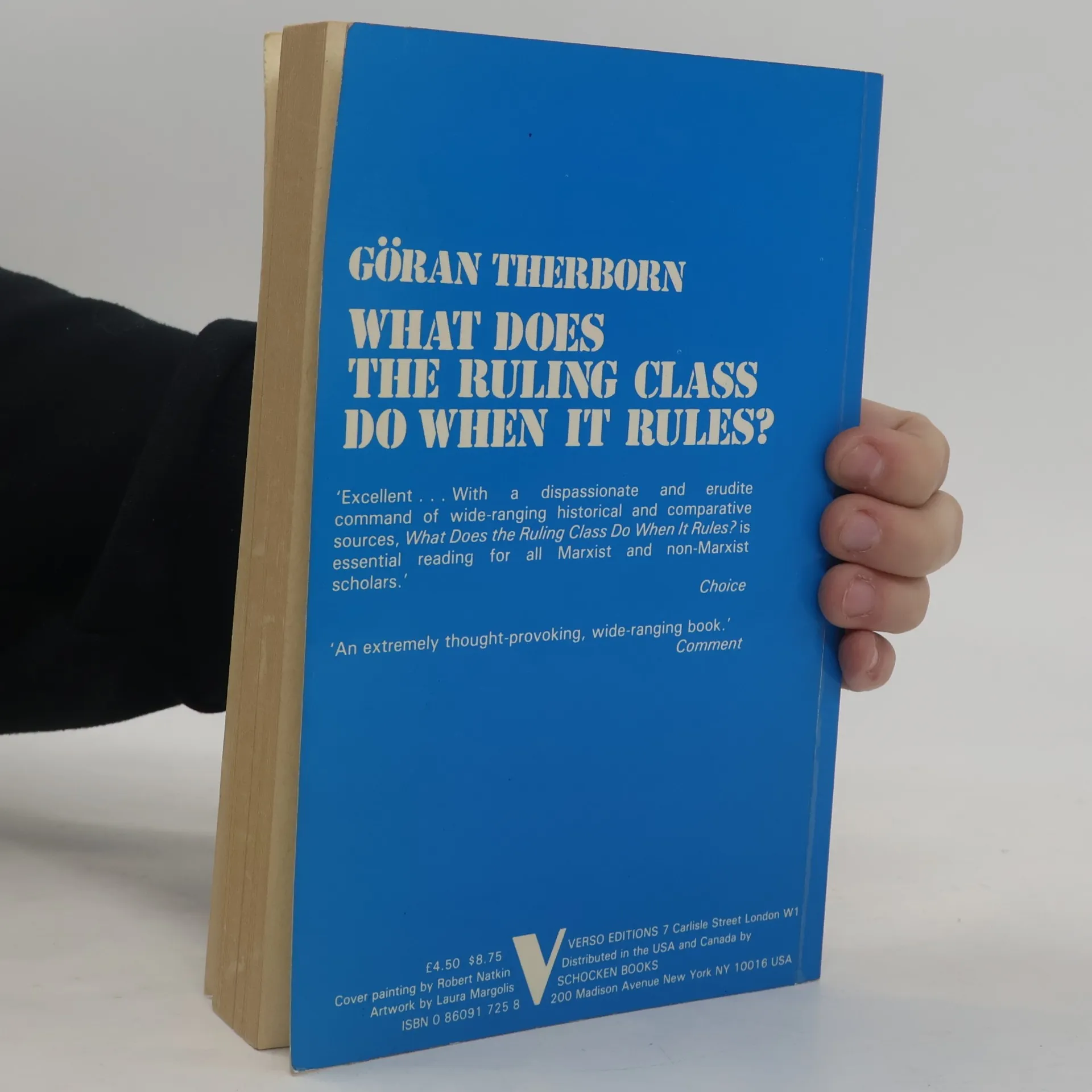
In his new book, Göran Therborn – author of the now standard comparative work on classical sociology and historical materialism, Science, Class and Society – looks at successive state structures in an arrestingly fresh perspective. Therborn uses the formal categories of modern system analysis – input mechanisms, processes of transformation, output flows – to advance a substantive Marxist analysis of state power and state apparatuses. His account of these is comparative in the most far-reaching historical sense: its object is nothing less than the construction of systematic typology of the differences between the feudal state, the capitalist state and the socialist state. Therborn ranges from the monarchies of mediaeval Europe through the bourgeois democracies of the west in the 20th century to the contemporary regimes in Russia, Eastern Europe and China. The book ends with a major analytic survey of the strategies of working class parties for socialism, from the Second International to the Comintern to Eurocommunism, that applies the structural findings of Therborn’s enquiry in the ‘Future as History’. Written with lucidity and economy, What Does the Ruling Class Do when it Rules? represents a remarkable sociological and political synthesis.
Nákup knihy
What Does the Ruling Class Do When It Rules?, Göran Therborn
- Jazyk

- Rok vydání
- 1980
- Vazba
- (měkká),
- Stav knihy
- Dobrá
- Cena
- 299 Kč
Doručení
Platební metody
Nikdo zatím neohodnotil.
- Titul
- What Does the Ruling Class Do When It Rules?
- Podtitul
- State Apparatuses and State Power Under Feudalism, Capitalism and Socialism
- Jazyk
- anglicky
- Autoři
- Göran Therborn
- Vydavatel
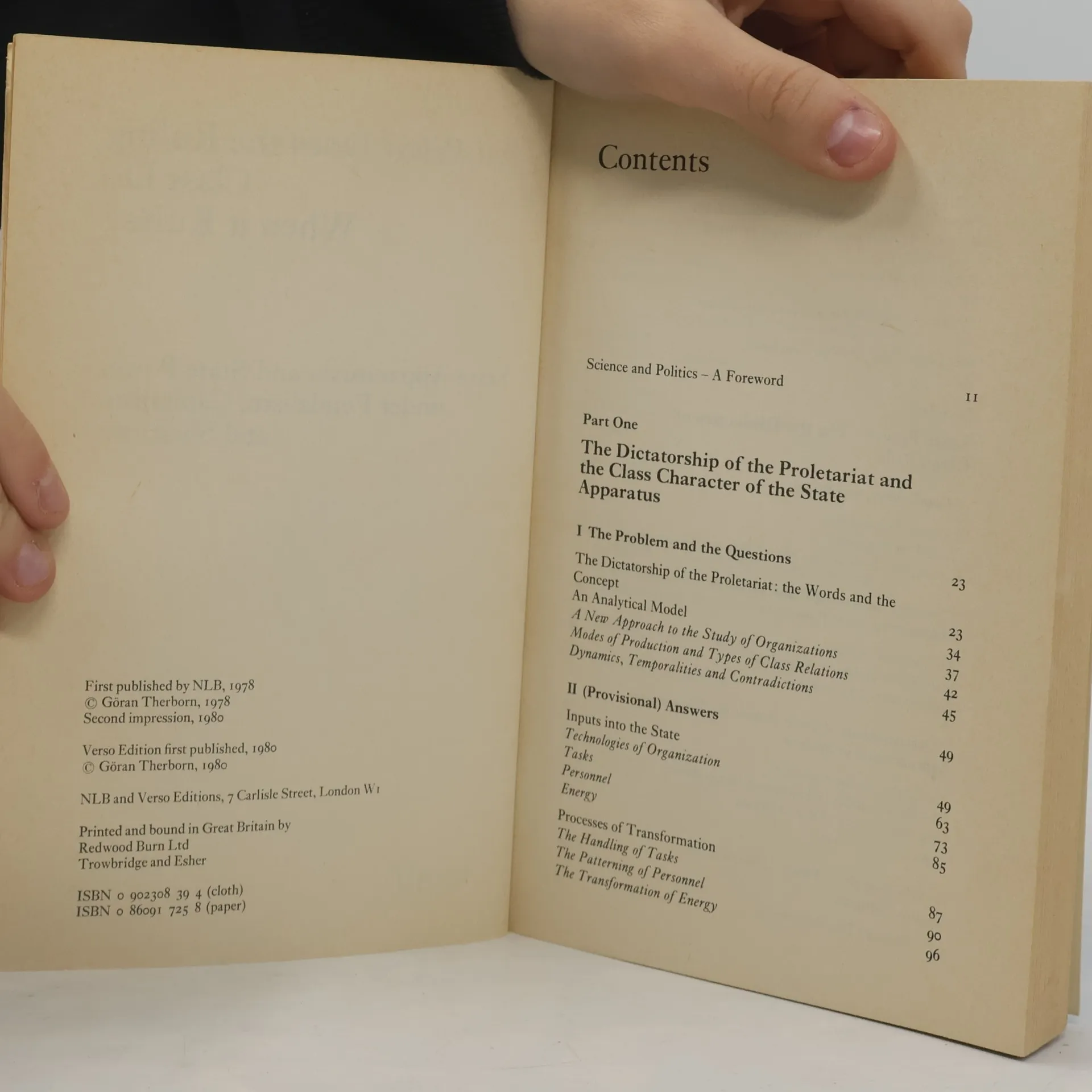
- Verso Books
- Rok vydání
- 1980
- Vazba
- měkká
- Počet stran
- 290
- ISBN10
- 0860917258
- ISBN13
- 9780860917250
- Série
- Kategorie
- Štítky
- Politika
- Anotace
- In his new book, Göran Therborn – author of the now standard comparative work on classical sociology and historical materialism, Science, Class and Society – looks at successive state structures in an arrestingly fresh perspective. Therborn uses the formal categories of modern system analysis – input mechanisms, processes of transformation, output flows – to advance a substantive Marxist analysis of state power and state apparatuses. His account of these is comparative in the most far-reaching historical sense: its object is nothing less than the construction of systematic typology of the differences between the feudal state, the capitalist state and the socialist state. Therborn ranges from the monarchies of mediaeval Europe through the bourgeois democracies of the west in the 20th century to the contemporary regimes in Russia, Eastern Europe and China. The book ends with a major analytic survey of the strategies of working class parties for socialism, from the Second International to the Comintern to Eurocommunism, that applies the structural findings of Therborn’s enquiry in the ‘Future as History’. Written with lucidity and economy, What Does the Ruling Class Do when it Rules? represents a remarkable sociological and political synthesis.